
Fiverr is an online marketplace where freelancers sell digital services, called Gigs, to businesses and individuals around the world. For marketers, it works both ways. You can hire help for design, video or copy, or you can sell your own skills to clients in other countries. As a result, it is one of the common first stops for people starting freelance or remote marketing work.
Key Takeaways
- Fiverr is a marketplace that connects buyers with freelancers who offer digital services.
- Each service is listed as a Gig, with its own description, formats and prices.
- Buyers and freelancers can also agree custom terms through custom offers.
- Fiverr earns money mainly from marketplace commission and other services.
- Clear Gigs, good samples and strong reviews help freelancers win orders.
What Is Fiverr?
Fiverr is a website and app for buying and selling freelance work online. In its annual report to the US Securities and Exchange Commission, the company defines its terms clearly. It says “Gig” means “the services offered on the Fiverr marketplace.” It also says sellers, or freelancers, are “users who offer Gigs or digital services,” while buyers are “users who purchase digital services.”
Think of it like a food court. Each stall shows a clear menu with set dishes and prices. You walk up, pick what you want and pay. In the same way, each freelancer on Fiverr shows a menu of services, so buyers can compare and order quickly.
The range of services is wide. For example, Fiverr lists categories such as graphic design, digital marketing, programming, and video and animation. So a small business might buy a logo, a set of social posts and a product video, all from different freelancers.
Fiverr also states its goal plainly. On its investor site, it says “Fiverr’s mission is to transform the way the world creates and works together.” In addition, its annual report says it has “users located in over 160 countries.”
Why It Matters for Marketers
Fiverr matters to you in two ways. First, as a buyer, you can fill skill gaps fast, without hiring full-time staff. Second, as a freelance digital marketer, you can reach clients far beyond your own city. That makes it a practical way to build experience, earn reviews and grow a client list for remote work.
How Fiverr Works
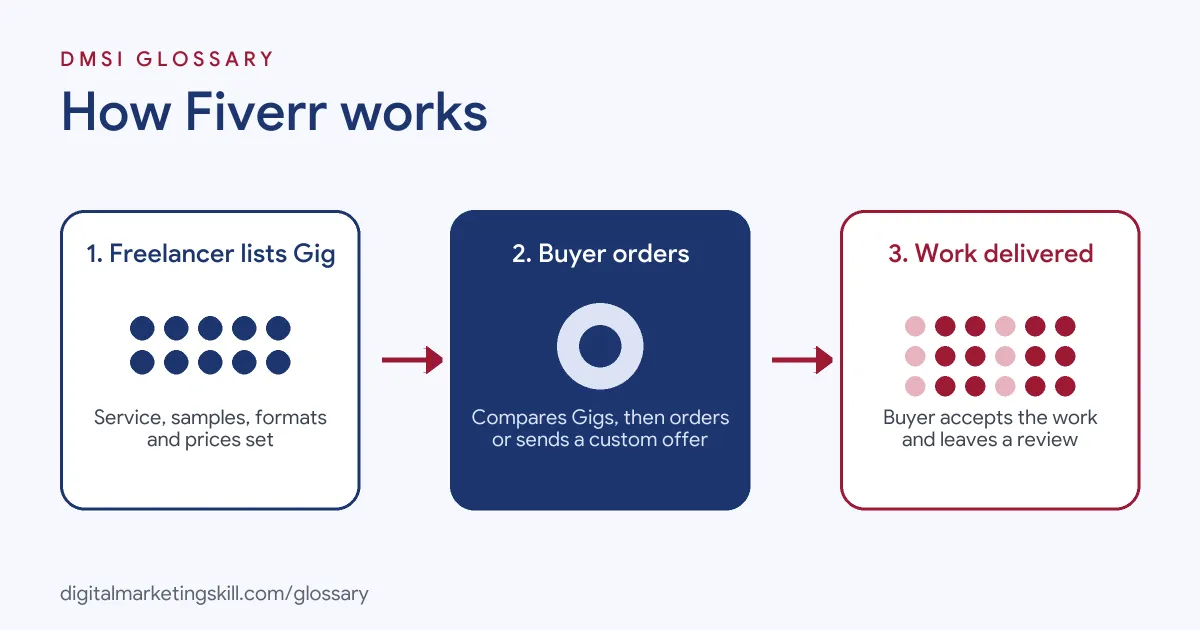
Fiverr works by turning a service into a clear listing that buyers can find, compare and order. A freelancer creates a Gig, a buyer orders it, the work is delivered and then both sides can leave feedback.
Step 1: Freelancers Create Gigs
First, a freelancer sets up a profile and lists a Gig. In addition, the Gig explains the service, shows samples and sets the price. Fiverr’s annual report notes that freelancers can “set different formats and prices for each Gig.” So one seller might offer a basic version and a bigger version of the same service.
Step 2: Buyers Search and Compare
Next, buyers search by keyword or browse categories. Then they compare Gigs by price, samples, delivery time and reviews. Because buyers often scan many listings, your Gig title and first image matter a lot. In fact, good keyword research helps your Gig show up for the right searches.
Step 3: Orders and Custom Offers
After that, the buyer places an order or sends a message first. If the job needs special terms, Fiverr’s report explains that buyers and freelancers can negotiate through “custom offers sent from the conversation page.” Payment runs through the platform, which relies on third parties to “collect funds from buyers, remit payments to sellers.”
Step 4: Delivery and Reviews
Finally, the freelancer delivers the work through Fiverr. Then the buyer can accept it and leave a review. Over time, those online reviews build trust, so a seller with steady good feedback usually finds it easier to win new orders.
How Fiverr Makes Money
Fiverr takes a share of each sale. In its own words, “We currently primarily derive our revenue from marketplace commission and other services.” It has also offered paid extras for sellers. For example, it launched Seller Plus as “a subscription based loyalty program for freelancers,” with tools such as advanced analytics. However, fees and features can change, so always check Fiverr’s own help pages for the current terms.
Buying on Fiverr as a Marketer
Buying well takes some care too. First, write a short brief with your goal, audience, brand rules and deadline. Then compare a few freelancers, not just the cheapest one. For instance, look at their samples, reviews and how clearly they answer your questions. After that, start with a small order to test the fit. Finally, give clear feedback, so the next order goes even better.
Examples of Fiverr in Marketing
- A local bakery buying design help. The owner needs a new menu and social post templates. So she orders a Gig from a designer, shares her brand colours and gets the files back through the platform.
- A freelance social media manager selling services. She lists a Gig for monthly content plans with three formats at different prices. Then she adds real samples and a short video, and her first reviews help her win repeat clients.
- A small agency handling overflow work. The agency has more video edits than its team can handle. Therefore, it hires a trusted freelancer on Fiverr for short-term help, while keeping strategy in-house.
Fiverr vs Other Ways to Find Freelance Work
| Point | Fiverr | Job-post marketplaces | Direct clients |
|---|---|---|---|
| How work starts | Buyer orders a listed Gig | Client posts a job and freelancers apply | You pitch or get referred |
| Pricing | Set by the freelancer in each Gig | Often agreed per proposal | Agreed in your own proposal |
| Platform fees | Yes, the platform takes commission | Usually, yes | None to a platform |
| Finding clients | Buyers come to the marketplace | You compete on each job post | You do all the marketing |
| Best for | Clear, repeatable services | Custom or longer projects | Long-term retainers |
Many freelancers use more than one route. For instance, they start on a marketplace, then move loyal clients to a retainer where the platform’s rules allow it.
How to Start Selling on Fiverr
- Pick one clear service. First, choose a skill you can deliver well, such as ad copy or social graphics.
- Study the category. Then look at top Gigs to see how they describe, price and present their work.
- Build your profile. Add a real photo, a short bio and your key skills. Good personal branding builds trust fast.
- Write a strong Gig. Next, use a clear title, plain benefits and the words buyers search for.
- Show real samples. Also, add your best work, or create sample pieces if you are new.
- Set fair prices and formats. Offer a simple starter option and a bigger option for more value.
- Reply fast and deliver on time. After all, quick, clear messages often lead to better reviews.
- Review and improve. Finally, check which Gigs get views and orders, then update the weak ones.
Best Practices for Fiverr
- Niche down. In general, a focused Gig, such as “Meta ad copy for cafes”, is easier to find than “marketing help”.
- Set clear scope. In short, list exactly what is included, so buyers know what they will get.
- Use visuals well. Similarly, clean images and short videos help your Gig stand out in search.
- Ask good questions. For example, a short brief at the start avoids revisions later.
- Follow the rules. Read Fiverr’s terms, especially on payments and contact outside the platform.
- Turn work into proof. With permission, use results in your case studies and portfolio.
Common Mistakes to Avoid
- Vague Gigs. First of all, unclear offers confuse buyers and attract the wrong orders.
- Pricing too low for too long. Of course, low prices can win early reviews, but they can also burn you out.
- Overpromising. Also, promising results you can’t control, such as guaranteed sales, leads to bad reviews.
- Slow replies. Otherwise, buyers often move on if they don’t hear back quickly.
- Ignoring platform rules. For example, breaking terms can put your account at risk.
- Relying on one platform only. Instead, building other client channels keeps your income more stable.
Where You’ll Use Fiverr at Work
Fiverr shows up in content, business development and agency roles, often next to other freelance platforms. For example, real remote job listings mention it like this:
- “Searching for new authors for specific topics on Fiverr and Upwork.” (Content Editor).
- “Generate leads through LinkedIn, Upwork, Fiverr, Freelancer, email marketing, cold calling, and networking platforms.” (Assistant Manager Business Development – Rin Technologies).
- “Quality Bids on Upwork, Fiverr, Freelancer, Guru & PPH.” (Bidding Executive/Business Development Executive).
Learn It in the Full Stack Track
You can learn the marketing skills that clients buy on Fiverr, from social media to SEO, in the Full Stack programme, which covers all four tracks. Every track includes a U.S. Project Internship from day one, with unlimited 1-on-1 mentoring.
Frequently Asked Questions
What is a Gig on Fiverr?
A Gig is a service a freelancer offers on Fiverr. Typically, it includes a description, samples, and the formats and prices the freelancer sets.
Is Fiverr only for small, cheap jobs?
No. In fact, freelancers set their own prices and formats, so Gigs can range from small tasks to larger projects.
How does Fiverr make money?
Fiverr says it earns mainly from marketplace commission and other services. So check its help centre for the current fee details.
Can beginners sell on Fiverr?
Yes, anyone can create a seller profile, as long as they follow the rules. However, new sellers face competition, so clear Gigs and good samples matter a lot.
Does Fiverr guarantee work or income?
No. Instead, results depend on your skills, your Gigs, demand in your category and how well you serve buyers.
Sources: Fiverr Investor Relations: Overview; US SEC: Fiverr International Ltd. Annual Report (Form 20-F); Nasdaq: Fiverr Launches Subscription-Based Loyalty Program for Global Seller Community; remote job listings on Himalayas, Himalayas and Himalayas.