Most advice to increase online sales points you at more traffic: more ads, more posts, more emails. But the data shows most lost sales never fail at the traffic stage. They fail at checkout, at the trust check, or after the first purchase. Fix those three stages first, and the same traffic you already have will convert into more revenue.
Key Takeaways
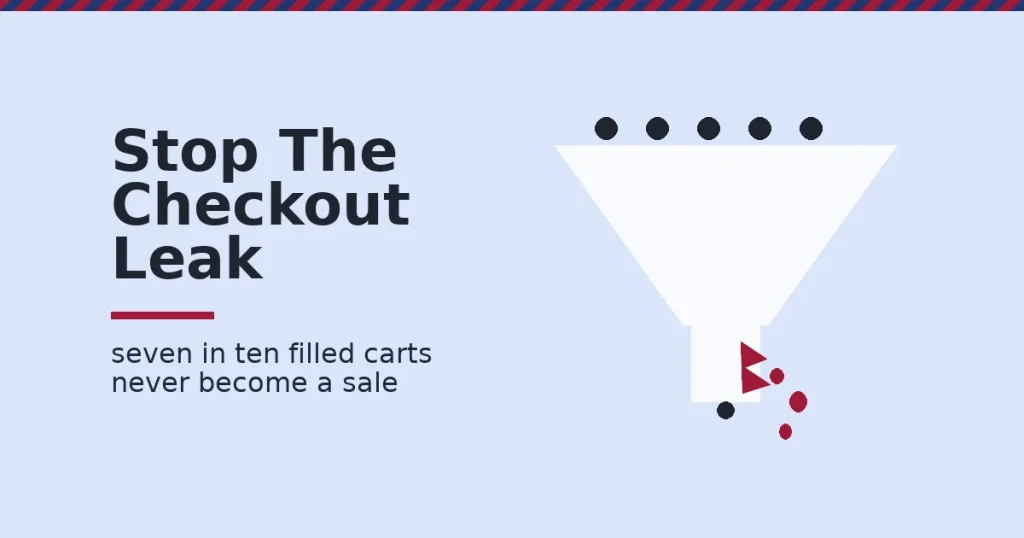
- Checkout is where sales die. Baymard Institute’s analysis of 50 studies puts the average online cart abandonment rate at 70.22%. That is seven in ten filled carts that never become a sale.
- Cost and trust are the top reasons. Baymard’s research found 40% of shoppers abandon over extra costs such as shipping. Another 19% cite security worries, and 18% leave because the store forced account creation.
- Most checkouts are mediocre by design, not accident. Baymard’s benchmark of 344 leading ecommerce sites rated 65% of checkouts “mediocre or worse.” The average site has 32 fixable issues, with up to 35% more conversions possible through better checkout design alone.
- Reviews now function as a trust layer. BrightLocal’s consumer review survey found 50% of shoppers trust online reviews as much as a personal recommendation. 85% say positive reviews make them more likely to buy.
- Email still drives outsized returns after the first sale. Litmus’s survey of email marketers found the retail and ecommerce sector reporting a 45:1 return. That is among the highest of any sector measured.
In this guide
- What Most Sales Advice Skips
- How Buyers Actually Decide to Complete a Purchase
- Three Levers That Actually Increase Online Sales
- How to Lead With Each Lever
- How to Measure Whether You Are Increasing Online Sales
- Common Mistakes That Quietly Cap Online Sales
- The One Rule to Increase Online Sales Fastest
- A Real Case: Campaigns Built Around This Kind of Proof
- Frequently Asked Questions About How to Increase Online Sales
- Start With the Stage Losing You the Most Buyers
What Most Sales Advice Skips
Search “how to increase online sales” and you get the same three answers. Run more ads. Post more often. Write better copy. None of that is wrong, but it assumes your traffic problem is the real problem.
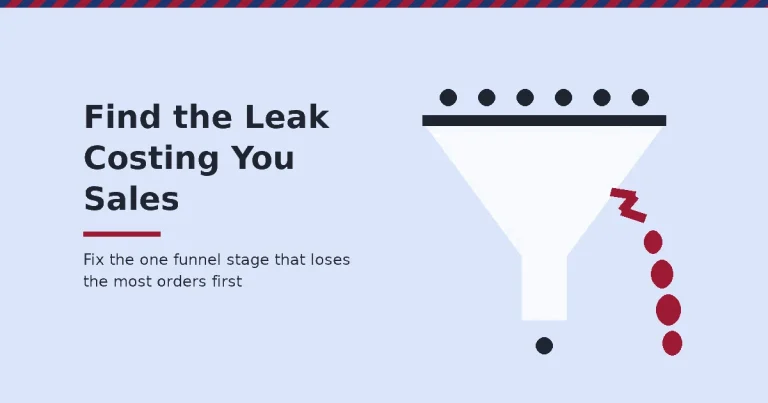
For most stores, it is not. The real leak sits further down the funnel. It comes after someone has already decided to buy, picked a product and reached your checkout. That is the gap this guide targets.
This gap matters more each year, not less. The US Census Bureau reports that online sales now make up 17.1% of total US retail sales, on a seasonally adjusted basis, in its most recent quarter. As more of your category moves online, the stores that fix checkout and trust capture a growing share of that shift. The rest simply buy more traffic to cover the same leak.
A few ground rules. The figures below mostly describe US and global ecommerce averages, so treat your own store’s numbers as the ones that matter most. Surveys like BrightLocal’s and Litmus’s are self-reported. A single real case near the end is illustrative, not proof of what will happen in your market.
How Buyers Actually Decide to Complete a Purchase
A sale is not one decision. It is several small decisions in a row, and a buyer can drop out at any one of them. Understanding where buyers actually drop off is the fastest way to increase online sales without spending more on traffic.
Think of it the way a store owner would think about a physical shop. A shopper who walks in, browses, then walks out at the till without buying is not a traffic problem. They are a checkout problem, and the fix belongs at the till, not on the sign outside.
The Four Stages Where a Sale Is Won or Lost
First, a visitor decides the product is worth considering. Next, they decide your price and terms are fair enough to start checkout. Then, at checkout itself, they decide whether the process feels safe and quick enough to finish. Finally, after delivery, they decide whether to come back and buy again.
Each stage has its own job. Attracting traffic solves the first stage. Clear pricing and good copy solve the second. But the third and fourth stages, checkout and return purchases, need their own separate fixes. Treating all four stages as one problem is why so much effort to increase online sales produces so little extra revenue.
Most “increase online sales” advice only targets the first stage. But Baymard’s data shows the third stage, checkout, is where the largest share of already-interested buyers walks away. On a phone, that drop-off tends to be worse still. Small screens and slow typing add friction a desktop buyer never feels. Our guide on mobile conversion rate covers that case specifically.
Why Checkout Deserves the First Fix
A visitor who reaches checkout has already cleared the hardest step. They have already decided to buy from you specifically. Losing them there is the most expensive kind of loss. You already paid for the traffic, the browsing time and the product decision.
Compare that to a visitor who never clicked your ad at all. That visitor cost you nothing beyond the impression. A near-buyer who leaves at checkout cost you real money. They still left empty-handed. That is why this one stage deserves attention before any other.
That is why this guide treats checkout, trust and retention as the three highest-leverage places to increase online sales, ahead of simply buying more traffic.
Three Levers That Actually Increase Online Sales
Each lever below targets one stage of the funnel above. Work through them in order, since fixing checkout first protects the gains from the other two.
None of the three levers works in isolation. A trust fix sends more visitors into checkout, so a leaking checkout wastes that extra trust. A retention fix only pays off once enough people complete a first purchase to come back for a second one. Order matters here, even though all three ultimately help increase online sales.
Checkout Friction: Built on Named, Fixable Reasons
Checkout abandonment is not mysterious. Baymard’s research lists specific, named reasons. Extra costs revealed too late. A delivery estimate that feels too slow. Security doubts. A forced account. A process that simply takes too many steps.
Every one of those reasons is fixable without a redesign. That makes checkout the lever with the fastest path to more completed sales, not the slowest.
A quick, honest audit of your own checkout against these five reasons often turns up two or three fixes in a single afternoon.
Account creation deserves a specific mention. Baymard’s benchmark found that 42% of leading ecommerce sites still interrupt the checkout flow to push shoppers toward creating an account, right at the point where friction costs the most. Moving that request to after the order confirms, rather than before it, removes one of the five named reasons above without touching anything else in the flow.
Trust Signals: Built Before the Buyer Ever Reaches Checkout
Trust is decided earlier than most stores assume. BrightLocal found that half of shoppers trust online reviews as much as a recommendation from a friend. Doubt that appears on the product page, not just at checkout, already costs you the sale.
The same survey found 31% of shoppers will not buy from a business rated below 4.5 stars at all. So trust is a pass-or-fail filter for a meaningful share of visitors, not a minor nice-to-have.
This matters for any plan to increase online sales, because a trust problem looks exactly like a traffic problem from the outside. Visits stay steady, but sales quietly fall. Most store owners respond by buying more of the same traffic, instead of fixing the doubt sitting on the page.
Repeat Purchase: Built After the First Sale, Not Before
The first sale is the expensive one. Every sale after it costs less to earn, provided you stay in touch with the buyer through a channel they actually check. Email remains the strongest of those channels for retail specifically, based on the Litmus data above.
Our guide to finding and fixing a leaking ecommerce sales funnel covers this stage-by-stage view in more depth, and our guide to customer retention management covers the systems that keep a buyer coming back beyond the first follow-up email.
How to Lead With Each Lever
Each lever above needs a specific first move. Start with whichever stage is losing you the most buyers today, not whichever one is easiest to talk about.
Checkout Friction: Remove the Named Reasons First
Show shipping and any extra fees before the final page, not after. State a realistic delivery window early. Offer a guest checkout option alongside account creation, never instead of it. Each of these targets one of Baymard’s named reasons directly.
Then measure your own cart abandonment rate before and after each change. A small, measured test beats a full checkout redesign guessed at once, and it tells you which single fix actually moved the number.
Do this before you touch anything else on the site. Checkout fixes tend to be cheap, fast to ship and easy to measure. That makes this lever the best place to start whenever you are trying to increase online sales on a limited budget.
Trust Signals: Put Proof Where Doubt Appears
Place real reviews on the product page itself, not only on a separate reviews tab. Show your star rating near the price, where the 4.5-star threshold from BrightLocal’s survey actually gets judged.
Respond publicly to negative reviews rather than hiding them. A visible, reasonable response often does more to build trust than a perfect rating with no reviews at all. Shoppers reading a review page already expect some complaints; what they are actually checking is how the business handled them.
Repeat Purchase: Earn the Second Sale With Email
Collect the email address at the point of purchase, then send one genuinely useful message before you send a discount. A useful first message, such as a clear delivery update or a how-to guide for the product bought, earns attention for the sales message that follows.
Our guide on building a customer loyalty programme that actually pays off covers how to structure the ongoing offer, not just the first follow-up email.
How to Measure Whether You Are Increasing Online Sales
Pick a small set of numbers and track them weekly, not just at the end of the month. That lets you see which lever is actually moving before you spend more on any of them.
Five Numbers Worth Tracking
Write these five numbers down somewhere simple, such as one row per week in a spreadsheet. A plain list works just as well as dashboard software. What matters is seeing the trend over several weeks, not building a perfect tracking system before you start.
Conversion rate is completed purchases divided by visitors; it tells you how well the whole funnel is working together. Cart abandonment rate is filled carts that never reach a completed order; a high rate points straight at checkout friction.
Average order value shows how much each buyer spends per order, and rises when upsell or bundling offers work. Repeat purchase rate shows what share of buyers return within a set window. Revenue per email sent shows whether your retention channel is actually paying for itself.
Read cart abandonment rate and conversion rate together. A rising abandonment rate alongside flat conversion often means more people are reaching checkout but fewer are finishing it. That points straight back to the checkout lever above.
As a rough, illustrative guide, not a verified industry norm: a cart abandonment rate noticeably below the 70% average cited earlier is a reasonable sign your checkout is ahead of most competitors. Use your own trend over several weeks as the real benchmark. Product type and price point shift this number more than any single tactic does.
Common Mistakes That Quietly Cap Online Sales
A few repeat mistakes show up again and again across stores trying to increase online sales. Check your own store against this short list before you change anything else.
- Hiding costs until the last step. This is Baymard’s single largest named reason for abandonment, and the easiest one to fix.
- Treating reviews as decoration. A buried reviews tab wastes the trust effect that BrightLocal’s data shows reviews actually carry.
- Chasing new buyers while ignoring past ones. The first sale is the expensive one; a past buyer is already warmer than any new visitor.
- Running more ads before fixing checkout. More traffic into a leaking checkout simply means more wasted ad spend, not more sales.
- Measuring only revenue, never the stage it came from. Total revenue hides exactly which lever is actually working.
- Copying a competitor’s checkout without testing it. What works for one audience, price point or product type will not always transfer to yours untested.
The One Rule to Increase Online Sales Fastest
If you take one rule from this guide, make it this: fix the stage losing you the most buyers first, even if it is the least exciting stage to work on.
Here is an illustrative example, with invented numbers. A store sends 1,000 visitors to a product page each week. Of those, 200 start checkout, but only 60 finish it. Adding more traffic to reach 2,000 visitors would roughly double browsing, but checkout would still leak the same way, so sales would not double.
Fixing checkout so that 120 of the original 200 finish, instead of 60, doubles sales with no extra traffic spend at all. That is the leverage checkout holds over simply buying more visitors.
The same logic applies to trust and retention, just with a longer timeline. A better review display might lift the conversion rate of visitors who reach the product page. A better follow-up email lifts the share who return next month instead. Stack all three levers, and the gains compound instead of competing for the same budget.
A Real Case: Campaigns Built Around This Kind of Proof
Damola Akanbi is a graduate of Digital Marketing Skill Institute. He left his job and now runs paid digital marketing campaigns for clients, averaging $1,500 per client, as published in the Institute’s own student reviews.
Treat this as one documented example of applying these skills professionally, not a guaranteed income figure. Results depend on the clients, market and effort involved. See our earnings disclaimer for how the Institute frames outcomes like this one.
What makes a case like this repeatable is not luck. It is the same pattern this guide describes. Fix a measurable, named problem first. Show the result. Then use that proof to earn the next client or the next sale.
The same pattern works whether you run your own store or manage sales for someone else’s. Pick one stage, make one fix, measure the change honestly, and let that result open the next opportunity.
Frequently Asked Questions About How to Increase Online Sales
What is the fastest way to increase online sales without more ad spend?
Fix checkout first. Baymard’s research shows roughly seven in ten filled carts never convert. Recovering even a small share of that group usually beats the return from new ad spend.
Do online reviews really affect online sales that much?
Based on BrightLocal’s survey data, yes. Half of shoppers trust reviews as much as a personal recommendation, and a meaningful share will not buy at all below a certain star rating.
Is it better to focus on new customers or repeat customers?
Both matter, but repeat customers cost less to sell to once you have already earned the first sale. A healthy plan to increase online sales works on new traffic and repeat purchase at the same time, not one instead of the other.
How much should shipping costs affect my checkout design?
Significantly. Extra costs revealed late in checkout are the single largest named reason for cart abandonment in Baymard’s research. Showing them early is one of the highest-leverage fixes available.
Does email marketing still work for increasing online sales?
Yes, based on the Litmus data above, particularly for retail and ecommerce specifically. It works best as a relationship channel, not only a discount channel, so lead with useful content before every sales message.
Should I run a loyalty programme to increase online sales?
It can help, but only after checkout and trust are solid. A loyalty programme rewards buyers who already complete a purchase; it cannot fix a checkout that is losing them before that point.
What is a good cart abandonment rate to aim for?
Below the roughly 70% global average cited above is a reasonable start, since even a small reduction recovers sales you have already paid to generate. Track your own rate over time rather than chasing one fixed target number.
What is the single best first step to increase online sales this week?
List every reason a buyer might abandon your checkout, using Baymard’s named reasons as a starting checklist. Fix the single cheapest one first, such as showing shipping costs earlier, then measure the change before moving to the next fix.
Start With the Stage Losing You the Most Buyers
Pick the one stage above that is costing you the most sales right now, and fix it before you spend more on traffic. Checkout usually offers the fastest win, but your own numbers should decide. Write down this week’s number for each of the five metrics above, make one change, then check the same numbers again next week.
If you want structured help building and measuring campaigns like these, the Institute’s Master Diploma in Digital & AI Marketing pairs nine practical courses, including lead generation, email marketing automation and analytics, with unlimited 1-on-1 coaching. You also get real project work inside a US partner company.
The programme carries dual US and UK accreditation. It is recognised in more than 100 countries, studied entirely online, so you can apply what you learn to a real store wherever in your country you run your business. Explore the Master Diploma programme, browse more guides on the digital marketing blog, or read graduate outcomes on the reviews page.
When you are ready, go straight to the application page. Learn more at digitalmarketingskill.com, and whenever you want a second opinion on your funnel, digitalmarketingskill.com is a reasonable place to start, wherever you live.
Every figure in this guide was checked against its original source before publication. Figures marked as illustrative are invented examples, not real results.
![9 Amazing Digital Marketing Skills to Make Money Online [With Proof]](https://digitalmarketingskill.com/wp-content/uploads/2019/07/9-Amazing-Digital-Marketing-Skills-to-Make-Money-Online-With-Proof-17.png)