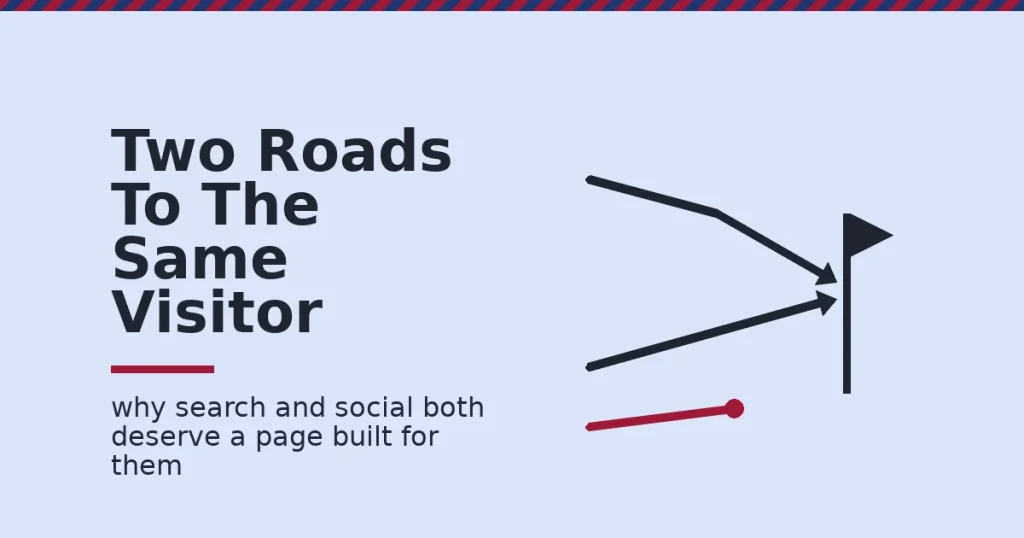
Social media traffic is the visits a site gets from platforms like Facebook, Instagram and TikTok, as opposed to search. It is not a replacement for search traffic; it is a different kind of visitor with a different intent. Knowing which job each channel does well decides where your next hour of marketing time should go, and which exact page you send each visitor to once they arrive.
Key Takeaways
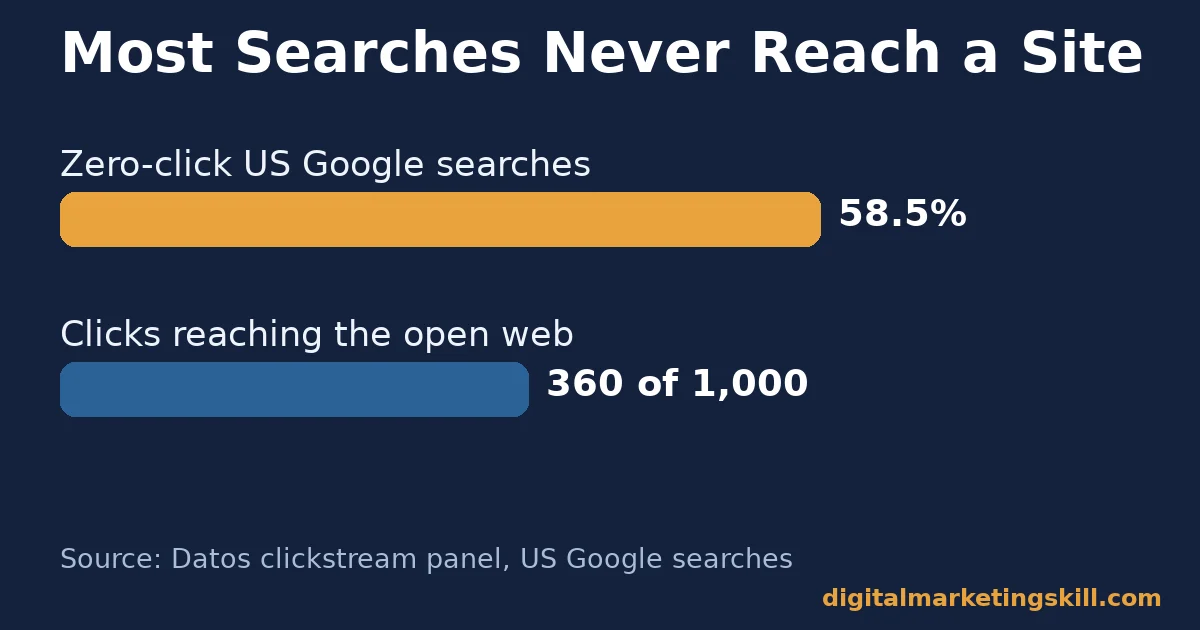
- Most Google searches end without a click. A study using Datos clickstream data found 58.5% of US Google searches resulted in zero clicks to any website.
- Search still leads for brand discovery, but not by much. GWI’s research, reported via DataReportal, found 32.8% of people discover new brands through search engines, against 29.7% through social media ads.
- People use several channels, not one. The same research found the typical adult discovers brands through 5.8 different sources. Search and social media traffic usually work together, not against each other.
- Search intent still shows up every month. DataReportal’s global overview report found 81.5% of online adults use a search engine monthly, a share that has held steady or grown in recent years.
- Social traffic needs a different page than search traffic. A visitor who clicked a search result already typed their question; a visitor who clicked a social post did not.
In this guide
- What Most “Social vs Search” Advice Gets Wrong
- Why Social Media Traffic and Search Traffic Are Not Competing
- Social Media Traffic and Search Traffic Differ By Intent
- How to Win Visitors From Each Channel
- How to Measure Social Media Traffic Properly
- The One Decision Rule: Match the Page to the Channel That Sent the Click
- A Real Case: How a Clickstream Panel Measured the Zero-Click Shift
- Frequently Asked Questions About Social Media Traffic
- Start By Checking Where Your Traffic Actually Comes From
What Most “Social vs Search” Advice Gets Wrong
Most advice treats social media traffic and search traffic as rivals competing for the same budget. Pick a side, the advice says, and focus there. That framing misses what each channel actually does. It also assumes a marketer only has one slot of attention to give, when most small teams can run both at once.
A searcher and a social scroller are not the same person in a different mood. They arrived with different intent, so they need a different page when they land. This guide treats the two as complementary jobs, not competing channels. It shows how to serve each one properly, using what the visitor actually needed in that moment.
A ground rule before the numbers: the zero-click and discovery figures below are global or US averages from named panels and surveys. They are not guarantees for your own site. Treat them as context for why both channels matter. Check your own analytics for what actually happens on your site, since your audience, product and market will all shift the real numbers.
Why Social Media Traffic and Search Traffic Are Not Competing
Search and social media solve different problems for the same person, often in the same week. Understanding why both still matter starts with two recent shifts in how people actually search and discover. Both shifts point the same direction: toward more channels sharing the work, not one channel winning outright.
The Zero-Click Shift Changes the Comparison
Comparing “social traffic” against “search traffic” assumes every search still sends a click somewhere. It increasingly does not. A study by Datos, a Semrush company, tracked tens of millions of real panelists on desktop and mobile devices. It found 58.5% of US Google searches ended with no click to any website at all.
Of the clicks that did happen, a large share stayed inside Google’s own properties, such as Maps, Images and YouTube, rather than reaching an independent site. A shrinking share of all searches ever reaches your page, no matter how well you rank. That makes other discovery channels, including social media traffic, more important than a ranking position alone suggests.
Discovery Is Not One Channel Anymore
GWI’s research, reported through DataReportal, found people discover new brands through 5.8 different sources on average. Search engines led at 32.8%, with social media ads close behind at 29.7%. Word of mouth and other channels made up the rest. No single channel comes close to a majority on its own. That is itself useful information for where to spend a limited marketing budget.
That gap between search and social is smaller than most marketing advice implies, and it keeps narrowing. For visitors aged 16 to 34 specifically, the same research found social media ads were the single largest source of brand awareness, ahead of search.
So which channel deserves more attention depends heavily on who your customers actually are. A store selling to teenagers and a firm selling to retirees should not split their attention the same way. Even a similar product can need a different channel mix depending on who buys it.
Social Media Traffic and Search Traffic Differ By Intent
The averages above blend many kinds of visitors. In practice, what a visitor needs from your page depends on one thing. Did they arrive already looking for an answer, or were they simply scrolling when something caught their eye?
Search Traffic: Built On an Existing Question
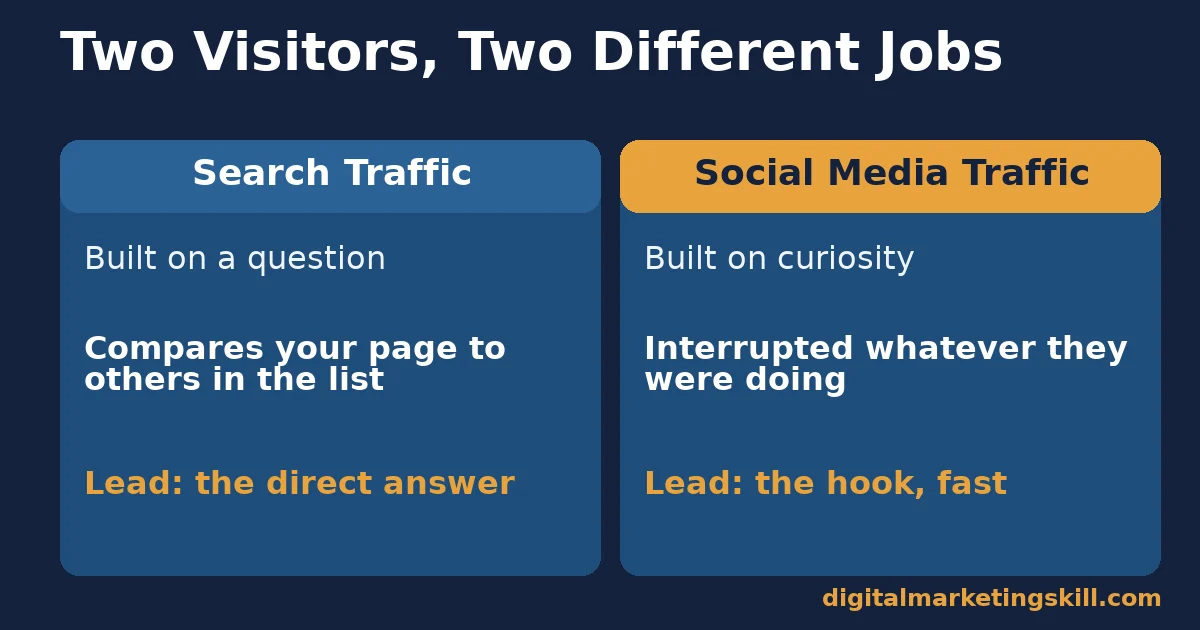
Think of search traffic as a visitor walking into a shop and asking a specific question at the counter. They expect a direct answer, not a tour of the whole store.
A search visitor typed a specific question or phrase before they ever saw your page. They compared your result against several others in the same list. They expect the answer to be where they can find it fast. Patience is short, but not because the visitor is distracted; it is because they already know exactly what they want.
This visitor rewards a direct, specific answer near the top of the page. They are also more likely to be close to a decision already, since searching takes more effort than scrolling a feed. Typing a question and reading a results page is a small, deliberate act, and a page that honours it tends to earn trust quickly.
Social Media Traffic: Built On Curiosity, Not a Question
Think of social media traffic as someone stopping at a shop window because something in the display caught their eye. They were not planning to shop; the display has to earn the visit on its own.
A social visitor did not ask a question. A headline, an image or a friend’s share interrupted whatever they were doing and earned one click. Their patience for a slow or unclear page is much lower, because they were not looking for you specifically. That one click is borrowed attention, not sought-out intent, and it does not last long.
This visitor rewards a page that delivers exactly what the post promised, fast. If the gap between the social post and the page is too wide, they leave within seconds and rarely give the brand a second chance. A clever headline that the page does not back up costs more in lost trust than it earns in clicks.
How to Win Visitors From Each Channel
Each channel needs a different first move from your page. Match the fix to whichever channel sends you the most visits today. A small store with limited time should fix one channel fully before splitting attention across both, then move to the second once the first is in reasonable shape.
Search Traffic: Lead With the Direct Answer
A page built for search traffic is judged within seconds against the other results the visitor could have clicked instead, so clarity matters more than cleverness here.
Put the answer to the likely search query in the first two or three sentences, using the words a searcher would actually type. Structure the rest of the page with clear subheadings, since searchers scan before they commit to reading.
- Match the page to the query’s intent. A “how to” query wants steps; a “best” query wants a comparison.
- Answer first, explain second. State the answer before the background or the story behind it.
- Keep ranking content updated. A page that stops matching current best practice slowly loses the ranking that sends it traffic.
- Link related pages together. A searcher who stays on your site to find a second answer is worth more than one who leaves after the first page.
Google’s own guidance on helpful, people-first content asks whether a reader will “leave feeling they’ve learned enough” to solve their problem. That question is a useful test for any page built to attract search traffic.
Social Media Traffic: Lead With the Hook, Not the Answer
A page built for social media traffic is judged against whatever the visitor was doing before they clicked, not against a list of competing results, so speed and payoff matter more than depth here.
Write the social post after the content is finished, pulling the single strongest point from the piece as the hook. Then make sure the page delivers that exact point within the first screen, so the visitor’s trust is rewarded immediately. Writing the post last, rather than first, keeps the promise honest because it is pulled from something that already exists.
- Keep the opening short. A long introduction loses a visitor who was not looking for you in the first place.
- Repeat the hook near the top. The point that earned the click should appear again, fast, once they land.
- Make sharing easy. A visitor who finishes the page is a candidate to share it onward, so do not bury the share option.
- Give them a reason to come back. A visitor who arrived once by chance rarely returns unless something, such as an email sign-up, makes that easy.
How to Measure Social Media Traffic Properly
Judge each channel by what it is actually good at, not by a single shared metric. A channel built for discovery and a channel built for intent will never look equal on a pure conversion-rate comparison. Holding both to the same number is how good channels get cut for the wrong reason.
Four Numbers That Separate the Channels
These four numbers show whether your social media traffic and search traffic are each doing the job they are good at, rather than being forced into a single unfair comparison. Pull them from the same reporting period each time you check, so a weekend spike or a holiday does not skew the trend.
- Traffic by source. The share of visits attributed to search, social and other channels, visible in Google Analytics. Track the trend by channel over several months, not just the total for one week.
- Engagement rate by source. The share of sessions from each channel that engage meaningfully, rather than bouncing in seconds. A low social engagement rate often means the page did not match the post’s promise.
- New vs returning visitors by source. Search tends to bring more new visitors with intent already formed. Social can bring either new or returning visitors, depending heavily on the content and who shared it.
- Assisted conversions. A visit that does not convert immediately but returns later through another channel, visible in Google Analytics attribution reports. Social media traffic often plants the seed that search or direct traffic later closes.
How to Read These Numbers Together
Read traffic by source and engagement rate by source together. A channel with rising traffic but falling engagement is sending visitors to the wrong page, not just the wrong amount of visitors. Fix the page before cutting the channel; the channel may be doing its job perfectly well.
Check assisted conversions before deciding a channel “does not work.” Social media traffic frequently supports a sale that search or email ultimately closes, so judging it only on last-click conversions undercounts its real value.
The One Decision Rule: Match the Page to the Channel That Sent the Click
If you remember one rule from this guide, make it this one: build or adjust the landing experience to match the intent of the channel sending the click, rather than sending every channel to the same generic page. A single all-purpose page is usually a compromise that serves no visitor particularly well.
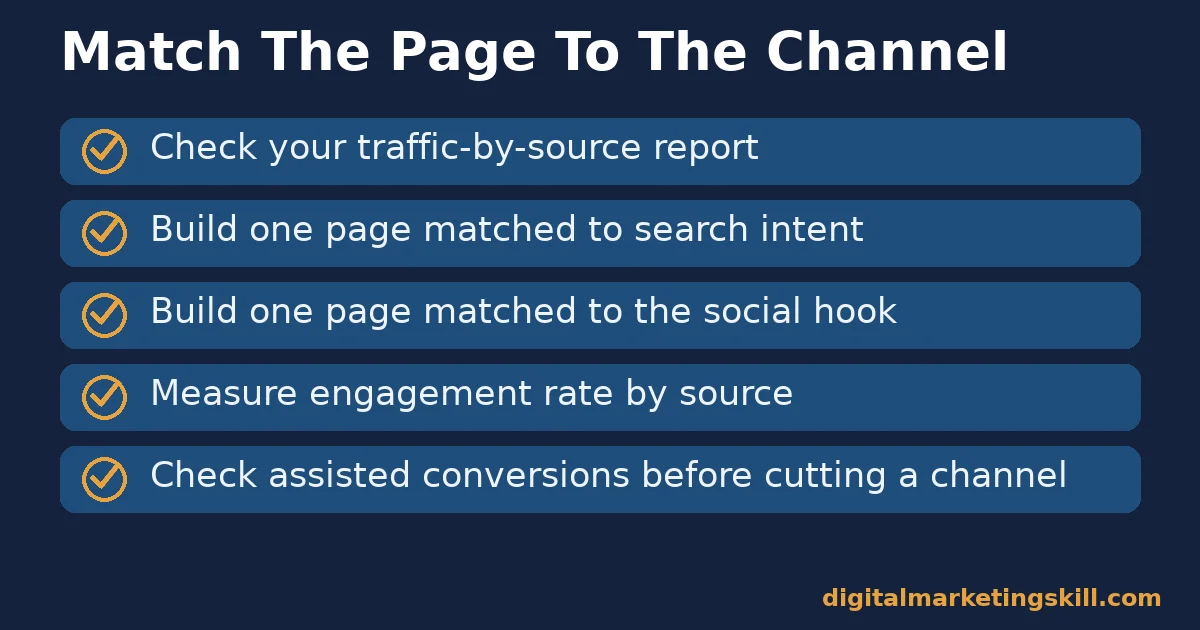
Here is an illustrative example, with invented numbers. A small course provider sends both search and social visitors to the same long homepage. Search visitors convert at 1.8%, and social visitors convert at 0.4%.
The team builds a short, hook-matching landing page specifically for social campaigns, repeating the exact promise from each ad. Social conversion rises to 1.1%. Search traffic, still landing on the original page, is untouched.
The fix did not require more traffic from either channel. It matched each channel’s visitor to a page built for the intent that channel actually carries.
A Real Case: How a Clickstream Panel Measured the Zero-Click Shift
Datos, the Semrush-owned research company behind the zero-click study above, built its findings from a clickstream panel rather than a one-off survey, because real behaviour is easy to misreport and hard to recall accurately. A survey asks someone to remember what they did; a panel simply records it as it happens.
According to the published study, the panel tracks tens of millions of real users across desktop and mobile Android devices, covering a sustained stretch of search activity. It found that for every 1,000 US Google searches, only 360 clicks reached a site outside Google’s own properties.
The limit is worth stating plainly: the panel has limited coverage of iPhone users and a shorter history of mobile data than desktop data, and ad blocker use can undercount paid clicks while overcounting organic ones. Treat the exact figures as a strong directional signal, not a precise count for every device and market.
The broader lesson applies beyond this one study. Any traffic or discovery figure you read, including the ones in this guide, comes from a specific panel, survey or market. Check what that panel actually measured before you treat its number as a rule for your own business.
Frequently Asked Questions About Social Media Traffic
Is social media traffic less valuable than search traffic?
Not less valuable, just different, and both are worth real budget and real attention. Search traffic tends to convert faster because the visitor already has a question in mind. Social media traffic often plants awareness that converts later, through search or direct visits, so judging it only on immediate conversions understates its role. A fair comparison looks at the full customer journey, not a single visit.
Why do so many Google searches end without a click?
A study using Datos clickstream data found 58.5% of US Google searches ended with no click at all, with many of the remaining clicks staying inside Google’s own properties rather than reaching an outside site. Features that answer the question directly on the results page, rather than linking out, are a large part of the shift.
Does this mean SEO is no longer worth the effort?
No, but it changes the comparison. A shrinking share of searches ever reaches an outside site, so a strong ranking alone delivers less traffic than it used to. SEO still matters for the searches that do click through; it just cannot be your only discovery channel anymore.
Should a small business focus on search or social media first?
It depends on the audience. GWI’s research found social media ads are the top brand-discovery channel for 16 to 34 year olds specifically, while search leads for the overall population. Check your own customer age range before choosing where to invest first. If you genuinely do not know, a short customer survey asking “how did you first hear about us” is cheaper than guessing.
Does the same landing page work for search and social traffic?
Usually not well. A search visitor already has a question in mind and wants a direct answer; a social visitor needs the page to match the exact hook that earned the click. A generic page built for neither visitor under-serves both. If you can only build one new page, match it to whichever channel sends the most visits today.
How many channels does a typical customer use before buying?
GWI’s research found the typical adult discovers brands through 5.8 different sources, so most customers encounter a brand more than once, often across both search and social, before they convert. Trying to credit one single channel with the entire sale usually misreads what actually happened.
What should I measure to compare social and search fairly?
Track traffic by source, engagement rate by source, and assisted conversions, not just last-click conversion rate. A channel that supports a later sale through another channel is still doing real work, even if it rarely closes the sale itself. Looking at only the final click before a sale is one of the most common ways small teams misjudge a channel.
Start By Checking Where Your Traffic Actually Comes From
Social media traffic and search traffic are not competing for the same job. They do different work at different points in a visitor’s decision. Check your own traffic-by-source report, build one page matched to each channel’s intent, and measure engagement rate by source before deciding either channel “does not work.”
Our guide to website traffic strategies covers the channels beyond these two, and our guide on finding customers on Facebook covers one social channel in more depth.
Once you know where your traffic comes from, our guide to Google Analytics traffic sources shows how to read the full channel breakdown, and our social media marketing checklist covers the weekly habits that keep social media traffic consistent.
If you want guided practice building strategy across both channels, Digital Marketing Skill Institute teaches these skills hands-on. The Master Diploma in Digital & AI Marketing includes nine practical courses, among them AI-powered SEO and content marketing and AI-powered social media marketing, with unlimited 1-on-1 coaching and real project work inside a U.S. company. It is dual US and UK accredited, recognised in more than 100 countries.
The programme is fully online, so you can study from anywhere in your country. Find more guides on the Digital Marketing Skill Institute blog, and when you are ready, apply for the Master Diploma or start from the Digital Marketing Skill Institute homepage.
Every figure in this guide was checked against its original source before publication. Figures marked as illustrative are invented examples, not real results.
![9 Amazing Digital Marketing Skills to Make Money Online [With Proof]](https://digitalmarketingskill.com/wp-content/uploads/2019/07/9-Amazing-Digital-Marketing-Skills-to-Make-Money-Online-With-Proof-17.png)