
Podcast Marketing is the use of podcasts to reach and grow an audience, either by running your own show or by advertising and appearing as a guest on other people’s shows. Podcasts give you long, focused time with listeners, often while they drive, walk or work. As a result, they can build trust in a way that short ads rarely do. They also give you a steady supply of content to reuse across social media, email and your blog.
Key Takeaways
- Podcast marketing covers three main routes: your own show, guest spots and paid ads on other shows.
- Podcasts reach people in quiet, focused moments, which helps build trust.
- Your show title, description and artwork shape how listeners find and judge you.
- Video podcasts on platforms like YouTube can widen your reach.
- Each episode can be turned into clips, posts, blogs and emails.
What Is Podcast Marketing?
A podcast is a series of audio or video episodes that people can stream or download. Podcast marketing uses that format to tell your brand’s story. For example, a software company might host a weekly show with tips for its users. Meanwhile, a coffee brand might sponsor a food podcast to reach new fans.
So there are two sides to it. On one side, you market through a podcast. On the other side, you also market the podcast itself, so that more people find and follow it. Both sides matter, because a great show with no listeners won’t help your business.
Think of a podcast as a radio show that people choose on purpose. Nobody stumbles into a 40-minute episode by accident. Instead, they pick it because the topic or the host interests them. That choice is what makes podcast audiences so engaged.
Podcast marketing is part of wider content marketing. However, it has its own tools, platforms and habits, which this page explains.
Why It Matters
Why does it work so well? First, listeners spend a long time with you. Next, they often hear the same host every week, which builds familiarity. In addition, many shows serve niche topics, so you can reach a very specific audience. As a result, podcasts are strong for brand awareness and trust. They are especially useful in B2B, where buyers want expert views before they talk to sales.
How Podcast Marketing Works
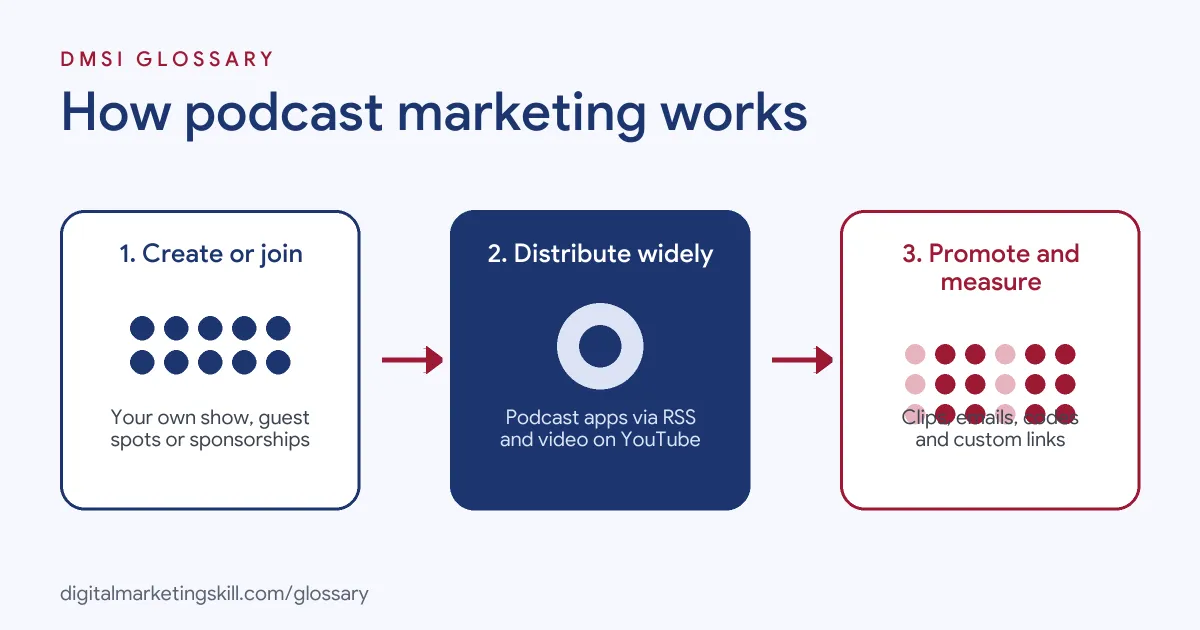
Podcast marketing works in a simple loop. First, you create or join episodes that serve a clear audience. Then you distribute them on podcast apps and video platforms. Finally, you promote each episode and measure what happens next.
Your Own Show
Running your own show gives you full control. You choose the topics, guests and format. Then you publish through a podcast host, which creates an RSS feed. Apple explains that “An RSS feed contains all the metadata of a podcast.” In other words, the feed tells apps your show name, artwork and episode details.
Guesting and Sponsorship
Alternatively, you can use other people’s audiences. As a guest, you share your expertise on an existing show. As a sponsor, you pay for an ad read, often by the host. Host-read ads can feel more like a recommendation than a normal ad. So they work best when the brand fits the show closely. This approach is close to influencer marketing, because you borrow the host’s trust.
Discovery on Podcast Apps
Next comes discovery. Apple’s guide warns, “Pay close attention to the title as Apple Podcasts uses this field for search.” It also advises, “Include keywords within your description to make it easy for listeners to find you.” Your artwork matters too. Apple says its purpose “is to stand out and catch your listener’s eye when they’re looking for a show.”
Video Podcasts
Many shows now publish video as well as audio. For example, on YouTube, “a podcast show is a playlist, and podcast episodes are videos in that playlist.” Google’s help page says eligible podcasts can get extra features, such as wider discovery and recommendations. So video can open a second audience for the same episode, and it links naturally with video marketing.
Promotion and Measurement
After that, each episode needs a push. For example, you can cut short clips for social media, quote the guest in a post and send the episode to your email list. Also, you can ask guests to share it with their own followers. Then you measure the results. Downloads and follows show reach. However, they don’t show business impact on their own. So many marketers add a short web address, a discount code or a simple “how did you hear about us” question. As a result, they can link listening to visits, leads and sales. In addition, comments and reviews give useful feedback on which topics people want next.
Planning Your Episodes
Good shows start with a plan. First, list the questions your customers ask most. Next, turn each question into an episode idea. Then group the ideas into themes, so you can build a simple content calendar. Also, line up guests early, because booking takes time. Finally, record a few episodes before launch. That way, you can keep a steady schedule even in busy weeks.
Examples of Podcast Marketing
- A B2B software firm. The company launches a show that interviews customers about their workflows. Then the sales team shares relevant episodes with prospects before calls.
- A local fitness studio. The owner appears as a guest on a regional health podcast. As a result, new listeners visit the studio’s site through a short, memorable web address.
- An online skincare shop. The brand sponsors a beauty podcast with host-read ads. It uses a unique discount code, so it can see which sales came from the show.
Podcast Marketing vs Other Content Channels
| Point | Podcast marketing | Blog content | Short-form video |
|---|---|---|---|
| Typical length | Long episodes | Medium to long articles | Seconds to a few minutes |
| How people consume it | Often while doing something else | Reading on a screen | Scrolling a feed |
| Main strength | Trust and loyalty | Search traffic | Fast reach |
| Main challenge | Discovery and tracking | Competition in search | Short attention spans |
How to Start Podcast Marketing
- Set your goal. Decide if you want awareness, leads or customer loyalty. This shapes every other choice.
- Define your audience. Pick a clear listener and a topic they care about.
- Choose your route. Start your own show, pitch yourself as a guest or sponsor existing shows.
- Plan your format. Choose interviews, solo episodes or panels, and set a regular schedule.
- Prepare your listing. Write a clear title and description, and design artwork that reads well at small sizes.
- Publish widely. Use a podcast host to send your feed to the main apps. Then consider a video version on YouTube.
- Promote each episode. Share clips on social media, send it to your email list and add it to your blog.
- Track results. Use custom links, UTM parameters, codes and simple surveys to see what drives action.
Best Practices for Podcast Marketing
- Serve the listener first. Useful, honest episodes build trust. Constant selling drives people away.
- Stay consistent. Publish on a steady schedule so listeners know when to expect you.
- Make a trailer. A short trailer helps new listeners decide quickly.
- Repurpose every episode. Use content repurposing to turn one recording into clips, quotes and posts.
- Pick shows that fit. When you sponsor or guest, choose shows whose listeners match your customers.
- Give a clear next step. End with one simple call to action, such as a short web address.
Common Mistakes to Avoid
- Starting without a goal. Without one, you can’t judge if the show is working.
- Poor audio quality. Listeners forgive a lot. However, bad sound often makes them leave.
- Publishing and forgetting. Episodes need promotion, just like any other content.
- Vague titles. Clever names that hide the topic make your show hard to find.
- Measuring only downloads. Also look at site visits, sign-ups and sales linked to the show.
Where You’ll Use Podcast Marketing at Work
Podcast skills show up in content, events, media buying and audio sales roles. For example, real remote job listings ask for:
- “Define the show with executive stakeholders: concept, format, name, audience, episode structure, and cadence.” (Webinar & Podcast Manager).
- “Ideal background: national audio sales, podcast advertising, digital media, or network/agency sales at a major media company.” (National Account Executive Podcast).
- “Record and produce high-quality audio and/or video podcast episodes using professional-grade tools.” (Podcaster).
Learn It in the Social Media and Paid Social Track
You can learn to promote podcasts and repurpose episodes across channels in the AI-Powered Social Media Management and Advertising track. Every track includes a U.S. Project Internship from day one, with unlimited 1-on-1 mentoring.
Frequently Asked Questions
Do I need my own podcast to do podcast marketing?
No. You can appear as a guest or sponsor other shows. Many brands start this way before launching their own.
How do people find new podcasts?
They search in podcast apps, follow recommendations and hear about shows on other podcasts or social media. So a clear title and description help a lot.
How do I measure podcast marketing?
Track downloads and follows first. Then use custom links, discount codes and “how did you hear about us” questions to link listening to action.
Should my podcast have video?
It can help. For example, YouTube treats a podcast as a playlist of videos, which can reach a new audience.
How long should an episode be?
There is no fixed rule. Instead, make it as long as the topic needs, and keep the length fairly consistent.
Sources: Apple Podcasts for Creators: Present your podcast; Apple Podcasts Connect: A Podcaster’s Guide to RSS; YouTube Help: Create a podcast in YouTube Studio; remote job listings on Himalayas, Himalayas and Himalayas.