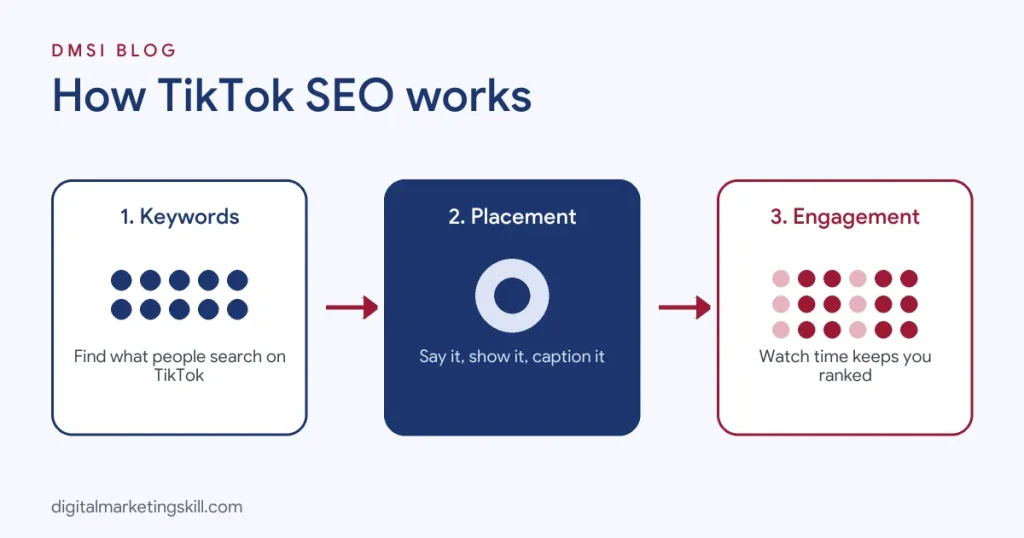
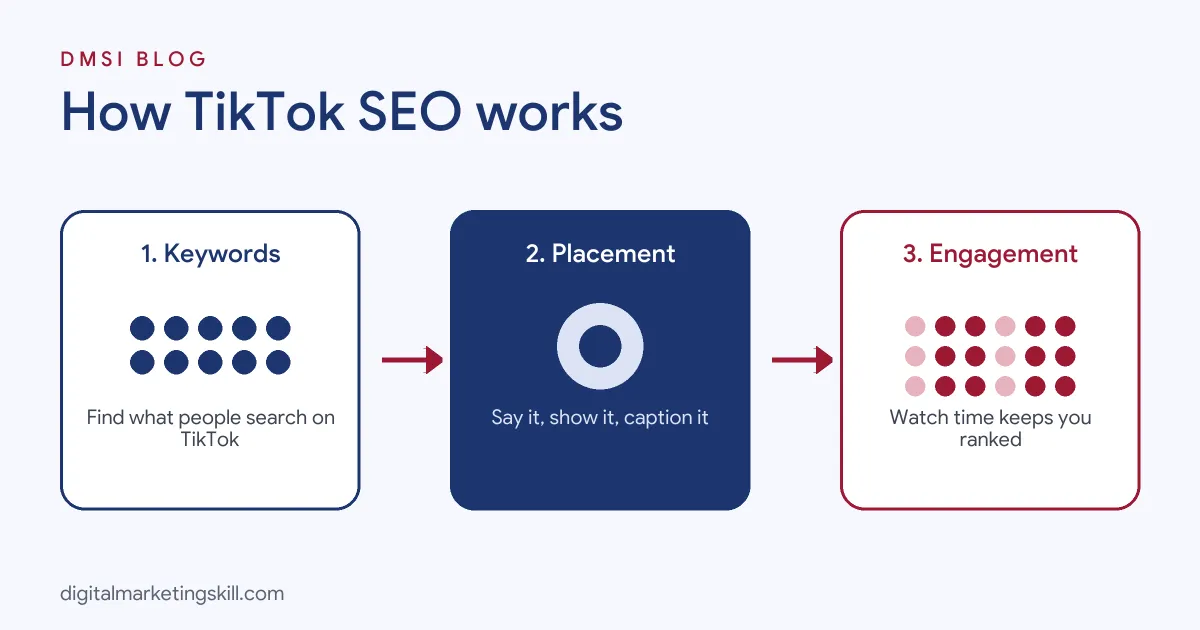
TikTok SEO is the practice of optimising your videos and profile so they appear when people search on TikTok, and so TikTok understands who to show them to on the For You feed. It works by putting the words your audience searches for into the places TikTok reads: what you say out loud, the text on screen, your caption, your hashtags and your profile. Engagement still decides how high a video ranks, so the best TikTok SEO pairs the right keywords with videos people watch to the end. Done well, it gives your videos a second life: instead of fading after 48 hours, a search-optimised video can keep bringing in views for months.
This guide explains how TikTok search works, how to find keywords, exactly where to place them, how TikTok videos can also rank on Google, and the mistakes that hold accounts back. It builds on our TikTok marketing strategy guide.
Key Takeaways
- TikTok says its recommendations use viewer interactions, video information such as captions, sounds and hashtags, and device and account settings.
- TikTok has stated that follower count is not a direct factor in recommending videos, so new accounts can rank in search.
- Pew Research Center found that 37% of U.S. adults use TikTok, and about one in five regularly get news there, a sign of how many people now look things up on the app.
- TikTok captions can run to thousands of characters, giving you room to describe a video with natural keywords.
- Google search results often include a short videos section that features TikTok clips, so TikTok SEO can also drive visibility on Google.
In this guide
- What Most TikTok SEO Guides Miss
- What Is TikTok SEO?
- Why TikTok SEO Matters
- How TikTok Search Ranks Videos
- How to Find TikTok Keywords
- Where to Put Keywords: 8 Places TikTok Reads
- How to Optimise Your TikTok Profile for Search
- Creating Search-Friendly TikTok Videos
- How TikTok Videos Rank on Google
- TikTok Search Ads
- TikTok SEO Tools
- A 30-Day TikTok SEO Plan
- TikTok SEO Mistakes to Avoid
- How to Measure TikTok SEO
- The One Rule for TikTok SEO
- An Illustrative Case
- Frequently Asked Questions About TikTok SEO
- Your Next Step
What Most TikTok SEO Guides Miss
Most TikTok SEO advice boils down to “add keywords to your caption and use hashtags.” That is part of it, but it misses how people actually use TikTok search and what makes a video worth ranking.
- Search intent is different on TikTok. People search TikTok for ideas, demonstrations, opinions and real experiences: “easy jollof rice recipe,” “what I eat in a day,” “Canva tutorial for beginners.” They want to see it done, not read about it. Videos that show beat videos that tell.
- Keywords only get you considered. Putting the right words in your video helps TikTok decide what it is about. Whether it ranks well still depends on how people respond. A keyword-stuffed video that people abandon will not stay at the top.
- Your account is a topic signal. An account that posts consistently about one subject builds relevance for that subject. Random posting makes every video work harder.
What Is TikTok SEO?
TikTok SEO means applying search engine optimisation principles to TikTok. Just as a website optimises pages to rank on Google, a TikTok creator or brand optimises videos to rank in TikTok’s search results and suggested searches.
TikTok has grown into a discovery tool. People open the search bar to find recipes, product reviews, travel tips, study help, fashion ideas and how-to guides. When your video matches what they type and holds their attention, TikTok can surface it again and again, long after the first burst of views from the For You feed.
TikTok SEO covers three layers:
- Video-level SEO: spoken keywords, on-screen text, captions, hashtags and the title or cover.
- Account-level SEO: your name, username, bio, playlists and the consistency of your topic.
- Engagement signals: watch time, completion, shares, saves and comments that tell TikTok a video satisfies searchers.
Why TikTok SEO Matters
TikTok is no longer just a place to scroll. Pew Research Center found that 37% of U.S. adults use it, and about one in five regularly get news there, up from 3% in 2020. Many younger users treat it as a first stop for answers.
For marketers, that creates three advantages:
- Longer video life. For You views often fade after a couple of days. Search views can continue for months, because people keep searching the same questions.
- Higher intent. Someone searching “best budget microphone for YouTube” is closer to buying than someone casually scrolling.
- Compounding results. Each search-optimised video adds another entry point to your account. Over time, a library of answers can bring steady traffic.
How TikTok Search Ranks Videos
TikTok has explained that its recommendation system weighs:
- User interactions: likes, shares, comments, follows, watch time, completion and rewatches.
- Video information: captions, sounds, hashtags, effects and other details that describe the content.
- Device and account settings: language, country and device type, which carry less weight.
For search, relevance matters too. TikTok reads the words in your caption and on-screen text, and it can transcribe what you say. If your video clearly matches a search term and people who find it watch and engage, it is more likely to rank. TikTok has stated that follower count and previous viral videos are not direct factors, which is why small accounts can rank for specific searches.
Think of ranking as two questions. First: is this video about what the person searched? Keywords answer that. Second: did people who saw it find it useful? Engagement answers that. You need both.
How to Find TikTok Keywords
Keyword research on TikTok is quick and mostly free.
1. Use the TikTok Search Bar
Type a seed term related to your niche and look at the autocomplete suggestions. These come from real searches. Then open the results and scroll to suggested searches such as “Others searched for,” which reveal related phrases. For example, typing “digital marketing” might suggest “digital marketing for beginners,” “digital marketing jobs” and “digital marketing course.”
2. Check Creator Search Insights
TikTok offers a Creator Search Insights tool to eligible accounts. Search for it in the app to see trending searches in categories and, in some cases, “content gap” topics where people search but few good videos exist. Content gaps are excellent opportunities.
3. Explore TikTok Creative Center
TikTok’s Creative Center shows trending hashtags, songs, creators and top ads by country and industry. Use it to spot rising topics and the language people use around them.
4. Mine Comments for Questions
Your comments, and comments on popular videos in your niche, are full of keywords. Questions like “how do you do this on mobile?” or “does this work for small businesses?” are exact phrases people would search.
5. Use Google and Keyword Tools
Google autocomplete, Google Trends and tools that show TikTok keyword ideas can add more options. Prioritise long-tail keywords: specific phrases like “how to price freelance social media management” are easier to rank for than broad terms like “social media.”
6. Match the Intent
Before filming, search the keyword yourself. What do the top videos have in common? Tutorials, reviews, lists or stories? Make a video that matches the search intent but does it better: clearer, faster, more complete or more current.
Where to Put Keywords: 8 Places TikTok Reads
Once you have a main keyword, place it naturally in these spots.
| Placement | How to use it | Example for “Canva tutorial for beginners” |
|---|---|---|
| Spoken words | Say the keyword in the first few seconds | “Here’s a Canva tutorial for complete beginners.” |
| On-screen text | Add it as your hook headline | “Canva tutorial for beginners (5 minutes)” |
| Caption | Write a natural description with the keyword and related terms | “Easy Canva tutorial for beginners: make an Instagram post from a template…” |
| Hashtags | Three to five specific tags | #canvatutorial #canvatips #graphicdesignforbeginners |
| Auto-captions | Turn on captions so spoken words are text | Subtitles show the keyword as you say it |
| Cover or title text | Make the topic clear on your cover image | “Canva for Beginners” |
| Profile and playlists | Group videos under keyword-rich playlist names | Playlist: “Canva Tutorials” |
| File and sound choices | Pick relevant sounds; name files descriptively | canva-tutorial-beginners.mp4 |
Write for people first. A caption that reads naturally and includes the keyword once or twice is better than a list of repeated phrases.
How Many Hashtags for TikTok SEO?
Three to five relevant hashtags is a good rule. Mix one or two broader niche tags with specific ones that describe the video. Generic tags like #fyp or #viral tell TikTok almost nothing about your content, so skip them.
How to Optimise Your TikTok Profile for Search
Your profile tells TikTok and searchers what your account is about.
- Name field: include a keyword alongside your name, such as “Ada | Social Media Tips,” because the name field is searchable.
- Username: keep it simple and memorable; add a niche word if it fits.
- Bio: say who you help and what you post in one clear line, using natural keywords.
- Playlists: where available, group videos into playlists with descriptive names that match searches.
- Pinned videos: pin your best search-friendly videos so visitors see your expertise straight away.
- Consistency: post mostly about your core topics so TikTok associates your account with them.
Creating Search-Friendly TikTok Videos
Keywords bring people in; the video keeps them. These formats tend to rank well in search:
- Tutorials and how-tos that solve one problem quickly.
- Answers to specific questions, often using the question as the hook.
- Reviews and comparisons, such as “Canva vs CapCut for beginners.”
- Lists like “5 free tools for small business marketing.”
- Explainers that break down a term or trend in plain language.
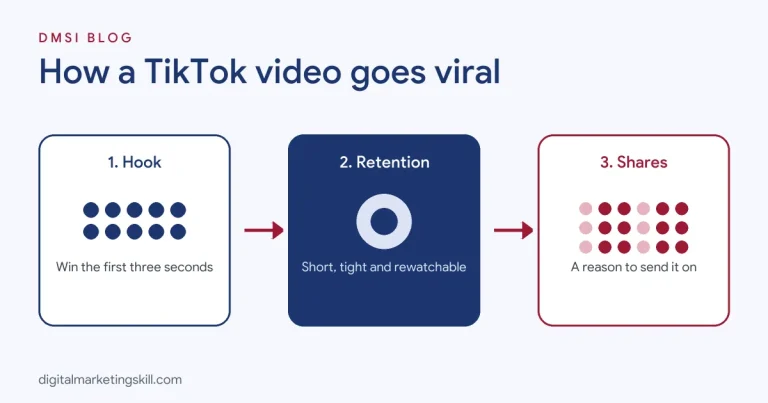
Open with the answer or result, keep the video tight and deliver exactly what the keyword promised. If someone searches “how to schedule TikTok posts” and your video spends 20 seconds on an introduction, they will leave, and your ranking will fall. Our guide on how to go viral on TikTok covers hooks and retention in detail.
How TikTok Videos Rank on Google
TikTok SEO can help you on Google too. Google often shows a short videos section in its results, and TikTok clips appear there for many queries, especially how-to, recipe, product and entertainment searches. Google also indexes public TikTok profiles and videos.
To improve your chances:
- Use clear, descriptive captions with your main keyword near the start.
- Answer common questions directly, because Google favours content that matches search intent.
- Embed your best TikToks in related blog posts on your website, which adds context and can send traffic both ways.
- Keep your account public and consistent in topic.
This is one reason TikTok and YouTube SEO work well alongside a website: short videos capture attention, while longer content and blog posts capture deeper search demand.
TikTok Search Ads
TikTok also lets advertisers show ads in search results. Through TikTok Ads Manager, you can enable search placement or run dedicated search campaigns targeted to keywords, depending on availability in your market. Search ads appear alongside organic results, marked as sponsored.
Use organic TikTok SEO to learn which keywords bring engaged viewers, then test search ads to capture more of that demand. As with all TikTok ads, judge them on cost per lead or sale, not views.
TikTok SEO Tools
- TikTok search bar and suggestions: free, real-time keyword ideas.
- Creator Search Insights: trending searches and content gaps for eligible creators.
- TikTok Creative Center: trending hashtags, songs and creators by country.
- TikTok Studio analytics: shows how much traffic each video gets from search.
- Google Trends and autocomplete: useful for spotting rising topics.
- Keyword research tools with TikTok or social keyword features, for larger keyword lists.
- CapCut: adds auto-captions and text overlays so keywords appear on screen.
A 30-Day TikTok SEO Plan
If you are starting from scratch, this simple plan turns the ideas above into action.
- Days 1 to 3: research. List 30 keywords from the TikTok search bar, Creator Search Insights and your comments. Group them into three or four themes that match your content pillars.
- Days 4 to 5: fix your profile. Add a keyword to your name field, rewrite your bio in one clear line and create playlists for your main themes.
- Days 6 to 20: publish. Post one search-focused video a day or every other day. Each video targets one keyword, says it in the first sentence, shows it on screen and repeats it naturally in the caption.
- Days 21 to 25: review. Check search traffic for every video. Note which keywords brought views that kept growing after the first week.
- Days 26 to 30: double down. Make follow-up videos on your best keywords, answering related questions from comments, and link them together with playlists and replies.
After 30 days, you will have a small library of search-friendly videos and real data on what your audience looks for. Repeat the cycle every month, retiring keywords that do not work and expanding the ones that do.
TikTok SEO Mistakes to Avoid
- Keyword stuffing. Repeating the same phrase in captions and hashtags looks spammy and reads badly.
- Mismatch between keyword and video. If the video does not deliver what the keyword promises, people leave and rankings drop.
- Slow openings. Searchers want answers fast. Put the payoff first.
- Generic hashtags only. #fyp and #viral do not describe your video.
- No spoken keyword. Saying the topic out loud helps both TikTok and viewers.
- Scattered topics. An account that covers everything ranks for nothing.
- Ignoring analytics. If you never check search traffic, you cannot learn which keywords work.
How to Measure TikTok SEO
In TikTok Studio, open a video’s analytics and look at traffic sources. The share of views from search tells you whether your SEO is working.
| Metric | What it shows |
|---|---|
| Search traffic (%) | How many views come from people searching |
| Views over time | Whether a video keeps gaining views after the first week |
| Search terms (where shown) | Which queries led people to the video |
| Average watch time and completion | Whether searchers found the video useful |
| Profile views and link clicks | Whether search traffic turns into business results |
Track these monthly. When a video earns strong search traffic, make related videos targeting nearby keywords to build a cluster, the same idea as a topic cluster on a website.
The One Rule for TikTok SEO
Answer the search faster and better than anyone else. Use the searcher’s words so TikTok knows your video is relevant, then deliver the answer in the first seconds and make the rest worth watching. Relevance gets you shown; satisfaction keeps you ranked.
An Illustrative Case
Imagine a small catering business in Lagos posting party food videos. Its videos get a burst of views and then stop. Captions say things like “Weekend vibes” with #foodie #fyp.
The owner searches TikTok and finds people typing “party jollof rice for 50 people,” “small chops recipe” and “how much food for 100 guests.” She makes one video for each, says the phrase in the first sentence, adds it as on-screen text and writes a clear caption. She also renames her account “Bisi’s Kitchen | Party Catering Lagos.”
Two months later, her “how much food for 100 guests” video is still getting a few hundred views a day, mostly from search. Several event planners message her after finding it. The cooking did not change; the words around it did.
This example is illustrative, not a real business, but it shows how search-friendly videos can keep working long after posting.
Frequently Asked Questions About TikTok SEO
What is TikTok SEO?
It is optimising your TikTok videos and profile so they appear in TikTok search results and reach the right viewers, using keywords in speech, on-screen text, captions, hashtags and your profile.
How do I use SEO on TikTok?
Find keywords in the TikTok search bar, say your main keyword early in the video, add it to on-screen text and your caption, use three to five relevant hashtags and optimise your profile.
Does TikTok SEO really work?
Yes. Many people search TikTok for answers, and videos that match their words and keep them watching can rank in search for months.
Do hashtags still matter for TikTok SEO?
They help TikTok categorise videos, but they are only one signal. Spoken words, on-screen text and captions matter just as much.
How long should a TikTok caption be for SEO?
Long enough to describe the video naturally with your main keyword and a few related terms. A clear sentence or two is usually enough; avoid stuffing.
Can TikTok videos rank on Google?
Yes. Google often shows a short videos section with TikTok clips and indexes public TikTok content. Clear captions and focused topics help.
How much does TikTok pay per 1,000 views?
Payouts vary by programme, country and video type, and TikTok does not publish a fixed rate. Monetisation depends on eligibility for programmes such as its creator rewards scheme.
What is the TikTok three-second rule?
It is the idea that you have about three seconds to hook a viewer. For SEO, it means putting your keyword and answer right at the start.
Is 10,000 views on TikTok viral?
For a small account, 10,000 views can be a breakout. For larger accounts it may be normal. A video is “viral” when it reaches far beyond your usual audience.
How long does TikTok SEO take to work?
Some videos pick up search traffic within days. A consistent library of search-friendly videos usually shows clear results over a few months.
Your Next Step
TikTok SEO sits where social media and search meet, two of the most valuable skills in marketing today. The Master Diploma in Digital & AI Marketing at Digital Marketing Skill Institute includes an AI-powered Social Media Management and Advertising track and a WordPress and SEO track, alongside Lead Generation and Email Automation and Google.
From day one, you work on a real U.S. company’s project through the U.S. Project Internship, so you finish with real results and a verified U.S. work reference letter. You also get unlimited one-on-one coaching. The program carries dual US and UK accreditation, is recognised in more than 100 countries, and runs 100% online over three months.
You can build those skills wherever you live, anywhere in your country. Read student reviews, then apply for the 65% partial scholarship to see if you qualify.
Every figure in this guide was checked against its source before publication: TikTok’s explanation of its recommendation system and Pew Research Center. TikTok features vary by country and account type. The case above is an illustrative example, not a real result.