The best New Year marketing ideas tap into the “fresh start” mindset people have in January: they want to set goals, learn something new, get organised, get healthy, save money and try new things. Strong New Year campaigns include resolution challenges, “new year, new you” offers tied to real goals, January sales and clearance, gift card redemption campaigns, year-in-review content, planning tools, community challenges such as Dry January or Veganuary where relevant, and loyalty offers that bring holiday customers back. This guide shares 45 New Year marketing ideas, a campaign timeline from late December to February 2027, examples, ideas by industry, the mistakes to avoid and how to measure results.
New Year’s Day 2027 falls on Friday 1 January, and January is often a quieter month for sales in many industries. The right New Year campaign can turn that quiet month into one of your best. For a full year of campaign planning, see our guide to seasonal marketing.
Key Takeaways
- Research by Hengchen Dai, Katherine Milkman and Jason Riis on the “fresh start effect” (2014) found that people are more likely to pursue goals after temporal landmarks such as the start of a new year, with Google searches for “diet” rising at the start of each year.
- Dry January, run by the UK charity Alcohol Change UK since 2013, and Veganuary, a campaign started in 2014, show how New Year challenges can become annual movements.
- US searches for “New Year social media posts” rise more than tenfold in December compared with November, based on Google Ads keyword data, showing how late many businesses plan.
- Lunar New Year 2027 falls on Saturday 6 February, extending the New Year marketing window for brands with audiences who celebrate it.
- Holiday customers are most likely to drift away in January, so New Year marketing is also a retention opportunity.
In this guide
- Why New Year Marketing Works
- What Most New Year Marketing Guides Miss
- What Motivates New Year Resolutions
- Key New Year Marketing Dates
- How to Plan a New Year Campaign in 6 Steps
- 45 New Year Marketing Ideas
- A New Year Campaign Timeline
- New Year Marketing Ideas by Industry
- New Year Marketing Campaign Examples
- New Year Marketing Mistakes to Avoid
- How to Measure New Year Campaigns
- The One Rule of New Year Marketing
- An Illustrative Case
- Frequently Asked Questions About New Year Marketing
- Your Next Step
Why New Year Marketing Works
The New Year is one of the few moments when almost everyone thinks about change at the same time. That creates unusual opportunities:
- Goal-setting is natural. People actively look for products, services and information that help them improve their health, finances, careers, homes and skills.
- Budgets reset. Many people and businesses start new budgets in January, while others look for value after holiday spending.
- Gift cards need spending. Customers who received gift cards or money as gifts are ready to shop.
- Attention is available. After the noise of the holidays, inboxes and feeds are quieter in early January, and many advertisers reduce spending.
- Habits are forming. If your product becomes part of someone’s new routine in January, they may stay with you all year.
What Most New Year Marketing Guides Miss
- Motivation fades quickly. Many resolutions lose momentum within weeks. Campaigns that support people through February, not just on 1 January, build deeper loyalty.
- “New year, new you” can feel pressuring. Messages that shame people about their bodies or habits often backfire. Positive, realistic and supportive messages work better and are kinder.
- January is a retention month. Your holiday customers are deciding whether you were a one-off purchase or a brand they will return to.
- Planning content wins search. People search for planners, budgets, templates and goal-setting guides in late December and January. Helpful content published early can rank and attract new customers.
What Motivates New Year Resolutions
Understanding why people make resolutions helps you market to them. The start of a year feels like a clean slate, so people reflect on the past year and imagine a better version of the next. Common themes include health and fitness, money and saving, learning new skills, career progress, relationships, travel and getting organised. Many people also want quick, visible wins in January to build momentum. Marketing that offers an easy first step, encouragement and a sense of progress fits this mindset far better than pressure or guilt.
Key New Year Marketing Dates
| Date | Moment | Marketing angle |
|---|---|---|
| 26 to 31 Dec 2026 | Between Christmas and New Year | Year in review, end-of-year sales, New Year teasers |
| Thu 31 Dec | New Year’s Eve | Celebration, reflection, countdown content |
| Fri 1 Jan 2027 | New Year’s Day | Fresh starts, resolutions, warm greetings |
| Early January | January sales, return to work | Clearance, planning, routines |
| All January | Dry January, Veganuary | Healthy habits, if relevant to your brand |
| Third Monday in January | “Blue Monday” (a marketing invention, not a scientific fact) | Mood-lifting offers, handled sensitively |
| Late January | Payday after holiday spending | Treats, value offers |
| Sat 6 Feb 2027 | Lunar New Year | Celebration, gifting, good fortune themes |
How to Plan a New Year Campaign in 6 Steps
1. Pick the Goal Your Customers Care About
List the resolutions and fresh-start goals your customers are most likely to have, such as saving money, getting fit, learning a skill or getting organised. Choose the one your business helps with most directly.
2. Decide What You Want From January
Set one business goal for the campaign: new customers, repeat purchases from holiday buyers, subscriptions, course enrolments or list growth.
3. Create a Simple Hook
A challenge, a free planner, a starter bundle or a January cohort gives people a clear, easy way to begin. The simpler the first step, the more people take it.
4. Plan Support, Not Just a Launch
Map content for every week of January: launch, early wins, mid-month motivation and end-of-month results. Support is what turns sign-ups into loyal customers.
5. Prepare Before the Holidays
Write emails, design graphics and schedule posts in early December. Your team will be busy or away in late December, and the campaign should be ready to run on 1 January.
6. Measure in February and March
Judge success by how many people are still engaged weeks later, not only by first-week sign-ups. Record what worked for next year.
45 New Year Marketing Ideas
Resolution and Goal Ideas
- A 30-day challenge. Run a free January challenge linked to your product, such as 30 days of workouts, recipes, savings tips or learning. Daily emails or posts keep people engaged, and the challenge builds habits around your brand.
- A goal-setting toolkit. Offer a free planner, template or worksheet in exchange for an email address. It works as a seasonal lead magnet and positions you as helpful.
- “Start the year right” bundles. Package products that support a goal, such as a fitness starter kit, home organisation set or skincare routine.
- Progress tracking. If you run an app or membership, add streaks, badges or progress emails that celebrate small wins.
- Accountability community. Create a group where customers share goals and progress. Community keeps motivation alive after the first few weeks.
- Expert Q and A sessions. Host live sessions answering questions about common resolutions related to your field.
- Realistic resolution content. Publish guides such as “small changes that actually stick”, which feel achievable rather than overwhelming.
Offer and Sales Ideas
- January sale. Clear seasonal stock with a clear, time-limited sale.
- Gift card bonus redemption. Encourage gift card holders to spend with suggestions and a small bonus for using their card in January.
- New Year subscription offer. Promote annual plans or memberships with an extra month or bonus while people are committing to goals.
- “Treat yourself” campaign. After weeks of buying for others, invite customers to buy something for themselves.
- Loyalty reset. Launch or refresh a loyalty programme with a welcome bonus for the new year.
- Price-lock or early-bird offers. Let customers lock in this year’s price for services booked in January.
Content Ideas
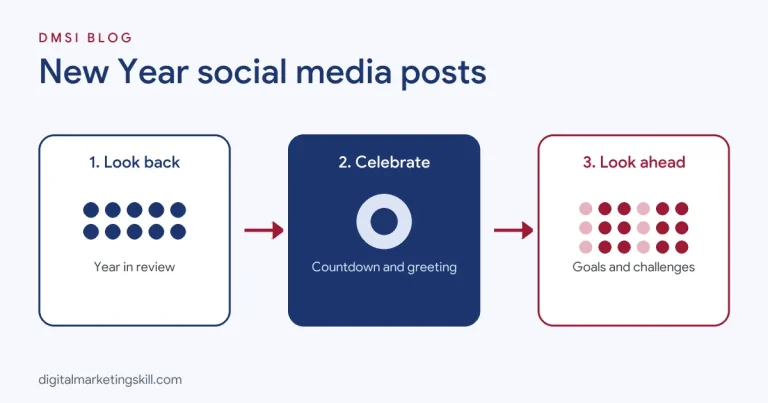
- Year in review. Share your highlights, milestones, favourite customer stories and lessons from the year.
- Trends for the year ahead. Publish predictions or trend reports for your industry. They attract shares, links and media interest.
- Customer-voted best of the year. Let customers vote for their favourite product, post or moment of the year.
- “What we’re changing this year”. Share your own business resolutions, such as new products, sustainability goals or better service.
- Planning guides and templates. Budget templates, content calendars, meal planners or study plans related to your audience earn search traffic in January.
- Beginner’s guides. Many people start something new in January. Publish “how to start” content for your field.
- A New Year newsletter edition. Send a special issue with your best content of the year and a preview of what is coming.
Social Media Ideas
- Countdown to midnight. Post a playful countdown on New Year’s Eve with Stories and a final greeting.
- Resolution polls. Ask followers about their goals, then create content that helps with the most popular ones.
- Team resolutions. Share your team’s personal or work resolutions to humanise your brand.
- A “top posts of the year” carousel. Recap your most-loved content.
- Behind-the-scenes plans. Tease new products or changes coming this year.
- User-generated goals. Invite customers to share how your product helps their New Year goals, with a branded hashtag. See our guide to user-generated content.
For a full list of posts and captions, see our guide to Christmas social media posts, many of which adapt easily to New Year.
Email Ideas
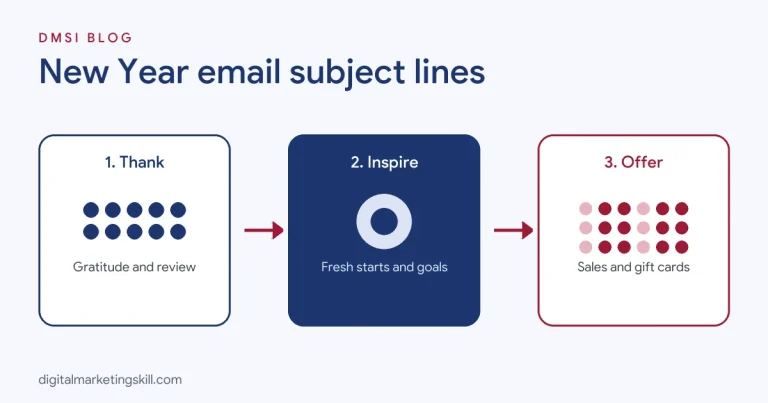
- A thank-you and year-in-review email. Thank subscribers and share highlights.
- A New Year welcome series for holiday customers. Help first-time buyers get value from their purchase and invite them back.
- Personalised “your year with us” emails. If you have the data, show customers their own year, such as orders, classes attended or progress made.
- Re-engagement emails. Invite lapsed subscribers back with a fresh-start message and an option to update preferences. Our guide to email marketing strategy explains how.
Community and Brand Ideas
- A charitable New Year pledge. Commit to a cause for the year and share progress regularly.
- Customer advisory or feedback drive. Ask customers what they want from you this year, and act on the answers.
- A free workshop or webinar. Teach a skill related to common resolutions in your field.
- Partnerships with complementary brands. Team up for a joint challenge or bundle, such as a gym and a healthy meal brand.
- Lunar New Year campaigns. If your audience celebrates, mark the festival respectfully with themed products, greetings or events.
Choose four or five of these ideas, link them under one theme such as “your best year yet”, and give each a place in the timeline below so your campaign builds week by week instead of fading after the first few days.
More New Year Marketing Ideas (36 to 45)
- Encourage impulse buys. Add small, affordable add-ons at checkout, such as accessories, refills or mini versions, especially for gift card holders spending a balance.
- Launch a new product. January is a natural moment for something new. Tease it in late December and launch in the first week.
- Promote a referral programme. Reward customers who invite friends to join them in a New Year goal or challenge. Our glossary explains referral marketing.
- Use print and direct mail. A New Year postcard or thank-you card with a QR code to a January offer stands out when inboxes are crowded.
- Host a New Year event. Run a goal-setting workshop, open day or online kickoff session for customers and prospects.
- Sponsor a local New Year celebration. Support a community fireworks display, charity run or New Year’s Day event for local visibility.
- Run a New Year contest. Invite followers to share their goals or a photo of their fresh start for a chance to win a relevant prize.
- Send a customer feedback survey. Ask what customers want from you this year, then share what you will change as a result.
- Share company milestones openly. Tell customers what you achieved last year and what you are building next. Transparency builds trust.
- Celebrate local traditions. Mark local New Year customs, such as Hogmanay in Scotland, where they matter to your audience.
A New Year Campaign Timeline
| When | Focus | Actions |
|---|---|---|
| Early to mid December | Prepare | Plan your challenge or offer, write emails, create planning content and graphics |
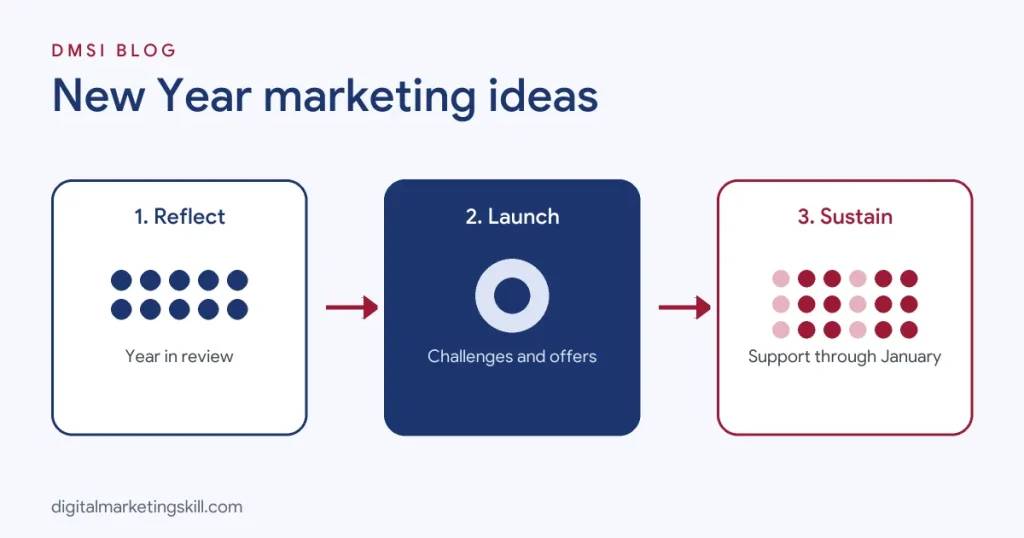
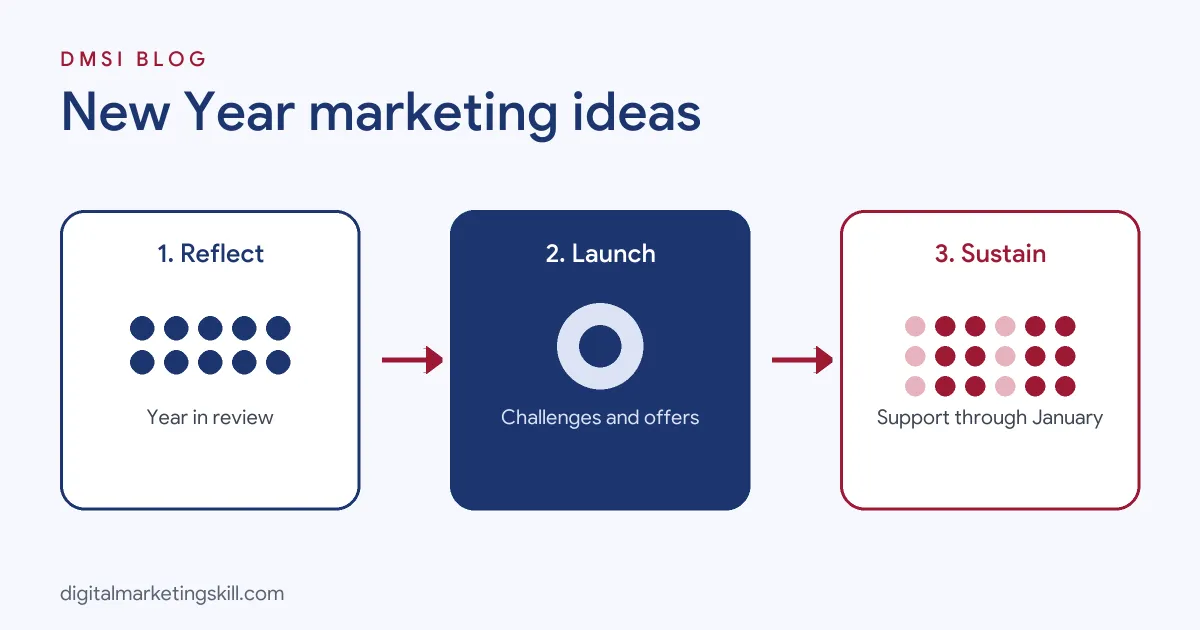
| 26 to 30 December | Reflect | Year-in-review content, end-of-year sales, tease January plans |
| 31 December | Celebrate | New Year’s Eve countdown posts, thank-you email |
| 1 to 7 January | Launch | Launch your challenge, fresh-start offers and planning content |
| 8 to 21 January | Support | Progress tips, community posts, gift card reminders |
| 22 to 31 January | Sustain | “Keep going” content, payday offers, results stories |
| February | Extend | Lunar New Year where relevant, Valentine’s Day, habit check-ins |
New Year Marketing Ideas by Industry
| Industry | Ideas that fit |
|---|---|
| Fitness and wellness | 30-day challenges, starter packages, accountability groups |
| Education and online courses | “Learn a new skill” campaigns, January cohorts, free taster lessons |
| Finance | Budget templates, savings challenges, tax planning content |
| Food and drink | Healthy recipe series, Dry January and Veganuary options, meal planners |
| Home and organisation | Declutter challenges, storage bundles, planning tools |
| Beauty and skincare | New routine bundles, skin reset guides |
| Retail and fashion | January sales, gift card redemption, capsule wardrobe guides |
| B2B and software | Annual planning content, trend reports, onboarding offers for new budgets |
Whatever your industry, the pattern is the same: identify the goal your customers set in January, offer an easy first step and support them as they build the habit. Businesses outside these categories can still join in through planning content, loyalty offers and a heartfelt thank-you for the year just ended, which costs little but reminds customers why they chose you in the first place.
New Year Marketing Campaign Examples
Dry January
Alcohol Change UK’s Dry January, launched in 2013, invites people to give up alcohol for a month, supported by an app, emails and community. Lesson: a clear, time-limited challenge with support tools can become an annual movement.
Veganuary
Veganuary, started in 2014, encourages people to try a plant-based diet in January, and many food brands and restaurants now launch products and menus to support it. Lesson: brands can join existing movements that genuinely fit their products.
Spotify Wrapped
Spotify’s personalised year-end summaries, released each December, turn customer data into shareable stories. Lesson: “your year with us” content makes customers feel seen and spreads your brand.
Fitness Apps and Gyms
Many fitness brands run January challenges and starter offers because interest in exercise rises at the start of the year. Lesson: meet people at the moment their motivation is highest, then help them keep going.
Borrow the principle behind each example and adapt it to your own customers.
New Year Marketing Mistakes to Avoid
- Shaming messages: “Lose the holiday weight” or similar messages can make people feel bad and damage your brand. Focus on positive goals, energy and progress instead.
- Stopping after the first week: resolutions need support beyond 1 January. Plan content for the whole month.
- Generic “new year, new you” clichés: everyone uses them. Specific, useful offers stand out more.
- Ignoring holiday customers: January is your chance to turn one-time buyers into regulars.
- Exploiting “Blue Monday”: it is a marketing invention, and January can be genuinely hard for some people. Be kind and avoid trivialising mental health.
- Overpromising results: avoid claims about guaranteed weight loss, income or life changes. Honest promises build trust.
How to Measure New Year Campaigns
- January revenue compared with previous Januaries, not with December.
- Challenge participation: sign-ups, completion rates and engagement over the month.
- List growth from planners, templates and challenges.
- Repeat purchase rate of holiday customers in January and February.
- Gift card redemption and the average spend above the card value.
- Subscription and membership sign-ups and how many are still active in March.
The most important number is often retention. A New Year campaign that keeps customers engaged until spring is worth far more than a short spike on 1 January. Our glossary explains customer retention and customer lifetime value.
The One Rule of New Year Marketing
Help people keep their promises to themselves. If your marketing supports real progress, with encouragement, tools and community, customers will associate your brand with their success and stay with you long after January.
An Illustrative Case
Imagine an online language school in Abuja that sees enquiries drop every December. This year it plans a New Year campaign in early December.
It publishes a free “learn a language in 2027” planning guide in late December, collecting email addresses. On 1 January it launches a free 21-day speaking challenge with a short daily lesson by email and a supportive WhatsApp community. In week two it offers challenge participants a discount on a three-month course starting in February, and in week four it shares stories from learners who completed the challenge.
The email list grows, many challenge participants enrol in the February cohort, and the school starts the year with more students than it had in the autumn. This example is illustrative, not a real business, but it shows how a supportive challenge can turn the fresh-start mindset into lasting customers.
Frequently Asked Questions About New Year Marketing
What are good New Year marketing ideas?
Strong ideas include 30-day challenges, goal-setting toolkits, “start the year right” bundles, January sales, gift card redemption offers, year-in-review content and welcome series for holiday customers.
When should I start New Year marketing?
Plan in early December, start year-in-review and teaser content after Christmas, and launch your main campaign on or just after 1 January.
What is a New Year marketing campaign?
It is a time-limited campaign built around the start of the year, usually themed around fresh starts, goals, planning or January value, designed to win customers in a typically quieter month.
How do small businesses market in January?
Run simple challenges, share helpful planning content, reward loyal customers, follow up with holiday buyers and partner with complementary local businesses.
What is the fresh start effect?
It is the finding, from research by Dai, Milkman and Riis, that people are more motivated to pursue goals after time landmarks such as a new year, a new month or a birthday.
Should I run a January sale?
A January sale can clear seasonal stock and attract gift card holders, but balance it with full-price offers tied to New Year goals so you do not rely only on discounts.
How do I avoid “new year, new you” clichés?
Be specific about the goal you help with, use positive and realistic language, and show real customers or practical steps rather than slogans.
Is Blue Monday real?
No. “Blue Monday” began as a marketing idea, not a scientific finding. If you reference it, do so lightly and kindly, and avoid trivialising mental health.
What should I post on New Year’s Day?
A warm greeting, a thank-you to your community or an encouraging message about the year ahead works well. Save hard selling for the following days.
How do I keep New Year customers after January?
Support them with progress tips, community, milestones and helpful emails through February and March, so your product becomes part of their routine.
What are some good marketing ideas for January?
Fresh-start challenges, planning templates, January sales, gift card redemption offers, referral programmes, new product launches and welcome series for holiday customers all work well in January.
What are some famous New Year advertising campaigns?
Well-known examples include Dry January and Veganuary, which grew into annual movements, and Spotify Wrapped, which turns each user’s year into shareable content every December.
What is the 3-3-3 rule for marketing?
It is an informal rule with several versions. A common one says you have about three seconds to grab attention, three more to hold interest and a little longer to deliver your message, so New Year ads should lead with the benefit.
What are the new marketing trends for the year ahead?
Trends to watch include AI-assisted content and personalisation, short-form video, social commerce, privacy-first data and creator partnerships. Our guide to digital marketing trends covers them in more detail.
Your Next Step
New Year campaigns rely on email automation, social media, content and paid ads working together. The Master Diploma in Digital & AI Marketing at Digital Marketing Skill Institute covers AI-powered Social Media Management and Advertising, Lead Generation and Email Automation, Google, and a WordPress and SEO track where you build and rank a real website.
From day one, you work on a real U.S. company’s project through the U.S. Project Internship, so you finish with real results and a verified U.S. work reference letter. You also get unlimited one-on-one coaching. The program carries dual US and UK accreditation, is recognised in more than 100 countries, and runs 100% online over three months.
You can build those skills wherever you live, anywhere in your country. Read student reviews, then apply for the 65% partial scholarship to see if you qualify.
Every claim in this guide was checked against its source before publication: Dai, Milkman and Riis, The Fresh Start Effect (Management Science, 2014), Alcohol Change UK on Dry January, Veganuary’s published history and Google Ads keyword search volume data. The case above is an illustrative example, not a real result.