
Tourism marketing is the promotion of destinations, attractions, tours, hotels and travel experiences to attract visitors and turn interest into bookings. Because travel is bought before it is experienced, the best tourism marketing reduces uncertainty: it shows the experience vividly through photos and video, proves quality through reviews, makes booking easy on mobile and stays in touch with past guests so they return and recommend you. The core channels are a fast booking website, Google and local search, social media and short video, reviews, email, partnerships and, increasingly, online travel agencies and booking platforms.
Key Takeaways
- Zaui, a booking software provider for tour operators, describes email marketing as one of the highest-return channels for tour operators (Zaui).
- Zaui also notes that post-trip review requests, re-engagement campaigns for past guests and seasonal promotions to subscribers consistently outperform cold acquisition on cost per booking (Zaui).
- TrekkSoft’s tourism marketing guide covers the travel customer journey, website, SEO, distribution, social media, reviews, offline marketing and analysis (TrekkSoft).
- What Most Tourism Marketing Guides Miss
- What Tourism Marketing Is
- The Travel Customer Journey
- 15 Tourism Marketing Strategies
- Marketing a Destination
- Off-Season Marketing
- Measuring Results
- Common Mistakes
- FAQ
What Most Tourism Marketing Guides Miss
Most tourism marketing articles list channels: social media, SEO, email, influencers. That is useful, but it skips the problem those channels must solve. Travellers are buying something they cannot see or touch in advance, often from a business they have never heard of, sometimes in another country. Every piece of tourism marketing should answer the same hidden questions: Is this real? Is it worth the money? Will I be safe and looked after? How easy is it to book?
The second gap is the difference between direct bookings and bookings through online travel agencies (OTAs) and marketplaces. OTAs bring visibility but take commission. Smart operators use them for discovery and then work hard to win repeat and referral bookings directly, through email, their own website and strong relationships with past guests. This guide covers both.
What Tourism Marketing Is
Tourism marketing covers the promotion of:
- Destinations: countries, regions, cities and towns, usually promoted by tourism boards and destination marketing organisations.
- Accommodation: hotels, guesthouses, resorts, lodges and holiday rentals.
- Tours and activities: guided tours, safaris, adventure sports, food tours, cultural experiences.
- Attractions: museums, parks, heritage sites, theme parks.
- Transport and travel services: airlines, transfers, travel agents and tour operators.
Tourism products share some traits that shape marketing. They are intangible, so visuals and reviews matter. They are perishable, because an unsold tour seat or hotel night today cannot be sold tomorrow. They are seasonal, with peaks and quiet periods. And they depend heavily on word of mouth.
The Travel Customer Journey
TrekkSoft’s guide starts with the travel customer journey, and it is the best way to plan tourism marketing. A simple version has five stages:
- Dreaming: people get inspired by social media, video, friends’ photos, films and articles.
- Planning: they research destinations, read reviews, compare options and check prices.
- Booking: they choose and pay, on your website, an OTA or through an agent.
- Experiencing: the trip itself, where service, communication and memorable moments matter.
- Sharing: they post photos, write reviews and recommend you, which inspires the next traveller.
Each stage needs different marketing. Inspiring video works for dreaming; detailed itineraries, FAQs and reviews work for planning; a fast, trustworthy checkout works for booking; and post-trip emails and review requests drive sharing.
15 Tourism Marketing Strategies
1. Build a fast, mobile-first booking website
Untethered Media puts a high-converting tourism website first in its list of strategies. Your website should load quickly on phones, show prices and availability clearly, and let people book in a few taps. Include detailed descriptions, what is included, meeting points, cancellation terms, FAQs and plenty of real photos. Zaui warns that the most common and expensive mistake operators make is investing in new marketing channels before fixing conversion gaps on their existing traffic.
2. Optimise your Google Business Profile and local presence
Zaui puts Google Business Profile first in its tourism marketing strategies. Complete your Google Business Profile with photos, opening hours, a booking link and regular posts. Zaui explains that Google Things To Do lets tour operators show direct booking links when people search for activities. See our guide to local SEO.
3. Create destination and experience content for search
Travellers search for things like “best things to do in Zanzibar” or “day trips from Cape Town”. Content that answers these questions brings in people at the planning stage. Zaui describes SEO as a high-margin channel for tour operators because the traffic is free, intent is high and results compound over time. Write guides, itineraries, packing lists and “how to get there” pages, and link them to your tours.
4. Tell stories with photos and video
Visual storytelling is central to tourism. Show the experience from the traveller’s point of view: the view from the boat, the guide explaining a landmark, families laughing at dinner. Short videos work well on Instagram, TikTok and YouTube. See our guides to video SEO and Instagram Story ideas.
5. Make reviews a priority
Reviews are among the most important trust signals in travel. Zaui includes review marketing among its core strategies. Ask every guest for a review shortly after the trip, make it easy with a direct link, and reply to every review politely, including negative ones. Feature reviews on your website and social media.
6. Use email to win repeat and referral bookings
Collect email addresses from every booking with permission. Send a pre-trip email with useful information, a post-trip thank-you with a review request, and occasional updates with new tours, seasonal offers and referral incentives. Zaui recommends a re-engagement sequence six to twelve months after a guest’s last trip, with a personalised offer linked to the type of experience they had. See our guide to email marketing.
7. Run social media that feels authentic
Untethered Media advises authenticity over perfection on social media. Share behind-the-scenes moments, guides’ personalities, guest photos (with permission), local tips and seasonal highlights. Zaui notes that Instagram drives aspirational discovery, Facebook works for retargeting and community, and TikTok reaches younger adventure travellers.
8. Use user-generated content
Encourage guests to tag you and use a branded hashtag. With permission, reshare their photos and videos. Guest content is more believable than polished marketing. See our guide to user-generated content.
9. Advertise on search and social
Untethered Media lists search engine advertising and social advertising among its strategies. Search ads capture people actively planning; social ads build awareness and retarget people who visited your website. Start with tightly targeted campaigns around specific tours and destinations.
10. Work with online travel agencies wisely
OTAs and activity marketplaces can bring visibility, especially for new businesses, but they take commission. TrekkSoft includes distribution in its tourism marketing guide. Use OTAs for reach, keep your prices and availability consistent, and give every OTA guest a great experience so they book directly next time.
11. Partner with local businesses and tourism boards
Hotels, restaurants, transport providers and tourism boards can refer guests to each other. Untethered Media recommends local partnerships, including with businesses outside the travel industry. Create packages together, such as a tour plus dinner, or offer commissions to hotel concierges.
12. Collaborate with travel creators
Travel influencers and creators can show your experience to large, engaged audiences. Choose creators whose audience matches your ideal guests, agree clear deliverables and require proper disclosure. See our guide to influencer marketing.
13. Offer packages and upsells
Packages and add-ons, such as transfers, meals, photos or private upgrades, increase revenue per guest. Zaui calls the moment a guest completes a booking the highest-intent point in your relationship with them, making it a good time to offer relevant extras.
14. Provide fast, helpful customer service
Travellers often have questions before booking. Quick replies on WhatsApp, chat, email or social messages can make the difference between a booking and a lost sale. Untethered Media includes chatbots and AI-powered customer service among its strategies; use them for common questions and hand over to a person for anything complex.
15. Use data to improve
Track where bookings come from, which tours sell best, how far ahead people book and which markets they come from. Untethered Media and TrekkSoft both highlight analysis as a key part of tourism marketing.
A Simple Tourism Marketing Plan
A one-page plan keeps small tourism businesses focused. Fill in these sections each year and review them every quarter.
- Who we serve: two or three guest types, such as international couples, local families or business travellers, with what each wants and where they plan trips.
- What makes us different: the one or two things guests praise most in reviews.
- Goals: for example, raise direct bookings, fill weekday tours or grow off-season revenue.
- Channels: website, Google Business Profile, two social platforms, email, one or two OTAs and key partners.
- Content calendar: monthly themes linked to seasons, festivals and events.
- Budget: split between always-on activity, such as search ads and email, and seasonal campaigns.
- Measurement: the five or six metrics you will check monthly.
Keep the plan short enough that the whole team understands it. A simple plan that is followed beats a detailed one that sits in a folder.
Marketing a Destination
Destination marketing, usually led by tourism boards and destination marketing organisations, promotes a whole place rather than a single business. It typically involves:
- A clear destination brand: what makes the place distinctive, such as culture, nature, food, adventure or history.
- Target markets: choosing the countries and traveller types to focus on.
- Campaigns and content: inspiring video, itineraries, events calendars and practical travel information.
- Industry partnerships: working with airlines, hotels, tour operators and travel agents.
- Media and trade relations: hosting journalists, creators and travel buyers.
- Visitor experience: information centres, signage and digital guides that make the trip easier.
Small businesses benefit by aligning with destination campaigns, using official hashtags and themes, listing on tourism board websites and joining familiarisation trips for agents and creators.
Marketing Hotels, Guesthouses and Holiday Rentals
Accommodation businesses share many tourism tactics but have a few specific priorities. First, photos of rooms, bathrooms, views and common areas need to be bright, accurate and up to date, because guests compare listings side by side. Second, rate and availability must match across your website, booking platforms and channel manager to avoid double bookings and confusion. Third, the direct booking website should give a clear reason to book direct, such as flexible cancellation, a welcome drink, free breakfast or the best available rate, while staying within any platform agreements.
Guest communication also matters more for accommodation. A friendly pre-arrival message with directions, check-in details and local tips reduces stress and questions. During the stay, a quick check-in message invites guests to raise problems before they become bad reviews. After check-out, a thank-you and review request, followed later by occasional offers for return stays, builds loyalty.
Finally, local partnerships work especially well for accommodation. Recommending trusted restaurants, tours and transport makes the stay better, and partners may send their own customers your way in return.
Off-Season and Low-Demand Marketing
Seasonality is one of tourism’s biggest challenges. Strategies for quieter periods include:
- Market to locals. Zaui suggests special offers for locals, such as weekday prices or locals-only discounts, and promoting lesser-known activities to people who have already seen the main sights.
- Create off-season experiences. Festive tours, rainy-season photography trips, cooking classes or wellness retreats.
- Target different markets. Some countries have holidays at times when your local market is quiet.
- Run community events and partnerships. Zaui suggests organising local events and collaborating with non-profits.
- Plan ahead for peak season. Use quieter months to build content, gather reviews and run early-booking offers.
Our guide to seasonal marketing covers how to plan around demand peaks and troughs.
Sustainable and Responsible Tourism Marketing
More travellers care about how their trips affect local communities and the environment. Honest sustainability marketing can attract them, but only if it is real. Share specific practices, such as hiring local guides, supporting community projects, reducing plastic or limiting group sizes, rather than vague claims. Avoid greenwashing; travellers and reviewers notice when promises do not match reality.
Marketing to International Travellers
If you welcome visitors from other countries, adapt your marketing to them. Translate key pages, or at least booking information and FAQs, into the main languages of your visitors. Show prices in familiar currencies or explain conversions, and make sure your payment options accept international cards. Answer practical questions travellers worry about, such as visas, safety, transport from the airport, what to wear and tipping customs. Timing matters too: people in different countries plan trips at different times of year and book different distances ahead, so schedule campaigns for each market accordingly. Working with travel agents and tour operators in key source markets can open doors that digital ads alone cannot.
How to Measure Tourism Marketing
| Metric | What it tells you |
|---|---|
| Bookings by channel | Which sources bring paying guests: direct, OTA, referral, social, search |
| Website conversion rate | How well your site turns visitors into bookings |
| Cost per booking | Marketing spend divided by bookings for each channel |
| Direct booking share | How much business avoids OTA commission |
| Review volume and rating | Trust and reputation over time |
| Repeat and referral bookings | Loyalty and word of mouth |
| Occupancy or capacity used | How well you fill available seats, rooms or slots |
Ask guests how they heard about you at booking or check-in. Combined with analytics and booking data, it shows which marketing truly works.
Handling Crises and Bad News
Tourism is sensitive to weather, safety concerns, strikes and health alerts. Prepare a simple plan for difficult moments: who communicates, which channels you use and what flexible options you can offer guests. Update your website and social channels quickly with clear, honest information, and contact booked guests directly. Calm, transparent communication protects trust and often leads to rebookings once things return to normal.
Common Mistakes
- Poor photos. Dark, blurry or stock images make experiences look unappealing or untrustworthy.
- Hard-to-find prices and availability. Hidden information sends people elsewhere.
- Slow mobile booking. Many travellers book on phones; friction loses sales.
- Ignoring reviews. Unanswered complaints damage trust.
- Over-reliance on OTAs. Commission costs add up and you lose the customer relationship.
- No contact with past guests. Your best future customers are people who already loved your experience.
- Overpromising. Marketing that does not match the real experience leads to bad reviews.
One Rule to Remember
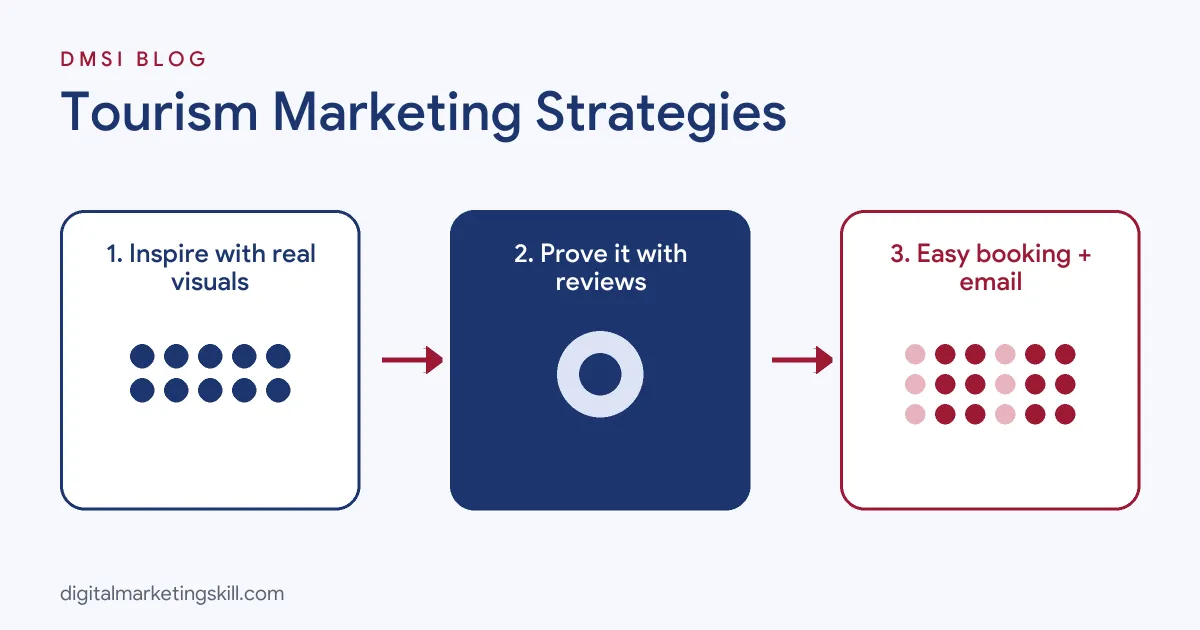
Show the experience honestly, prove it with reviews, make booking effortless and stay in touch with every guest: in tourism, today’s happy traveller is tomorrow’s best marketing.
Example: a small tour company in Accra offers city food tours. It replaces stock photos with real images of guests tasting dishes, adds a clear booking calendar to its mobile site, lists on Google Things To Do, asks every guest for a review the evening after the tour, and emails past guests about a new evening market tour. Within a season, direct bookings grow and a local hotel starts recommending the tours to its guests. This example is illustrative and not a real business.
Tourism Marketing Careers
Hotels, tour operators, attractions, tourism boards and travel brands need marketers who can create inspiring content, manage reviews, run paid campaigns and grow direct bookings. Many of these roles can be done remotely. If you are in your country, building digital marketing skills and a portfolio of tourism campaigns, even for small local operators, can help you win remote marketing roles and freelance clients in the travel industry worldwide.
Frequently Asked Questions
What is tourism marketing?
Tourism marketing is the promotion of destinations, accommodation, tours, attractions and travel services to attract visitors and drive bookings.
What are the main tourism marketing strategies?
A mobile-friendly booking website, Google Business Profile and local SEO, destination content, visual storytelling, reviews, email, social media, user-generated content, paid ads, OTAs, partnerships and creator collaborations.
Why is tourism marketing different?
Travel is intangible, perishable and seasonal, and people buy it before experiencing it. Marketing must build trust and show the experience clearly.
How can a tour company get more bookings?
Improve the website and booking process, gather more reviews, use Google Business Profile and local search, email past guests, partner with hotels and use targeted ads.
Should I list on online travel agencies?
OTAs can bring visibility, especially when you are new, but they charge commission. Use them alongside direct marketing and aim to win repeat bookings directly.
What is destination marketing?
It is the promotion of a whole place, such as a country, region or city, usually by a tourism board or destination marketing organisation.
How do you market tourism in the off-season?
Target local residents, create seasonal experiences, focus on markets with different holiday periods, run events and offer early-booking deals for peak season.
What are the main types of tourism?
Common types include leisure, business, adventure, cultural and heritage, eco and nature, food, wellness, medical, religious and sports tourism.
How important are reviews in tourism?
Very important. Travellers rely heavily on reviews to judge quality and trust, so collecting and responding to reviews should be a priority.
Can I work in tourism marketing remotely?
Many digital tourism marketing roles, such as social media, content, SEO, email and paid ads, can be done remotely for clients and employers anywhere.
Your Next Step
Tourism businesses need marketers who can turn inspiring content and reviews into direct bookings. The Master Diploma in Digital & AI Marketing at Digital Marketing Skill Institute covers AI-powered Social Media Management and Advertising, Lead Generation and Email Automation, Google, and a WordPress and SEO track where you build and rank a real website.
From day one, you work on a real U.S. company’s project through the U.S. Project Internship, so you finish with real results and a verified U.S. work reference letter. You also get unlimited one-on-one coaching. The program carries dual US and UK accreditation, is recognised in more than 100 countries, and runs 100% online over three months.
You can build those skills wherever you live, anywhere in your country. Read student reviews, then apply for the 65% partial scholarship to see if you qualify.
Sources checked November 2026: Zaui: tourism marketing strategies, Zaui: digital marketing for tour operators, Zaui: increase tour sales, TrekkSoft and Untethered Media. We have no connection with these companies.