
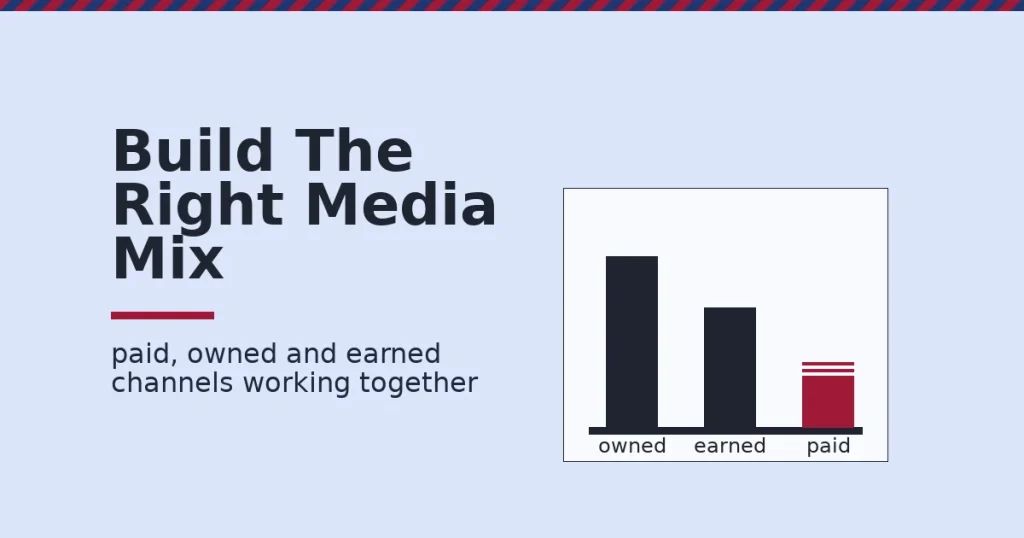
Media marketing means picking and combining paid, owned and earned channels to reach an audience and hit a specific goal. Social, video, email and search all count. The right mix depends on budget, speed and the trust you need. It is not a single tactic. It is a system.
Key Takeaways
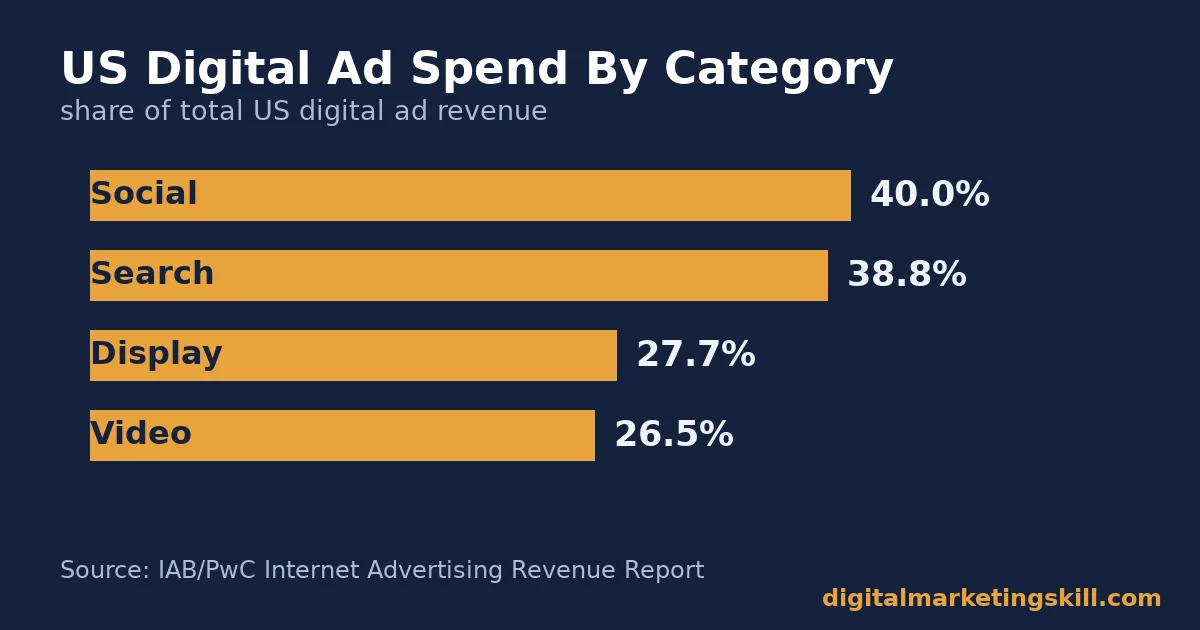
- US digital ad revenue reached $294.6 billion, up 13.9% in a year. Social media is the biggest slice at 40.0% of spend (IAB/PwC Internet Advertising Revenue Report, US-only).
- Reach is uneven across platforms. 84% of US adults use YouTube. 71% use Facebook. Several newer platforms sit far lower (Pew Research Center, US-only).
- Mobile and webmail together make up roughly 82% of email opens. That number should shape how a team designs email creative (Litmus Email Analytics).
- Landing pages convert at a median of 6.6% across industries. Email-sourced traffic converts far higher than paid social or paid search (Unbounce Conversion Benchmark Report).
- Global email users are forecast to approach 4.7 billion. Email stays one of the cheapest channels for reaching people at scale (Statista).
In this guide
- Why Most Media Marketing Plans Fail Before They Launch
- How Media Marketing Actually Works
- What Differs By Channel Type
- How To Lead With Each Channel Type
- Common Mistakes That Waste A Media Marketing Budget
- How To Measure Whether The Mix Is Working
- The One Decision Rule To Apply Before Spending Anything
- A Real Case: Scaling One Channel Before Adding More
- Frequently Asked Questions About Media Marketing
- Where To Learn To Run This Mix Properly
Why Most Media Marketing Plans Fail Before They Launch
Most small businesses do not fail at media marketing because they pick the wrong channel. They fail because they pick a channel first and a goal second. A founder sees a competitor running video ads. So they start there too. But nobody asks if the audience is even ready to buy from a short clip.
This guide is an informed framework, not a fixed formula. Channel performance shifts by industry, region and season. Treat every number here as a snapshot, not a permanent ranking. No channel guarantees results. No agency or platform can promise a specific rank or return. Treat any claim like that as a warning sign.
The real fix starts with naming the problem plainly. Businesses need a way to match each channel’s strength to a stage of the buying decision. Then they need to measure it honestly. Then they need to stop paying for channels that are not earning their place.
How Media Marketing Actually Works
Media marketing sorts every channel into three working groups. Marketers often call this the POEM framework: paid, owned and earned media. A fourth group, shared media, covers the likes, comments and shares that happen on social posts. Many teams now treat shared media as its own category.
Paid media is space or time a business buys outright. Search ads, social ads, display banners and sponsored content all count. Owned media is anything the business controls directly. That includes its website, blog, email list and social accounts. Earned media is attention someone else creates for free. Press coverage, reviews, customer posts and word of mouth all fit here. Shared media sits between owned and earned. A business posts something on social, and the audience comments, shares and remixes it.
Put together, a media marketing strategy is just a deliberate mix of these four groups. A team sizes and sequences the mix to match a goal, whether that goal is awareness, consideration, conversion or retention. Mature marketing teams rarely lean on one group alone. The IAB/PwC Internet Advertising Revenue Report shows US paid spend split across search, social, display, video and commerce media. No single paid channel carries the whole load, even inside paid media alone.
In short, the four groups are not competitors for the same budget line. Instead, they play different roles over different time frames. For instance, a paid search campaign can fill a calendar gap this month, while an email list built this quarter keeps paying off next year. Overall, a healthy mix usually includes at least one channel from each group, sized to the business’s current stage rather than copied wholesale from a bigger competitor.
What Differs By Channel Type
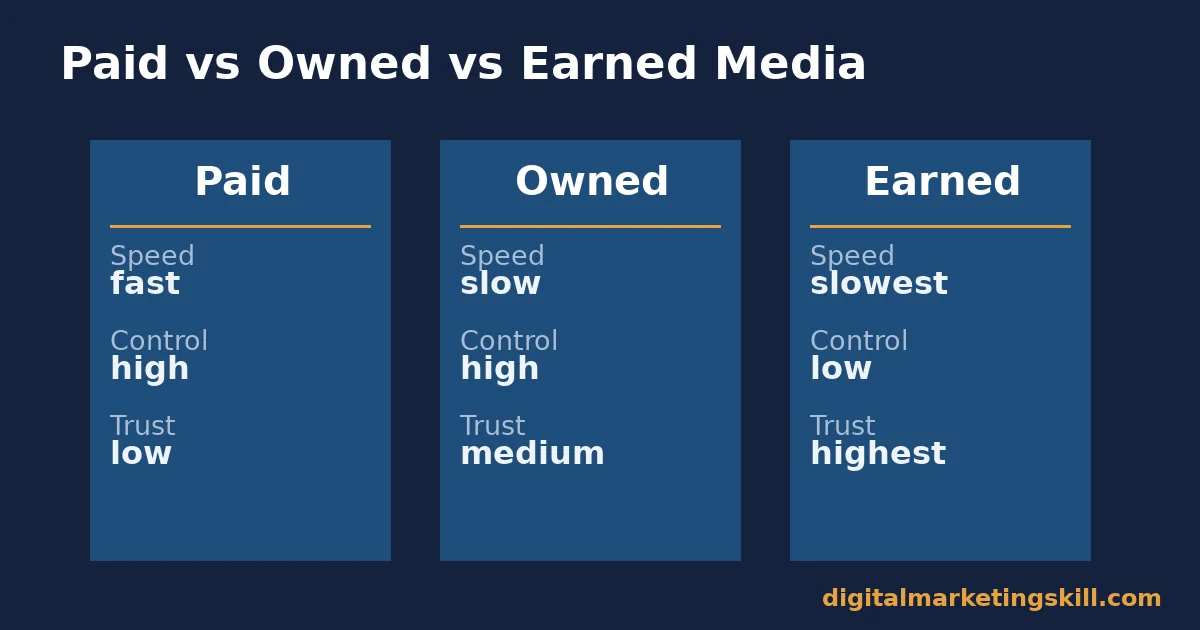
Each group above behaves differently on three things that matter to a small budget: speed, control and trust.
Paid Media: Built For Speed And Control
Paid media is the only group that can produce traffic, leads or sales within days. A business sets the budget, the audience, the creative and the timing. Results start almost as soon as the campaign goes live. That control has a cost, though. Spend stops, and results stop with it. IAB/PwC data puts social media at 40.0% of US digital ad spend and search at 38.8%. Those are the two channels advertisers trust most for fast, controllable delivery.
Owned Media: Built For Compounding Reach
By contrast, owned channels work the opposite way. A blog, an email list and a social media content library all behave this way. One blog post or email sequence keeps earning traffic long after the work is done. But it only pays off after weeks or months of steady publishing. Email makes this easy to see. Global email users are forecast to approach 4.7 billion, according to Statista. A list a business owns outright keeps working even when an ad platform changes its rules or raises its prices.
Earned Media: Built For Trust You Can’t Buy
Earned media is the slowest group to build on purpose. It is also the hardest to control. Reviews, press mentions, word of mouth and customer-made content all sit here. But earned media carries a kind of credibility a business cannot simply purchase. A user-generated content post from a real customer usually beats a brand’s own ad on trust. The audience knows the business did not pay for that specific placement, and that matters to them. Consequently, even a small, steady flow of genuine reviews often outperforms a bigger ad budget on trust alone.
How To Lead With Each Channel Type
Knowing what each group is built for is only half the job. The other half is deciding which one to lead with for a given campaign. The rest then follow in sequence around it.
Paid Media: Lead With Tight Targeting And Fast Tests
Start paid campaigns with a narrow audience and a small daily budget. Run two or three creative versions against each other. Let the data pick a winner before scaling spend further.
Pair search ads with social ads rather than treating them as the same thing. Search ads reach people who are already searching, so intent is high. Social ads reach people earlier, so intent is lower but discovery is easier. Review cost-per-click and cost-per-result every week. If a channel shows no trend after two or three weeks of steady spend, change the creative before spending more. Otherwise, the same underperforming ad just keeps absorbing budget that a fresh version could put to better use.
Owned Media: Lead With Consistent Publishing And SEO
Build a fixed publishing schedule. One well-researched article or email a week beats five rushed ones a month. Optimize every piece for a specific channel and a specific search term people actually type. Treat the email list as the most valuable owned asset a business has. Segment it by interest or purchase stage. Send fewer, more relevant emails instead of one blast to everyone on the list. As a result, open and click rates usually rise even as the total number of emails sent goes down.
Earned Media: Lead With Reviews And Direct Outreach
Ask every happy customer for a review within days of a good experience. Do this while the memory is fresh, rather than hoping a review appears on its own. For press or blogger coverage, send a short, specific pitch to one named writer about one real result. By contrast, a generic press release sent to a long list rarely works as well. Earned media compounds slowly, so start building it alongside paid media, not after paid media has already run its course.
Common Mistakes That Waste A Media Marketing Budget
Even with the right framework, a few habits quietly drain a media marketing budget. However, naming each habit makes it easy to fix.
Chasing Every New Platform At Once
A new platform launches, and a business feels pressure to be there immediately. As a result, attention and budget spread thin across five channels instead of building depth in two. Instead, pick the one or two channels where the target audience already spends time, and prove the model there first.
Copying A Competitor’s Channel Choice Without The Context
A competitor’s heavy investment in video does not mean every business should copy it. For example, a competitor with a large existing audience can afford a slower-burning channel; a newer business usually cannot. Therefore, match the channel choice to the audience and budget at hand, not to what a rival happens to be doing.
Running Campaigns Without A Shared Way To Track Them
Many small teams run paid ads, post on social and send emails from separate tools that never talk to each other. Consequently, nobody can say which channel actually drove a sale. A simple shared spreadsheet, updated weekly with the metrics listed below, solves most of this problem without extra software spend. Specifically, one column per channel and one row per week is usually enough to spot a channel that is quietly underperforming.
How To Measure Whether The Mix Is Working
A media marketing plan is only as good as the numbers a business checks each week. Here are the core metrics, explained in plain terms.
- Click-through rate (CTR): the share of people who see an ad or link and click it. A falling CTR on the same creative over time usually means the audience has seen it too many times already.
- Cost per click or result (CPC/CPR): how much a business pays, on average, for one click or one defined outcome, such as a lead or a sale. Always compare this across channels, not just inside one channel.
- Organic traffic: visits that arrive without a paid click, mostly from search and from people typing a URL directly. Rising organic traffic is the clearest sign that owned media is compounding.
- Engagement rate: likes, comments, shares and saves, divided by reach or followers. It shows whether content is actually being watched, not just served to a feed.
- Email open and click rate: the share of a sent email a recipient opens, and of those opens, the share that clicks a link inside it. Litmus Email Analytics finds that roughly 82% of opens happen on mobile or webmail combined. A subject line or layout that fails on a small phone screen will quietly understate true performance.
- Conversion rate: the share of visitors who complete the goal action, such as a purchase, a signup or a form submission. The Unbounce Conversion Benchmark Report puts the median landing page conversion rate at 6.6% across industries. In the same report, email-sourced traffic converts meaningfully higher than paid social or paid search traffic.
Review these numbers on a fixed schedule. Check paid media weekly. Check owned and earned media monthly. Compare each channel against its own channel-type benchmark, not against a channel built for a completely different job. Otherwise, a healthy owned-media channel can look like a failure next to a paid channel that was simply designed to move faster.
Also write the goal down before a campaign starts, not after. Therefore, a business reviewing results a month later can say clearly whether the campaign hit its own target, rather than quietly redefining success once the numbers come in.
The One Decision Rule To Apply Before Spending Anything
Decision rule: match the channel to the time horizon, not to the trend. If a result is needed inside a month, lead with paid search or paid social. Treat every other channel as support for now. If the goal is a durable audience over the next few years, put the first budget into owned content and email instead. Add earned media once there is something customers genuinely want to talk about on their own.
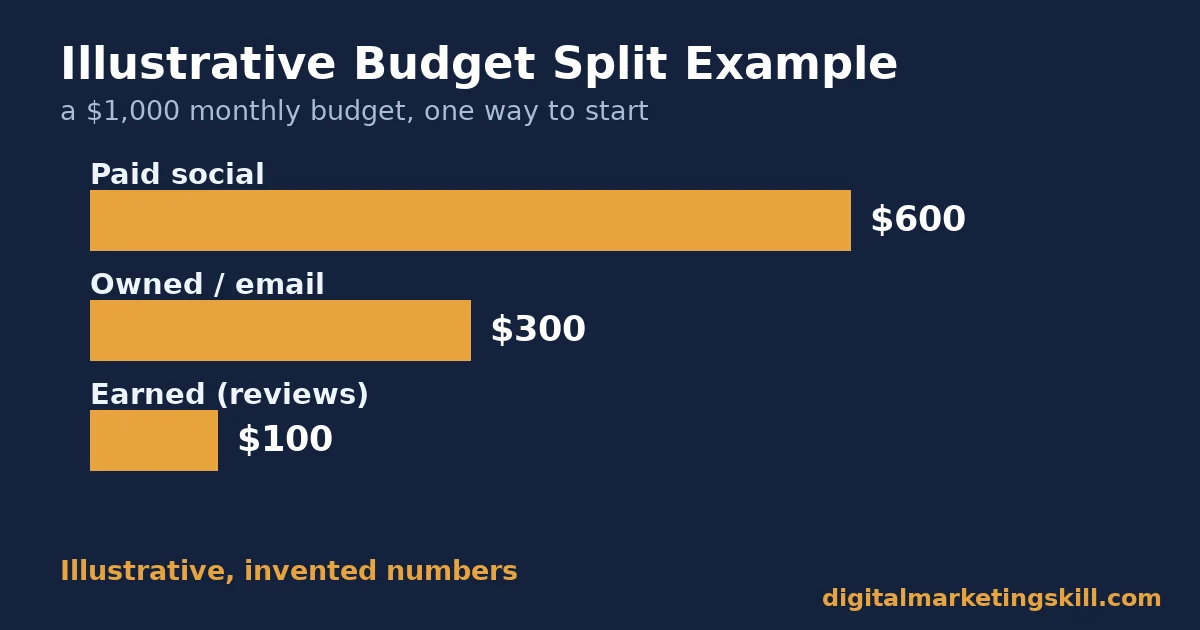
Illustrative, invented numbers: picture a small business with a $1,000 monthly budget. It might send $600 to paid social for quick leads. Then $300 could go to email tools and content production for the owned channel. The remaining $100 might sit aside to encourage customer reviews.
As owned content starts to rank and the email list grows, that split can shift. A later mix might run closer to 40% paid and 60% owned and earned combined. This exact split is only an example of the logic, not a target to copy directly. Meanwhile, a business with a larger existing audience might reasonably flip that ratio toward owned and earned media much sooner, since it already has the attention a newer brand still needs to buy.
A Real Case: Scaling One Channel Before Adding More
As published on the Digital Marketing Skill Institute reviews page, student Olajire Jacob scaled a freelance service from charging $500 to set up email marketing flows for clients, up to earning $5K a month. The path ran through one owned channel, email, built deep before the student added any other service.
This is a single, self-reported result from one student. It is not an audited business outcome, and it says nothing about typical earnings. DMSI’s earnings disclaimer applies to every student result in this guide. What the case does show is a pattern worth copying. A narrow focus on one channel, measured and repeated, usually beats spreading a small budget across five channels at once. In other words, depth in one owned channel often creates more leverage early on than breadth across several.
Frequently Asked Questions About Media Marketing
What is media marketing?
Media marketing is the use of paid, owned, earned and shared channels together, rather than any single platform alone, to reach a target audience and meet a defined marketing goal, from awareness through to conversion.
What is the difference between media marketing and traditional marketing?
Media marketing usually centers on digital channels, such as social media, email and search. These channels allow precise targeting and clear, measurable results. Traditional marketing relies on offline channels, such as television, radio and print. These reach a broad audience, but they are far harder to measure directly.
Which media marketing channel should a small business start with?
There is no single correct first channel for every business. A business that needs fast leads usually starts with paid search or paid social. A business building for the long term usually starts with owned content and an email list, because those assets keep producing results without ongoing spend.
How should a marketing budget be split across channels?
Split spending by time horizon and goal, not by habit or by what a competitor is doing. Give the largest share to the channel matched to the current priority, whether that priority is speed or durability. Keep a smaller amount for testing one new channel. Finally, review the split every few months against what each channel is actually producing.
Can earned media be measured reliably?
Yes, though less precisely than paid media can be measured. Track the number of reviews and their average rating. Also watch mentions of the brand name across the web, plus referral traffic from sites the business did not pay to be listed on. Together, these numbers move more slowly than paid metrics, so measure them monthly rather than weekly. Still, a steady upward trend over a few months is a reliable signal, even without the precision paid dashboards offer.
Is it a problem to run too many media marketing channels at once?
Usually, yes, for a small team or a small budget. Running five channels at a mediocre level typically produces worse results than running two channels well. Each channel needs enough budget and attention to reach the volume where its numbers actually become meaningful.
Does video still matter inside a media marketing mix?
Yes. Digital video made up 26.5% of US digital ad spend in the IAB/PwC report cited above, and it grew faster than most other categories. Video also works well across paid, owned and shared media at once, which is part of why spend keeps shifting toward it. As a result, even a small video budget tends to pull double duty across more than one channel group.
Why does content get skimmed instead of read in full?
Research from the Nielsen Norman Group found that most people scan a new web page rather than read every word of it. Therefore, owned content works better when the key point sits in the first sentence of a section, with headings that let a reader skim and still get the message.
Where To Learn To Run This Mix Properly
Picking the right channel mix takes practice. Running paid, owned and earned media together, without wasting budget on the wrong one, takes structured practice too. Reading about it is not enough on its own. The Master Diploma in Digital & AI Marketing at Digital Marketing Skill Institute is built around four AI-powered tracks: AI-Powered Social Media Management and Advertising, AI-Powered Lead Generation and Email Automation, AI-Powered Google Specialist, and AI-Powered WordPress and SEO Specialist. The four tracks draw on ten execution-first courses in total. A Full Stack option exists for anyone who wants to complete all four.
Every track includes unlimited 1-on-1 coaching and mentoring. Every track includes a U.S. Project Internship with a verified U.S. Work Reference Letter. The program carries dual US and UK accreditation, recognised in more than 100 countries, and it runs 100% online, so the training works anywhere in your country. Measuring team performance against clear numbers is also a stated challenge in the industry at large: HubSpot’s State of Marketing report lists measuring ROI as marketers’ top challenge, which is exactly the gap structured training is meant to close.
Whether the goal is to master one channel deeply, like the student case above, or to run a full paid-owned-earned mix for a business, the program is built to take a learner from channel theory to a job-ready, measurable skill set. See the full program details and apply directly, browse more guides on the Digital Marketing Skill Institute blog, or read more student reviews before deciding. Wherever you live, the online format and global accreditation are built to travel with you. Learn more at digitalmarketingskill.com, or start an application directly on the Digital Marketing Skill Institute homepage.
Every figure in this guide was checked against its original source before publication. Figures marked as illustrative are invented examples, not real results.
