
A PPC specialist is a digital marketer who plans, runs and improves pay-per-click ad campaigns on platforms such as Google Ads, Microsoft Advertising, Amazon and social media. The role turns an ad budget into clicks, leads and sales, so it has a direct effect on revenue. As a result, PPC specialists are in demand at agencies, online shops and software companies. Many roles can also be done remotely.
Key Takeaways
- A PPC specialist manages paid ads where the advertiser usually pays when someone clicks.
- The job mixes data analysis, ad writing, budgeting and testing.
- Common platforms include Google Ads, Microsoft Advertising, Amazon Ads and Meta.
- Google’s free Skillshop training and Google Ads certifications can help you get started.
- Strong analytical skills and attention to detail matter more than any one degree subject.
What Is a PPC Specialist?
PPC stands for pay-per-click. In this model, an advertiser pays each time someone clicks an ad. So a PPC specialist is the person who decides where those ads appear, who sees them and how much to pay.
The careers site Prospects describes PPC specialists as “experts in internet advertising.” It adds that they “create and plan a variety of PPC campaigns across a range of digital channels.” In addition, they “analyse trends and makes data-driven decisions” to improve results.
Think of a PPC specialist as the manager of a shop’s window displays, but online. They choose which products to show, where to put them and how much to spend on each spot. Then they watch who walks in and change the display to bring in more buyers.
The job title varies. For example, you may see PPC executive, paid search specialist, paid media manager or Amazon PPC specialist. However, the core work is the same: spend an ad budget wisely to hit a business goal.
PPC specialists work in several settings. For example, agency specialists manage accounts for many clients at once. By contrast, in-house specialists focus on one brand and know its products in depth. Also, some specialists focus on one platform, such as Amazon, while others cover search, shopping and social ads together. So you can shape the role around the kind of work you enjoy.
Why It Matters
In short, paid ads can bring visitors the same day a campaign goes live. On the other hand, poorly managed ads can waste money fast. Therefore, businesses need someone who can control costs and prove results. A good PPC specialist links every pound of spend to clicks, leads or sales. As a result, business owners and finance teams often watch the role closely.
In addition, PPC data helps the wider business. For instance, search terms show what customers want and the words they use. Then the content, SEO and product teams can use those insights too. Therefore, a skilled PPC specialist adds value well beyond the ad account.
How a PPC Specialist Works
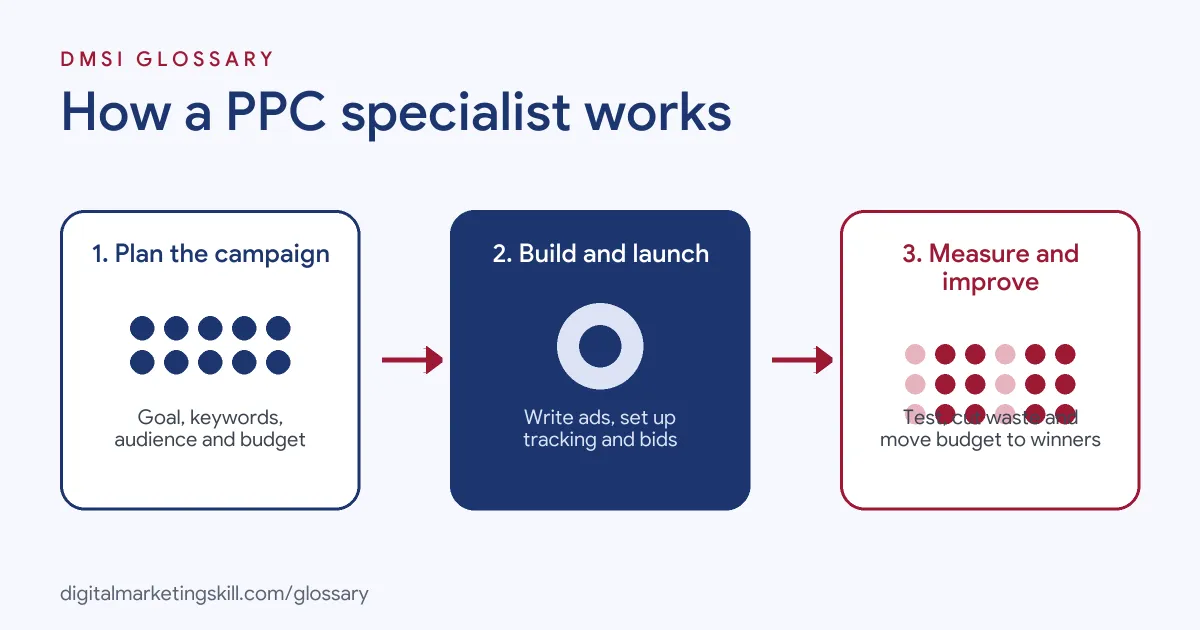
A PPC specialist’s work follows a cycle. First, they plan a campaign around a goal and an audience. Next, they build and launch the ads. Then they measure results and improve the campaign again and again.
Planning campaigns
To start, every campaign needs a goal, such as sales or leads. After that, the specialist does keyword research to find what people search for. They also choose the audience, budget and bid strategy. So the plan sets the direction before any money is spent.
Building and launching ads
Next, the specialist writes ad copy and sets up the campaign structure. For instance, they group related keywords together and add negative keywords to block poor searches. In addition, they make sure conversion tracking works, so every sale or lead is recorded.
Measuring and improving
Once ads are live, the real work begins. The specialist checks clicks, costs and conversions every day or week. Also, they run tests on headlines, landing pages and audiences. Prospects notes that the role includes the need to “present data and reports to a range of audiences.” Finally, they move budget towards what works best.
Tools of the trade
Day to day, most specialists work in the ad platforms themselves, such as Google Ads and Microsoft Advertising. They also use analytics tools, spreadsheets and reporting dashboards. In fact, Prospects lists “knowledge of Microsoft Excel and data manipulation” as a key skill.
Skills you need
So what makes a good PPC specialist? First, Prospects lists “strong analytical skills” and “excellent attention to detail.” Second, you need clear writing, because every ad has only a few words to win a click. In addition, you need business sense to connect ad results to profit. Finally, good communication helps you explain results to clients and managers.
You don’t need to be a maths expert. However, you should feel comfortable with numbers such as cost per click, conversion rate and return on ad spend. Also, curiosity helps a lot. The best specialists keep asking why a result changed and what to test next.
Career path
Many people start as a PPC executive or junior paid search assistant. After some hands-on experience, they move up to specialist. Then they can grow into PPC manager, head of paid media or a wider performance marketing role. Alternatively, some become a freelance digital marketer and manage accounts for several clients. Because the work is online, it also suits remote working.
Examples of PPC Specialist Work
- At an agency. A PPC specialist manages search ads for several local businesses. Each week, they review search terms, pause poor keywords and send each client a short report.
- At an online shop. The specialist runs Shopping campaigns and Amazon ads. During a busy sales period, they raise budgets on top products and cut spend on slow sellers.
- At a software company. The specialist focuses on lead generation. So they test two landing pages and keep the one that brings more demo requests for the same cost.
PPC Specialist vs Related Roles
| Role | Main focus | Typical channels |
|---|---|---|
| PPC specialist | Paid ads that charge per click | Google Ads, Microsoft Advertising, Amazon |
| SEO specialist | Unpaid rankings in search results | Google and Bing organic results |
| Paid social specialist | Paid ads on social platforms | Meta, TikTok, LinkedIn |
| Performance marketer | Results across all paid channels | Search, social, display and more |
How to Become a PPC Specialist
- Learn the basics. Understand how ad auctions, keywords, bids and Quality Score work.
- Take free training. Google’s Skillshop offers “free online training” for Google Ads. Then work towards the Google Ads certifications, such as Search and Display.
- Practise with real accounts. Offer to run a small campaign for a local business, charity or your own project.
- Build your data skills. Get comfortable with spreadsheets, formulas and simple charts.
- Write good ad copy. Practise short, clear headlines that match what people search for.
- Create a portfolio. Show the goal, what you did and what you learned for each campaign.
- Apply for junior roles. Look for PPC executive, paid search assistant or agency trainee roles. After that, grow into specialist and manager roles.
Best Practices for PPC Specialists
- Start from the business goal. Agree what success means before you spend a penny.
- Track everything. Without accurate conversion data, you can’t tell what works.
- Test one thing at a time. Change a single element, so you know what caused the result.
- Check search terms often. Add negatives to stop wasted spend on poor matches.
- Report in plain language. Explain results in terms of leads, sales and cost, not jargon.
- Keep learning. Ad platforms change often, so follow official help pages and updates.
Common Mistakes to Avoid
- Chasing clicks, not results. Cheap clicks mean little if nobody buys.
- Setting and forgetting. Campaigns need regular checks, even with automated bidding.
- Sending traffic to weak pages. A poor landing page wastes good ads.
- Ignoring mobile users. Many clicks come from phones, so test the mobile journey.
- Using too broad targeting. Wide audiences can burn budget on the wrong people.
- Hiding bad news. Clients trust you more when you explain problems and fixes honestly.
Where You’ll Work as a PPC Specialist
PPC specialists work at agencies, in-house marketing teams and as freelancers, often remotely. For example, real remote job listings say:
- “We are seeking a highly skilled and experienced PPC Specialist to join our marketing team.” (PPC Specialist).
- “We’re hiring a performance-driven E-Commerce PPC Specialist with deep Amazon advertising experience to help scale revenue across Amazon, Facebook Ads, and email marketing channels.” (E-Commerce PPC Specialist).
- “In this client-facing role, you will be responsible for developing, managing, and optimizing PPC campaigns to drive sales and profitability for our clients’ Amazon products.” (Amazon PPC Specialist).
Learn It in the Google Ads and Analytics Track
You can train for PPC roles in the AI-Powered Google Specialist track. Every track includes a U.S. Project Internship from day one, with unlimited 1-on-1 mentoring.
Frequently Asked Questions
What does a PPC specialist do every day?
They check campaign results, adjust bids and budgets, write and test ads, and report on performance. Many also research new keywords and audiences.
Do I need a degree to become a PPC specialist?
Not always. Prospects says most new entrants have a degree, but no specific subject is required, and experience often matters more.
Can a PPC specialist work remotely?
Yes. Many roles are remote or flexible, because the work happens in online ad platforms.
Are Google Ads certifications worth it?
They show employers that you know the basics. In addition, the training on Skillshop is free.
What is the difference between PPC and SEO?
PPC uses paid ads to get visits quickly. By contrast, SEO earns unpaid visits over time through better rankings.
Sources: Prospects: PPC specialist job profile; Google Skillshop: Google Ads training and certification; Google Ads Help: Google Partners requirements; remote job listings on Himalayas, Himalayas and Himalayas.