
A Marketing Coordinator is a marketing professional who organises the day-to-day work that keeps campaigns running, from schedules and content to events, suppliers and reports. They are often the link between managers, designers, agencies and sales. So they keep the whole team in sync. As a result, plans turn into finished work on time. Also, the role is a common first step into a marketing career.
Key Takeaways
- A coordinator plans, tracks and supports campaign work across channels.
- Typical tasks include content, social media, events, email, budgets and reporting.
- Good planning, clear writing and plain talk matter more than any one tool.
- In the UK, people also call the role a marketing executive or officer.
- Many coordinators later move into a specialist or manager role.
What Is a Marketing Coordinator?
Every team has big plans. However, someone has to make sure each task happens on time. That person is often the coordinator. For example, they book the designer, check the copy, schedule the posts and send the report on Monday.
Think of a stage manager in a theatre. The director decides what the show should be. Then the stage manager makes sure every actor, light and prop is ready at the right moment. In the same way, a coordinator turns the marketing strategy into a working plan.
Still, job titles vary. For example, in the UK, Prospects notes that a marketing executive is “sometimes called a marketing coordinator.” Also, the National Careers Service lists related titles such as digital marketing executive and marketing officer. So when you search for jobs, look at the tasks, not just the title.
Why It Matters
Why is this role so useful? First, campaigns have many moving parts, and small delays add up. Second, managers need clear data to make decisions. So a good coordinator handles both. In addition, the role touches almost every channel. As a result, it is a strong way to learn the whole field before you specialise.
Skills You Need
You don’t need to be an expert in every channel. Instead, you need a few core habits. First, you plan well and hit dates. Second, you write clearly, so briefs and posts make sense. Also, you stay calm when plans change. In addition, you are happy with numbers and can spot what went up or down. Finally, you ask good questions. The National Careers Service also lists “excellent verbal communication skills” for this kind of role.
How a Marketing Coordinator Works
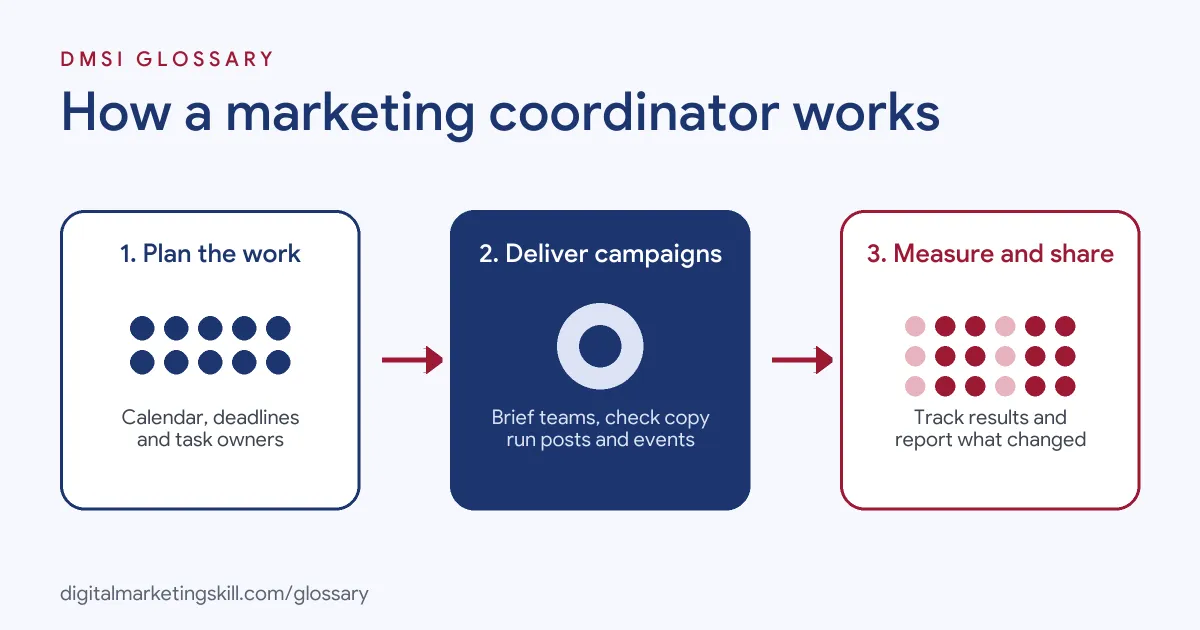
Most of the job follows a simple loop. You plan the work, help deliver it, then measure the results. After that, you share what you learned so the next campaign is better.
Planning the Work
First, the coordinator helps build the plan. That often means a content calendar, a list of deadlines and a clear owner for each task. Also, they may track spend against the marketing budget. Indeed, the National Careers Service lists “managing marketing budgets and checking that brand guidelines are followed” as a core task.
Delivering Campaigns
Next, the coordinator keeps work on track. For example, they brief designers, check copy and load emails into the sending tool. Prospects says marketing executives “work closely with in-house or external, creative agencies to design marketing materials.” In addition, they often run social channels and support events. Prospects also says they “organise and attend events, such as conferences, seminars, receptions, and exhibitions.”
Measuring Results
Then the coordinator pulls the numbers together. They might track clicks, sign-ups, leads or sales against each key performance indicator. Prospects notes that, with experience, the role grows to tracking “marketing performance and return on investment.” So skills with sheets and reports help from day one.
Keeping Everyone Aligned
Finally, the coordinator keeps people informed. They share updates, flag risks and make sure everyone uses the latest files. Also, they check that work follows the brand guidelines. Because so many people rely on them, clear, calm talk is the core skill of the job.
A Typical Week
So what does a normal week look like? On Monday, you might send last week’s results to your manager. Then you check the plan for the week ahead. On Tuesday, you brief a designer on new ads. Midweek, you load an email and test the links. Also, you might join a call with an agency. By Friday, you schedule next week’s posts and tidy the files. Of course, no two weeks are quite the same. Still, this rhythm of plan, do and check stays the same.
Tools You’ll Use
Most teams use a small set of tools. For example, a task board keeps work in one place. Then a social tool lets you plan posts ahead. Also, an email tool sends newsletters and tracks opens and clicks, which is the heart of email marketing. In addition, a website editor helps you update pages. Finally, sheets and simple charts help you share results. You don’t need to know them all on day one. Instead, learn the basics of each, and the rest comes with use.
Working Remotely
Many coordinators work from home or across time zones. So clear notes matter even more. For instance, you write updates that make sense without a call. Also, you keep files in shared folders with clear names. As a result, the team can pick up work at any hour. This kind of remote work suits people who plan well and speak up early.
Examples of Marketing Coordinator Work
- A software company launching a feature. The coordinator builds the launch timeline. Then they line up the blog post, email, social posts and sales slides for the same day.
- A university open day. The coordinator books the venue, orders printed guides and schedules reminder emails. After the event, they report how many people booked and attended.
- A small online shop. Here the coordinator wears many hats. For instance, they schedule posts, update product pages and send a weekly results summary to the owner.
Marketing Coordinator vs Assistant vs Manager
| Point | Assistant | Coordinator | Manager |
|---|---|---|---|
| Main focus | Supporting tasks set by others | Organising and delivering campaigns | Setting strategy and leading the team |
| Typical level | Entry level | Entry to mid level | Mid to senior level |
| Decision power | Low | Some, within a plan | High, sets the plan |
| Typical outputs | Admin, research, simple posts | Schedules, content, events, reports | Strategy, budgets, team goals |
| Who they work with | Mostly their own team | Teams, agencies and suppliers | Leadership and other departments |
How to Become a Marketing Coordinator
- Learn the basics. Study core ideas such as audiences, channels, funnels and campaign planning.
- Pick up the main tools. Practise with a social scheduler, an email platform, a website editor and spreadsheets.
- Build real examples. For example, run social media for a club or a charity. The National Careers Service suggests volunteering to help charities with social media and events.
- Show you can plan. Track deadlines and keep tidy notes, then point to them in interviews.
- Consider a qualification. CIM’s Level 3 Foundation Certificate “is designed for aspiring marketers, career changers, and those new to a marketing role.”
- Start in a related role. Prospects says “Getting work as a marketing assistant or junior executive is a good first step.”
- Show results. Finally, keep a short portfolio with what you did and what changed because of it.
Best Practices for Marketing Coordinators
- Write it down. Keep one shared plan with tasks, owners and deadlines.
- Confirm the brief. Check the goal, audience and deadline before work starts.
- Report simply. Use a clear marketing dashboard and lead with what changed and why.
- Flag risks early. Tell people about delays as soon as you see them.
- Check before you send. Proofread links, dates and prices on every asset.
- Keep learning. Pick one channel at a time and go deeper, so you grow towards a specialism.
Common Mistakes to Avoid
- Saying yes to everything. Instead, agree priorities with your manager when tasks clash.
- Working from old files. Keep one source of truth for each asset.
- Reporting only activity. “We sent five emails” means less than “Emails brought in 40 sign-ups.”
- Skipping the brand check. Small errors in logos or tone can undo good work.
- Forgetting follow-up. Events and campaigns need clear next steps for leads.
- Only learning tools. Tools change often. However, planning and communication skills last.
Where You’ll Work as a Marketing Coordinator
Marketing coordinators work in agencies, brands, universities and service firms, often remotely. For example, real remote job listings describe the role like this:
- “The Marketing Coordinator supports the planning and execution of marketing activities across WildBrain CPLG’s portfolio of entertainment, lifestyle, and consumer brands.” (Marketing Coordinator).
- “The Marketing Coordinator helps keep the marketing organization moving.” (Marketing Coordinator).
- “hiring a Marketing Coordinator to support day-to-day marketing operations, executive coordination, content management, and digital growth initiatives.” (Marketing Coordinator).
Learn It in the Full Stack Track
Coordinators touch every channel. So the Full Stack path, which covers all four tracks, is a good fit. Every track includes a U.S. Project Internship from day one, with unlimited 1-on-1 mentoring.
Frequently Asked Questions
What does a marketing coordinator do each day?
They plan and track tasks, prepare posts and emails, talk to suppliers and report results. However, the mix depends on the team.
Do I need a degree to become a marketing coordinator?
Not always. In fact, the National Careers Service lists several routes, including college courses, apprenticeships, volunteering and professional qualifications.
Is marketing coordinator an entry-level job?
It is often entry to mid level. Also, some people start as an assistant first, then step up.
Can a marketing coordinator work remotely?
Yes, many do. Remote listings for this role are common. Still, each employer sets its own rules.
What comes after a marketing coordinator role?
Often, coordinators move into a specialist role, such as email or social media. Others step up to manager.
Sources: Prospects: Marketing executive; National Careers Service: Marketing executive; CIM: CIM Qualifications; remote job listings on Himalayas, Himalayas and Himalayas.