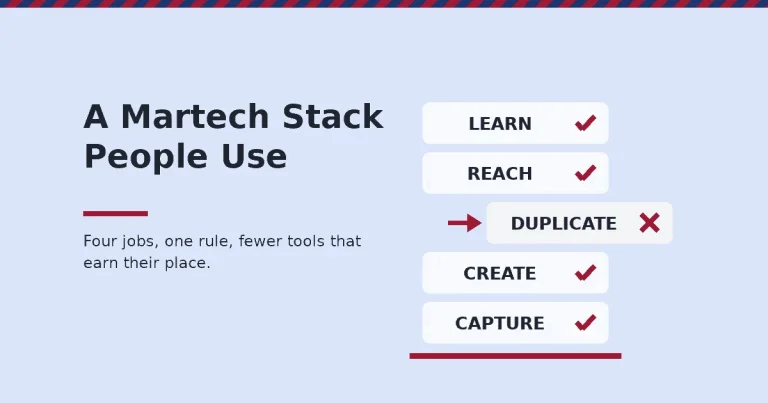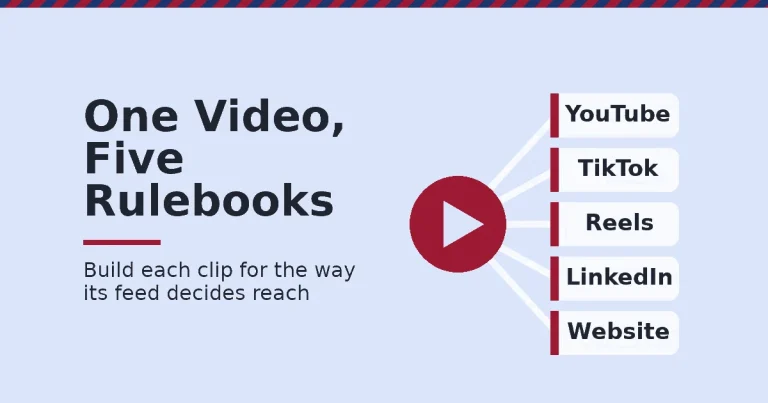
Instagram marketing guidelines usually mix two different things: tactics that help a post perform, and rules a post must follow before it is even eligible to perform. This guide separates them. It covers the technical specs, disclosure rules and ad policies Instagram enforces, plus the posting habits that actually move reach once a post clears those rules.
This guide checks every figure and rule below against Meta’s own documentation, the FTC’s own guidance, or an independent study, each named with its scope stated.
Key Takeaways
- Specs come before ranking. Meta’s own ads guidance recommends a 4:5 ratio at 1440 by 1800 pixels for Instagram Feed images. It also caps hashtags at 30 per post, limits that apply before any algorithm even weighs in.
- Paid partnerships need clear disclosure. The FTC’s Endorsement Guides say a single hashtag like “#ad” at the start of a post counts as clear. Bundled tags like “#sp” buried in a block do not.
- Certain ad categories need special handling. Meta’s own developer documentation names four special ad categories: housing, employment, financial products and services, and elections or political issues.
- Posting consistency has a measurable payoff. Buffer’s dataset of 4.8 million channel-weeks found accounts posting 10 or more times a week averaged 32 more followers a week than their silent weeks.
- Reposted or watermarked content gets suppressed. Instagram’s own creator guidance says it is less likely to recommend low-resolution, watermarked, bordered or reposted content.
In this guide
- Most Guidelines Blend Rules And Tactics. Few Separate What You Must Do From What You Should Do
- Why Compliance Comes Before Performance
- Four Pillars Of Instagram Marketing Guidelines, And What Each One Is Built For
- How To Lead On Each Pillar Of Instagram Marketing Guidelines
- Specs Differ Slightly For Stories And Reels Too
- A Quick Reference For Instagram Content Specs
- What To Actually Check Against Each Pillar
- The One Decision Rule For Instagram Marketing Guidelines
- Who Actually Enforces Each Rule
- Common Mistakes That Break Instagram Marketing Guidelines
- What Following These Guidelines Looks Like In Practice
- Frequently Asked Questions About Instagram Marketing Guidelines
- Build Guidelines Into Your Instagram Process, Not Just Your Memory
Most Guidelines Blend Rules And Tactics. Few Separate What You Must Do From What You Should Do
Search for Instagram marketing guidelines and you get a mixed list. Hashtag tips sit next to posting-time advice, next to vague legal warnings. That mix hides an important distinction.
Some of these are hard requirements, like disclosure law and ad policy. Others are optional tactics that only help once the hard requirements are met.
This guide separates the two. Every claim below is sourced to Meta’s or the FTC’s own documentation, or to an independent, named study, with its scope stated. Once these rules are handled, our guide to Instagram brand awareness covers how each surface’s algorithm actually builds recognition.
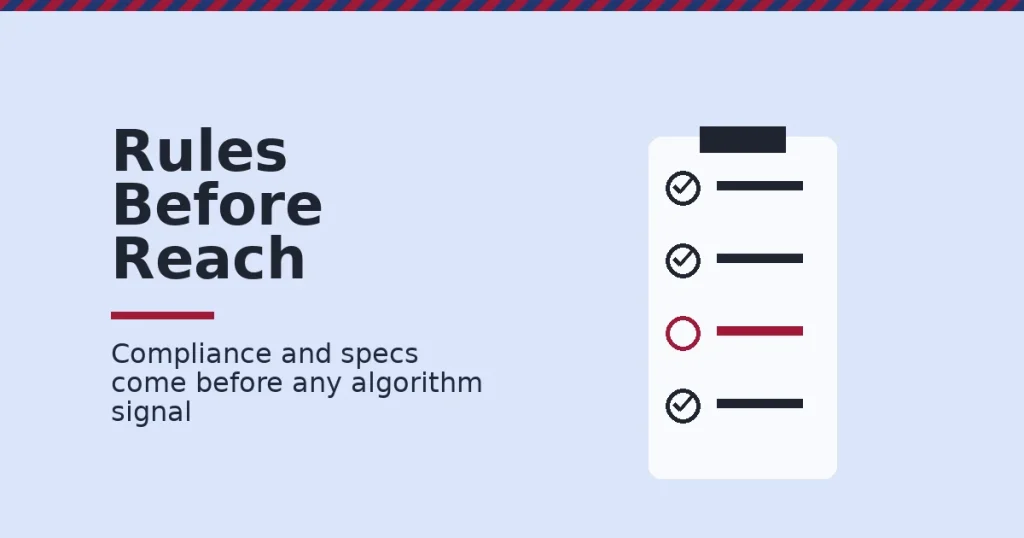
Why Compliance Comes Before Performance
A post that violates Instagram’s technical specs, or skips a legally required disclosure, is not a performance problem to fix later. Wrong image dimensions get cropped or rejected. A missing ad disclosure creates regulatory risk, not just a lower reach number.
Neither failure mode responds to a better caption or a smarter hashtag. That is why Instagram marketing guidelines should separate compliance from tactics. Get the specs and disclosure rules right first. No amount of algorithm knowledge fixes a rejected image or an undisclosed partnership.
Four Pillars Of Instagram Marketing Guidelines, And What Each One Is Built For
These four pillars cover almost every rule and habit a business needs to post on Instagram responsibly. That includes the pillars taught at Digital Marketing Skill Institute. Each one centres on a different kind of requirement.
Content Specs: Built For Technical Approval
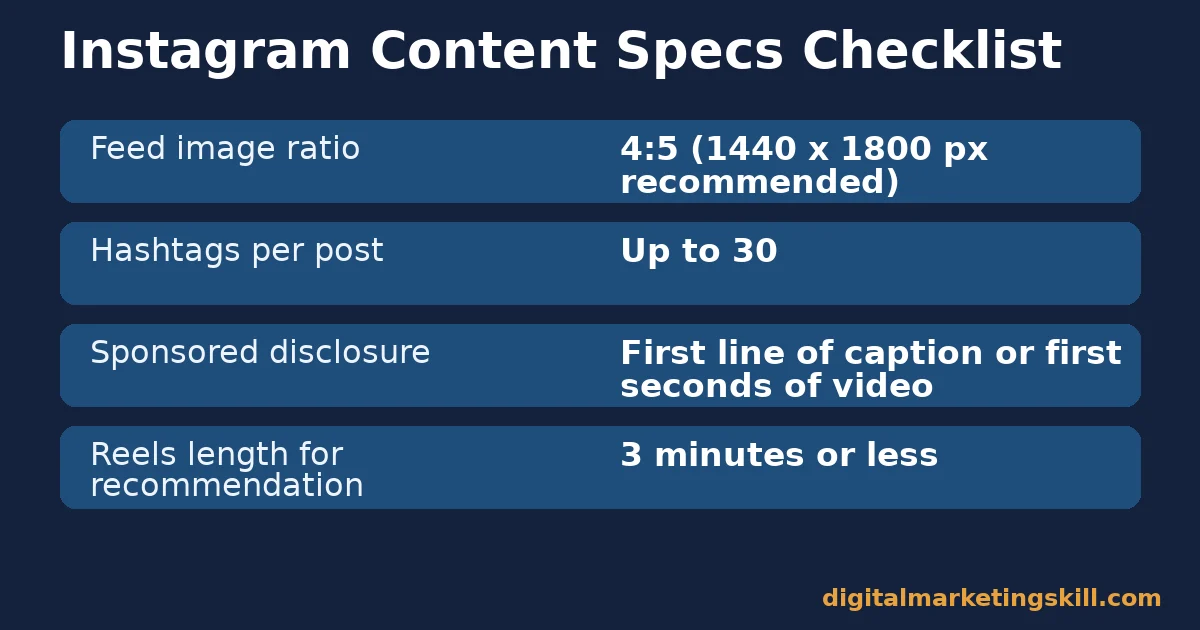
Content specs decide whether a post displays correctly at all. Meta’s own ads guidance recommends a 4:5 aspect ratio at 1440 by 1800 pixels for Instagram Feed images. It accepts a range between 4:5 and 1.91:1, with a small tolerance for variation. Posts outside that range get cropped or stretched unpredictably.
Captions and hashtags carry limits too. Meta’s own guidance caps hashtags at 30 per post. Going over that limit does not add reach. It risks the post reading as spam-like to Instagram’s own systems.
Sponsored Content Disclosure: Built For Legal Compliance
Disclosure rules exist independently of Instagram’s own policies. The FTC’s Endorsement Guides require disclosure whenever a connection between a poster and a brand is something “a significant minority of consumers wouldn’t expect.” That covers paid posts, free products and other incentives.
The FTC is specific about what counts. “#ad” or “Ad:” placed at the start of a post is clear. Bundled, ambiguous tags like “#sp” or “#partner,” buried at the end of a caption, are not. A disclosure hidden only in a video description or comment does not count either.
Ad Policy: Built For Platform Approval
Running a paid Instagram ad adds a second layer of rules beyond organic posting. Meta’s own developer documentation requires a special_ad_categories declaration for ads touching housing, employment, financial products and services, or elections and political issues. That declaration restricts targeting options on those campaigns specifically, including age ranges, location exclusions and lookalike audiences.
Skipping that declaration on a qualifying ad risks rejection or suspension, not just lower performance. It is a policy gate, not a ranking signal. Check it before a campaign launches, not after it underperforms.
Posting Cadence: Built For Earning Algorithm Trust
Once specs and compliance are handled, cadence is the habit that actually moves reach. Buffer’s dataset of 4.8 million channel-weeks covers roughly 161,000 profiles. It found accounts posting 10 or more times a week averaged 32 more followers a week than during their own silent weeks.
That gap is measured against an account’s own baseline, not a competitor’s. A sudden burst of posts after a long silence does not recover that lost ground right away. Among Instagram marketing guidelines, cadence is the one that rewards a sustainable rhythm over sporadic effort, week after week.
How To Lead On Each Pillar Of Instagram Marketing Guidelines
Meeting the minimum bar on each pillar is not the same as leading on it. Here is what separates compliant-but-average accounts from the ones that get real value from each pillar.
Content Specs: Lead With One Template Per Surface
A business that leads here builds one correctly sized template for Feed, one for Stories and one for Reels. It does not resize the same asset on the fly for every post. That removes the chance of an off-ratio image slipping through under deadline pressure.
Sponsored Content Disclosure: Lead With Disclosure In The First Line
A business that leads here puts the disclosure in the first line of the caption, or the opening seconds of a video, not buried at the end. That matches the FTC’s own “clear and conspicuous” standard. It protects both the brand and the creator from regulatory risk.
Ad Policy: Lead With A Pre-Launch Checklist
A business that leads here checks every campaign against Meta’s special ad category list before launch, not after a rejection notice. A five-minute checklist before a campaign goes live costs far less than a paused campaign mid-flight. Our broader guide to social media marketing skills covers how this checklist habit applies across other platforms too.
Posting Cadence: Lead With A Schedule You Can Actually Keep
A business that leads here picks a posting frequency it can sustain for months, not the maximum frequency it can manage for one good week. Instagram’s own creator guidance also warns against reposted or watermarked content. A sustainable schedule beats a frantic one that leans on recycled material to keep pace. For a fuller list of what else caps reach, see our guide to Instagram marketing mistakes.
Specs Differ Slightly For Stories And Reels Too
Feed is not the only surface with its own dimensions. Stories and Reels both favour a tall, full-screen vertical format, built for a phone held upright, rather than the 4:5 Feed crop above. Dropping a square or landscape Feed asset straight into Stories usually leaves visible bars or a cropped subject.
Video length carries its own rule on Reels specifically. Instagram’s own creator guidance states reels need to run three minutes or less to qualify for recommendation to non-followers. A longer video can still post, but it loses the discovery boost that drives new reach in the first place.
Build each surface’s template around its own ratio from the start, rather than cropping one master asset three different ways under deadline pressure. That single habit prevents most of the visible formatting mistakes that make a business look careless, even when the underlying message is solid.
A Quick Reference For Instagram Content Specs
Keep this as a checklist for whoever builds your creative, so the question never comes up mid-deadline.
- Feed images: 4:5 ratio at 1440 by 1800 pixels recommended; accepted range runs from 4:5 to 1.91:1.
- Hashtags: up to 30 per post, though fewer, more relevant tags usually read better than a maxed-out block.
- Sponsored disclosure: in the first line of text, or the first seconds of video, using a clear term like “#ad” or “Ad:”.
- Regulated ad categories: housing, employment, financial products and services, and elections or political issues, each needing its own declaration before launch.
What To Actually Check Against Each Pillar
Each pillar needs a different kind of check, not a single performance dashboard. Use this as a quick reference.
- Content specs: a pre-publish check that image ratio, resolution and hashtag count sit inside Meta’s documented ranges, caught before a post goes live.
- Sponsored disclosure: whether the disclosure appears in the first line or first seconds, not just somewhere in the post.
- Ad policy: whether a campaign’s category correctly triggers a special_ad_categories declaration before launch.
- Posting cadence: posts per week against your own prior weeks, since Buffer’s data measures the gap against an account’s own baseline, not a fixed industry number.
The One Decision Rule For Instagram Marketing Guidelines
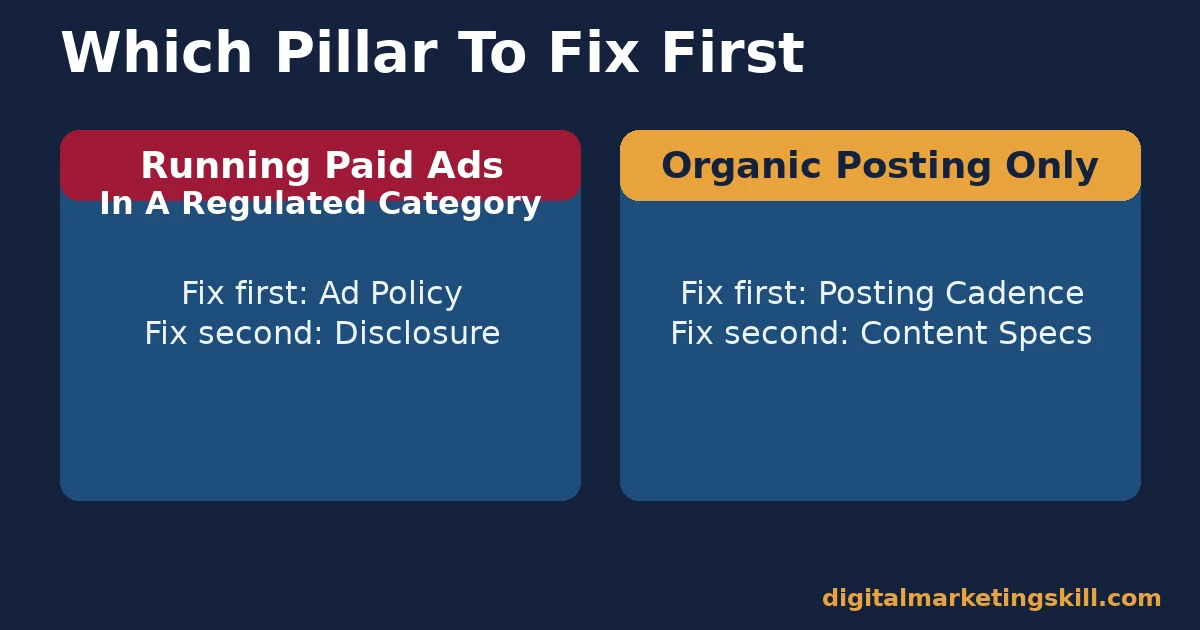
If you can only fix one pillar first, fix whichever one carries the bigger downside risk for your business right now. A business running paid ads in a regulated category should check ad policy and disclosure first, because those failures carry legal and account risk.
A business posting organic content only should fix cadence first instead, because that is the pillar actually suppressing its reach day to day. The risk profile, not a generic checklist order, should decide where you start.
Here is an illustrative example, with invented numbers. A skincare brand runs a giveaway post with an undisclosed free-product partnership, built to correct image specs. That post reaches 5,000 accounts before a disclosure complaint forces a takedown and a policy review.
The same post, with “#ad” in the first line, reaches the same 5,000 accounts with no compliance risk attached. Image specs were never the real problem.
Who Actually Enforces Each Rule
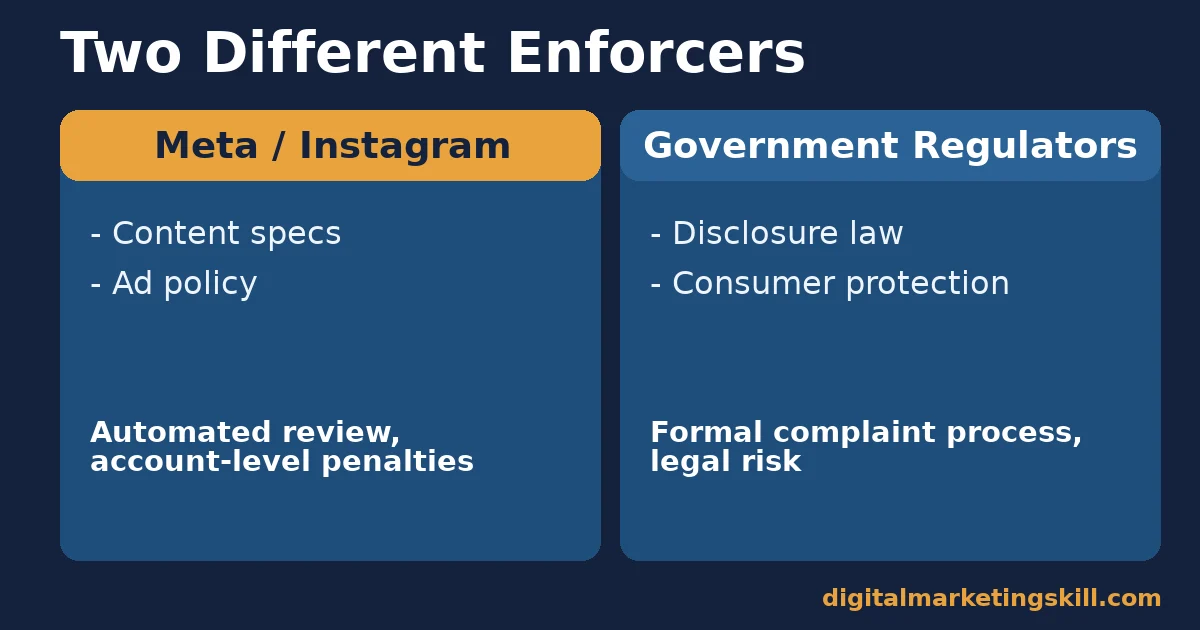
Instagram marketing guidelines come from two different enforcers, and mixing them up leads to the wrong fix. Meta enforces content specs and ad policy directly, through automated review and account-level penalties. A rejected ad or a flagged image is Meta’s own system acting, not a legal process.
Disclosure law comes from government regulators instead. The FTC enforces endorsement rules in the US. Similar consumer-protection bodies exist in other countries, with their own version of the same basic principle: disclose a paid relationship a viewer would not otherwise expect. A business operating internationally should check its own country’s advertising-standards body for the local equivalent, since the FTC’s guidance applies directly only in the United States.
That split decides how fast a problem goes away. You fix a specs violation by re-uploading a corrected asset. A disclosure violation can trigger a formal complaint process that moves on a regulator’s timeline, not Instagram’s.
Common Mistakes That Break Instagram Marketing Guidelines
Most accounts do not break Instagram marketing guidelines through one dramatic failure. They repeat a handful of small, fixable habits instead.
- Resizing images on the fly. Without a template per surface, an off-ratio image eventually slips through under deadline pressure.
- Burying the disclosure at the end. A disclosure after the fold, or only in a comment, fails the FTC’s own “clear and conspicuous” standard.
- Launching a regulated ad without checking its category. Housing, employment and financial ads need a declaration before launch, not a fix after rejection.
- Posting in bursts, then going quiet. Buffer’s no-post-penalty data shows the real cost of silent weeks, even after a strong burst.
- Treating every guideline as equally optional. Legal requirements and optional tactics carry very different consequences when ignored.
What Following These Guidelines Looks Like In Practice
Digital Marketing Skill Institute teaches social media students to separate platform rules from platform tactics, rather than treating every guideline as equally optional. Graduate Ayooluwa Osemi, as published on the Institute’s reviews page, reports spending $14 on Facebook and Instagram ads and making $878 back.
That account is self-reported by the Institute, not independently audited. Treat it as one graduate’s documented outcome, not a typical result. The lesson still holds. Getting the compliance basics right protects a campaign’s budget from being wasted on a rejected or taken-down ad.
Frequently Asked Questions About Instagram Marketing Guidelines
What image size does Instagram recommend for feed posts?
Meta’s own ads guidance recommends a 4:5 ratio at 1440 by 1800 pixels for Instagram Feed images. It accepts a range between 4:5 and 1.91:1.
How do I disclose a sponsored Instagram post correctly?
Place “#ad” or “Ad:” at the start of the caption, or state the partnership clearly in the opening seconds of a video. The FTC’s Endorsement Guides warn that bundled or ambiguous tags buried in the caption do not count as clear disclosure.
Is there a hashtag limit on Instagram?
Meta’s own guidance caps hashtags at 30 per post. Posts near that limit do not necessarily perform better, and excessive tagging can read as spam-like to Instagram’s own systems.
Which Instagram ad categories need special declarations?
Meta’s developer documentation names four special ad categories: housing, employment, financial products and services, and elections or political issues. Each requires a special_ad_categories declaration that restricts targeting on those campaigns.
How often should a business post on Instagram?
Buffer’s analysis of 4.8 million channel-weeks found accounts posting 10 or more times a week averaged 32 more followers a week than quiet weeks. Match your own baseline. Do not chase an industry average.
Does reposting content hurt reach on Instagram?
Yes. Instagram’s own creator guidance states it is less likely to recommend watermarked, low-resolution or previously posted content, which penalises reposts from other platforms or accounts.
What happens if a post breaks Instagram’s technical specs?
Organic posts typically display cropped or stretched, rather than facing an outright rejection. For paid ads, specs outside Meta’s accepted range can prevent the ad from running at all.
Do Stories and Reels use the same image ratio as Feed?
No. Feed favours a 4:5 ratio, while Stories and Reels favour a tall, full-screen vertical format built for a phone held upright. Using a Feed-sized asset on Stories or Reels usually leaves visible bars or crops out part of the image.
Who do I contact if a disclosure complaint is filed against my brand?
That depends on the regulator in your country. In the United States, the FTC handles endorsement and disclosure complaints. Other countries have their own consumer-protection or advertising-standards bodies, so check your local equivalent rather than assuming US rules apply everywhere.
Build Guidelines Into Your Instagram Process, Not Just Your Memory
Good Instagram marketing guidelines work as a checklist, not a list of tips to remember under deadline pressure. Digital Marketing Skill Institute’s Master Diploma in Digital & AI Marketing includes AI-powered social media marketing and analytics as one of its core courses. It sits alongside AI-powered content creation for graphics and video, AI-powered Google advertising, and AI-powered search engine optimisation and content marketing.
The program includes unlimited one-on-one mentoring. It carries dual US and UK accreditation, recognised in more than 100 countries, and runs 100% online, so you can apply these rules to a business anywhere in your country. Explore the full Master Diploma in Digital & AI Marketing curriculum. Read more outcomes on the reviews page, or browse more guides on the digital marketing blog.
Wherever you live, the rule above still applies: fix whichever pillar carries the bigger risk for your business first, then build the rest into a repeatable checklist. When you are ready to go deeper, apply to the Master Diploma program at Digital Marketing Skill Institute.
Every figure in this guide was checked against its original source before publication. Figures marked as illustrative are invented examples, not real results.
![9 Amazing Digital Marketing Skills to Make Money Online [With Proof]](https://digitalmarketingskill.com/wp-content/uploads/2019/07/9-Amazing-Digital-Marketing-Skills-to-Make-Money-Online-With-Proof-17.png)