Holiday marketing is the planning and promotion businesses do around the end-of-year holiday season, roughly from early November to early January, covering Thanksgiving, Black Friday, Cyber Monday, Hanukkah, Christmas, Kwanzaa, New Year and other celebrations your customers observe. A strong holiday marketing strategy starts early, uses data from previous seasons, builds one clear campaign idea, mixes helpful content with well-timed offers, works across email, social media, search and ads, respects the many ways people celebrate, and keeps new customers after the season ends. This guide explains how to build a holiday marketing strategy, the key dates for the 2026 season, holiday marketing campaign ideas, examples from well-known brands, how to market inclusively and how to measure results.
If your audience mainly celebrates Christmas, our dedicated guide to Christmas marketing goes deeper on December. This guide takes the wider view of the whole season.
Key Takeaways
- Adobe expected US online spending to reach $253.4 billion across the 2025 holiday season (1 November to 31 December), up 5.3% year on year.
- Cyber Week, the five days from Thanksgiving to Cyber Monday, generated $44.2 billion in US online sales in 2025, about 17.1% of the season’s total, according to Adobe.
- Cyber Monday 2025 was the biggest US online shopping day on record at $14.25 billion, with buy now, pay later driving more than $1 billion of that.
- Mobile accounted for 57.5% of US online transactions on Cyber Monday 2025, so holiday campaigns must be built for phones.
- The holiday season includes many celebrations, so inclusive messaging helps more customers feel welcome.
In this guide
- What Is Holiday Marketing?
- Why the Holiday Season Matters
- What Most Holiday Marketing Guides Miss
- Holiday Marketing Calendar for 2026
- When Should You Start Holiday Marketing?
- How to Build a Holiday Marketing Strategy in 9 Steps
- Holiday Marketing by Channel
- Holiday Social Media Strategies by Platform
- Prepare for a Busy Customer Care Season
- 20 Holiday Marketing Campaign Ideas
- Holiday Marketing Campaign Examples
- Inclusive Holiday Marketing
- Holiday Marketing for B2B and Services
- Holiday Marketing Mistakes to Avoid
- How to Measure Holiday Marketing
- The One Rule of Holiday Marketing
- An Illustrative Case
- Frequently Asked Questions About Holiday Marketing
- Your Next Step
What Is Holiday Marketing?
Holiday marketing is a type of seasonal marketing focused on the end-of-year holidays. It includes campaigns, content, offers and customer communications designed around the shopping, gifting, travel and celebration habits of the season.
In the United States, “the holidays” usually means the period from Thanksgiving to New Year. In other countries, the season may centre on Christmas, Diwali, Hanukkah or New Year, and it may fall in summer rather than winter. Good holiday marketing reflects how your own customers celebrate.
Why the Holiday Season Matters
- Demand peaks. Many retailers earn a large share of annual revenue in the final two months of the year.
- New customers arrive. Gift buyers discover brands they would never normally try, creating a chance to win long-term customers.
- Attention is high. People actively look for ideas, offers and inspiration, making them receptive to useful marketing.
- Emotions run strong. Generosity, nostalgia and togetherness make storytelling especially powerful.
- Competition is fierce. Ad costs often rise and inboxes fill up, so planning and creativity matter more than ever.
What Most Holiday Marketing Guides Miss
- The season is a series of moments, not one. Black Friday, Cyber Monday, Hanukkah, Christmas, Boxing Day and New Year each have different moods and goals. One message repeated for eight weeks quickly feels stale.
- Retention is where profit lives. Holiday customers cost more to acquire because ad prices rise. The real return comes when they buy again in January and beyond.
- Operations are marketing. Delivery promises, stock levels, customer service response times and returns policies shape customer experience as much as any advert.
- Not everyone celebrates the same way. Inclusive messaging reaches more people and avoids alienating loyal customers.
Holiday Marketing Calendar for 2026
| Date | Moment | Typical focus |
|---|---|---|
| Early November | Season warm-up; Diwali in many years (check annual dates) | Gift guides, list building, early offers |
| Wed 11 Nov | Singles’ Day | Online deals, especially in Asia |
| Thu 26 Nov | Thanksgiving (US) | Gratitude messages, soft launches |
| Fri 27 Nov | Black Friday | Biggest promotions |
| Sat 28 Nov | Small Business Saturday | Shop local, independents |
| Mon 30 Nov | Cyber Monday | Online offers |
| Tue 1 Dec | Giving Tuesday | Charity and giving back |
| Early to mid December | Hanukkah (dates vary each year) | Inclusive greetings, gifting |
| Mon 14 Dec | Green Monday | Online deals, shipping reminders |
| Sat 19 Dec | Super Saturday (last Saturday before Christmas) | Last-minute gifts, click-and-collect, gift cards |
| Mid to late December | Shipping deadlines | Order-by urgency, express delivery |
| Fri 25 Dec | Christmas Day | Greetings, no hard sell |
| Sat 26 Dec | Boxing Day; Kwanzaa begins | Sales, gift card redemption |
| Thu 31 Dec to Fri 1 Jan | New Year’s Eve and New Year’s Day | Reflection, resolutions, fresh starts |
When Should You Start Holiday Marketing?
For most businesses, holiday planning should start in late summer, with advertising and audience building active by September or October. Starting early gives your marketing time to work: people research gifts weeks before they buy, and warm audiences built in October are cheaper to reach in December than cold ones.
Black Friday and Cyber Monday Are Peaks, Not Starting Lines
If your first holiday message goes out on Black Friday, you are competing for attention at the most expensive moment of the year. Build awareness and your email list beforehand, so Cyber Week converts people who already know you.
Don’t Let Cyber Monday Be Your Finish Line
Many shoppers finish their gift buying in December. Keep campaigns running through gift guides, delivery deadlines and last-minute offers.
Plan for Super Saturday
Super Saturday is the last Saturday before Christmas, a busy day for last-minute shoppers, especially in physical stores. In 2026 it falls on Saturday 19 December. Promote click-and-collect, local delivery, gift cards and extended opening hours.
Keep Going After Christmas
Holiday shopping does not stop on 25 December. Gift card holders, self-gifters and bargain hunters shop in the last week of the year, so run Boxing Day and end-of-year campaigns and welcome new customers.
How to Build a Holiday Marketing Strategy in 9 Steps
1. Analyse Last Season
Review last year’s sales by week, best-selling products, top channels, email results and customer feedback. Identify what worked, what did not and when demand peaked.
2. Set Clear Goals
Choose goals for the season and for each moment within it. For example, new customers on Black Friday, higher order values in December and repeat purchases in January.
3. Understand Your Holiday Customer
Who buys from you at this time of year, and for whom? What worries them, such as budget, delivery or choosing the right gift? Build messages around those needs. Our glossary explains segmentation.
4. Create One Campaign Idea
A single theme, such as “give something meaningful” or “gifting made easy”, ties the season together and makes your marketing recognisable.
5. Plan Offers for Each Moment
Rather than one discount all season, plan different offers: early access in November, Black Friday deals, gift sets in December, express delivery near deadlines and clearance after Christmas.
6. Build Your Content
Prepare gift guides, landing pages, emails, social posts, videos and ads in advance. Use permanent URLs for seasonal pages so they keep their search visibility each year.
7. Choose and Coordinate Channels
Email and SMS reach existing customers cheaply. Social media drives discovery. Search captures intent. Paid ads scale what works. Our guide to omnichannel marketing explains how to connect them.
8. Prepare Operations
Confirm stock, staffing, shipping cut-offs, customer service hours and returns policies before you promote anything.
9. Measure and Adjust Daily
During peak weeks, check results daily and move budget to the best-performing products, audiences and channels.
A Simple Holiday Message Map
Use this map to change your message as the season moves, so customers always see something timely:
| Phase | Customer mindset | Your message |
|---|---|---|
| Early November | Browsing and planning | Inspiration: gift guides, wish lists, early access sign-ups |
| Black Friday to Cyber Monday | Hunting for deals | Value: clear offers, bundles, honest urgency |
| Early December | Buying for others | Help: personalised picks, gift sets, gift wrapping |
| Mid December | Worried about time | Reassurance: delivery deadlines, express shipping, click-and-collect |
| Final days | Out of time | Rescue: digital gift cards, experiences, local pick-up |
| Holiday days | Celebrating | Warmth: greetings and thanks, no hard sell |
| Late December to January | Treating themselves, setting goals | Renewal: sales, gift card redemption, fresh-start offers |
Holiday Marketing by Channel
Email and SMS
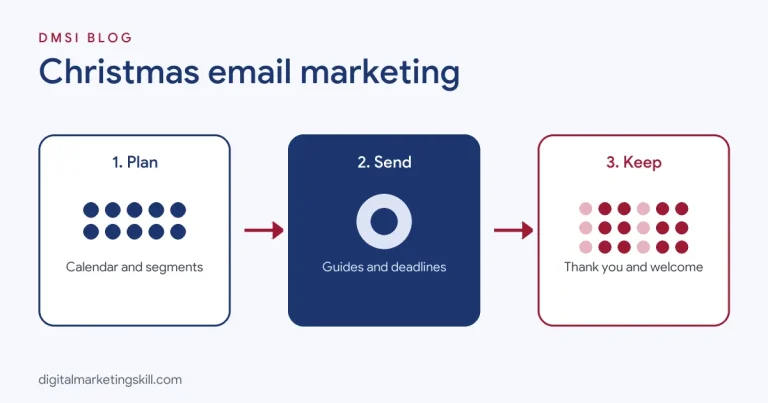
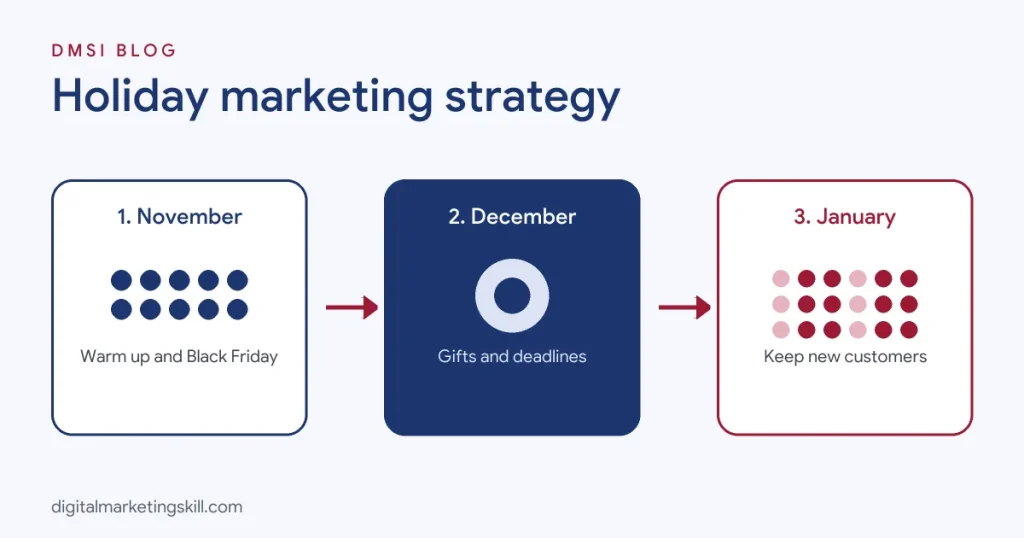
Your email list and SMS subscribers are your cheapest and often most profitable holiday audience. Plan a sequence that moves from inspiration (gift guides) to action (offers and deadlines) to gratitude (thank-you messages) to retention (January welcome emails). Segment by past behaviour so loyal customers, lapsed customers and new subscribers each get relevant messages. Our guide to email marketing strategy explains how to build a sequence, and our Christmas email marketing guide includes 60 subject lines.
Social Media
Social platforms are where many shoppers discover gift ideas. Short videos, carousels of gift ideas, behind-the-scenes content and customer photos perform well. Post consistently, reply quickly to comments and messages, and use Stories for countdowns and polls. For ready-made ideas, see our Christmas social media post ideas.
Search and SEO
People search for gift ideas, opening hours, delivery dates and offers throughout the season. Publish seasonal landing pages and gift guides by early November, keep them on permanent URLs and refresh them every year. Update your Google Business Profile with holiday hours.
Paid Advertising
Holiday ad auctions are competitive, so build warm audiences early and focus spending on retargeting, high-intent search terms and your best-performing products. Refresh creative for each moment, from Black Friday to last-minute gifting. Our guide to Google Ads covers search campaigns.
Your Website
Add a holiday banner with key dates, a gift guide hub, gift wrapping and gift card options, and clear shipping and returns information. Test checkout on mobile before traffic peaks.
In-Store and Local
Events, window displays, wrapping stations, extended opening hours and partnerships with neighbouring businesses help physical stores stand out. Promote them online so local customers know what is happening.
Holiday Social Media Strategies by Platform
- Instagram: your shop window for the season. Use Reels for gift ideas, carousels for gift guides and Stories for countdowns and polls.
- Facebook: a strong home for events, community groups and customer questions. Many customers message brands on Facebook about orders and delivery.
- TikTok: join festive trends with a twist that fits your brand, and post behind-the-scenes and gift idea videos in a natural style.
- YouTube: gift guides, reviews and tutorials influence purchases, especially for higher-priced products. YouTube Shorts help with discovery.
- Pinterest: people plan holiday gifts, decor and recipes here weeks in advance, so publish holiday Pins and boards early.
- LinkedIn: best for B2B. Share year-in-review content, client thanks and planning advice for the year ahead.
Our guide to Christmas social media posts has 40 ready-made post ideas.
Prepare for a Busy Customer Care Season
Questions about delivery, sizes, returns and stock increase sharply in December, and slow replies cost sales. Before the season starts:
- Write saved replies for common questions, such as delivery cut-offs and returns.
- Add a holiday FAQ to your website and link to it from social profiles.
- Set clear response times and publish your holiday support hours.
- Monitor comments and messages daily, including weekends.
- Extend your returns window for gifts so buyers feel confident.
Excellent customer care is one of the most persuasive holiday marketing tools you have, because every helpful reply can turn a hesitant shopper into a buyer.
20 Holiday Marketing Campaign Ideas
- A holiday gift guide hub. One page linking to guides by recipient, interest and budget, updated each year on the same URL.
- Early access for subscribers. Reward your list with first access to holiday offers, which also encourages sign-ups in October and November.
- A season-long loyalty boost. Double loyalty points from Black Friday to New Year to reward repeat customers.
- Advent or countdown content. Daily reveals of tips, deals or stories in December keep people coming back.
- Gift sets and bundles. Pre-built bundles at clear price points make gifting easier and raise average order value.
- Gift cards with a January bonus. Sell gift cards in December with a bonus voucher redeemable in January.
- A Giving Tuesday partnership. Donate a share of sales or match customer donations to a cause your audience cares about.
- Thanksgiving gratitude campaign. Thank customers with a message, a small gift or a feature of community stories.
- Small Business Saturday event. Host an in-store or online event celebrating local and independent businesses.
- Holiday user-generated content. Invite customers to share photos with your products using a branded hashtag. See our guide to user-generated content.
- Creator holiday gift guides. Partner with creators who share gift recommendations with their audiences. See our guide to influencer marketing.
- Interactive quizzes. “Find the perfect gift” quizzes recommend products and capture email addresses.
- Personalised recommendations. Use past purchases to suggest gifts in emails and on your website.
- Free gift wrapping or notes. A simple service that saves customers time and feels premium.
- Express shipping near deadlines. Promote fast delivery when standard shipping cut-offs pass.
- Last-minute digital gifts. E-gift cards, online classes or subscriptions for shoppers who have run out of time.
- A holiday story video. Even a short, low-budget video with a warm story can stand out. Our breakdown of Christmas ads shows what makes them memorable.
- Year-in-review content. Share highlights, customer stories and thanks at the end of December.
- Boxing Day and end-of-year sales. Clear seasonal stock and attract gift card holders.
- A New Year welcome series. Turn holiday buyers into loyal customers with a helpful onboarding series in January.
For more ideas focused on the biggest weekend of the season, see our list of 50 Black Friday ideas and our Black Friday marketing strategy guide.
You do not need to run all twenty. Choose a handful that suit your audience and margins, assign each one to a moment in the calendar above, and make sure each idea has an owner, a deadline and a way to measure it. A short list executed well will beat a long list that is only half delivered when the busiest weeks arrive.
Holiday Marketing Campaign Examples
REI: #OptOutside
In 2015, outdoor retailer REI closed its stores on Black Friday and encouraged employees and customers to spend the day outdoors instead. The campaign became one of the most talked-about holiday campaigns because it reflected the brand’s values. Lesson: standing for something can cut through the noise.
Coca-Cola: “Holidays Are Coming”
Coca-Cola’s festive trucks have appeared in holiday advertising since 1995 and have become a seasonal tradition. Lesson: repetition turns a campaign into a ritual.
Spotify Wrapped
Spotify’s personalised year-end summaries are designed to be shared, turning users into promoters every December. Lesson: personal, shareable data makes powerful holiday content.
Google Santa Tracker
Google’s Santa Tracker offers games and a Christmas Eve map for families. Lesson: useful or fun experiences can build goodwill without selling.
Starbucks Holiday Cups
Starbucks has released seasonal cups since 1997, and their annual reveal creates conversation. Lesson: small seasonal design changes can become events.
Borrow the principle, not the execution, and adapt it to your own brand and budget.
Inclusive Holiday Marketing
The holiday season includes many celebrations and some customers celebrate none at all. Inclusive holiday marketing helps every customer feel welcome:
- Use “holiday” and “season’s greetings” for broad audiences, and Christmas-specific messages where they fit your customers.
- Learn before you mark a festival. If you recognise Hanukkah, Diwali or Kwanzaa, understand what they mean and avoid treating them as sales gimmicks.
- Show diverse people and traditions in your imagery.
- Be sensitive to difficult feelings. The season can be hard for people who are grieving or lonely. Offering an opt-out from holiday emails is a thoughtful touch.
- Think globally. If you sell internationally, remember that seasons, holidays and shopping events differ by country.
Holiday Marketing for B2B and Services
- Client appreciation: send thank-you notes, small gifts or donations in clients’ names.
- Year-end budget offers: some companies have budget to spend before the year ends, which suits software, training and agency services.
- Planning content: publish trend reports, checklists and planning guides for the year ahead.
- Gift vouchers and packages: service businesses such as salons, coaches and studios can sell vouchers as gifts.
- January pre-sales: promote programmes, courses or services starting in the New Year while people are setting goals.
Holiday Marketing Mistakes to Avoid
- Starting too late and paying peak prices for attention.
- Discounting all season, which erodes margin and trains customers to wait for deals.
- One message for eight weeks, instead of adapting to each moment.
- Overpromising delivery, leading to disappointed customers and complaints.
- Exclusive or insensitive messaging that alienates customers who celebrate differently.
- Ignoring January, when new customers are most likely to drift away.
How to Measure Holiday Marketing
- Revenue and profit by week and by moment, compared with last season.
- Customer acquisition cost during peak weeks. Our glossary explains customer acquisition cost.
- Return on ad spend by channel.
- Email and SMS revenue and list growth.
- New versus returning customers.
- Repeat purchase rate of holiday customers within 90 days, which shows whether you turned seasonal buyers into loyal ones.
Review these numbers in mid-January, when returns and repeat purchases give you the full picture, and record the lessons in your plan for next season.
The One Rule of Holiday Marketing
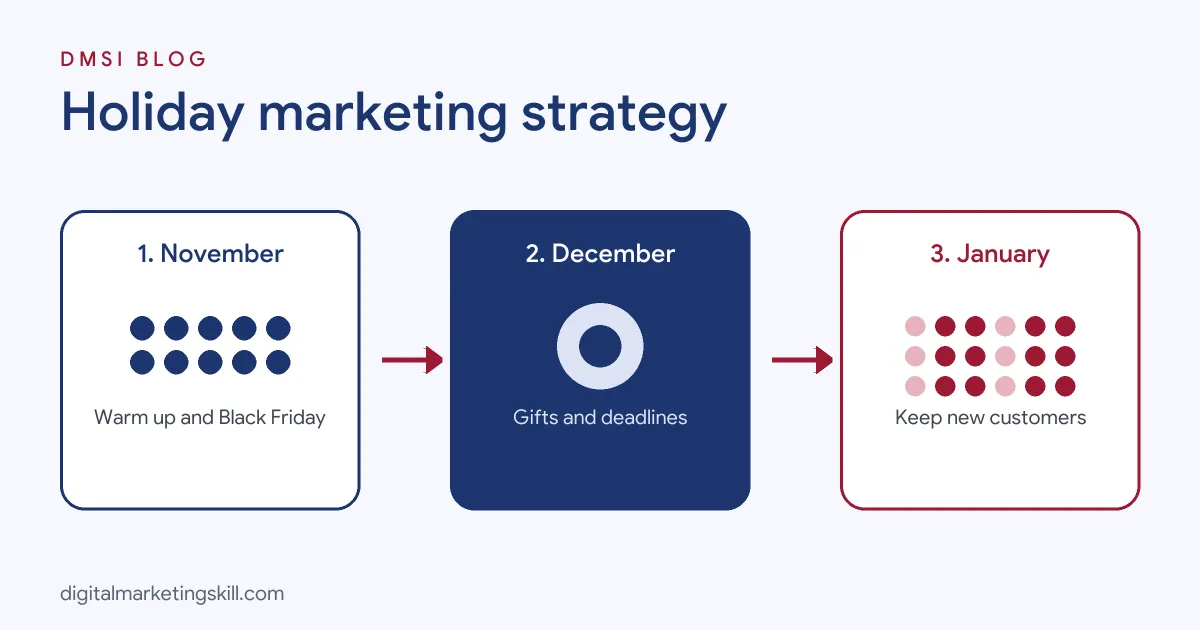
Plan the whole season, not just the sale. The businesses that do best treat the holidays as a journey from early inspiration to January loyalty, with the right message at each step.
An Illustrative Case
Imagine an online stationery brand in Toronto that ran one big Black Friday sale each year and then went quiet. This season it maps every moment. It builds its email list in October with a free holiday planner, offers subscribers early access before Black Friday, runs a Giving Tuesday donation campaign, launches gift sets in December with clear shipping deadlines, promotes digital gift cards in the final week and starts a New Year planning campaign on 26 December.
Holiday revenue rises, but the biggest change is in January: many first-time holiday customers return to buy planners and notebooks for the new year. This example is illustrative, not a real business, but it shows how planning the whole season pays off.
Frequently Asked Questions About Holiday Marketing
What is holiday marketing?
Holiday marketing is the planning and promotion businesses do around the end-of-year holiday season, from early November to early January, to win attention, sales and loyalty.
When should I start holiday marketing?
Plan in late summer or early autumn, start building your audience in October and begin holiday content in early November.
What are good holiday marketing ideas?
Gift guides, early access offers, gift sets, Giving Tuesday partnerships, interactive quizzes, creator gift guides, express shipping and a New Year welcome series are all strong ideas.
What is the difference between holiday marketing and Christmas marketing?
Christmas marketing focuses on Christmas itself. Holiday marketing covers the whole season, including Thanksgiving, Black Friday, Hanukkah, Kwanzaa and New Year.
How do I make holiday marketing inclusive?
Use broad seasonal greetings where appropriate, understand the celebrations you mention, show diverse people and traditions, and be sensitive to difficult feelings.
What are some examples of great holiday marketing campaigns?
REI’s #OptOutside, Coca-Cola’s “Holidays Are Coming”, Spotify Wrapped, Google’s Santa Tracker and Starbucks’ holiday cups are widely cited examples.
Which channels work best for holiday marketing?
Email and SMS for existing customers, social media for discovery, search for people ready to buy and paid ads to scale what works.
How can small businesses compete during the holidays?
Focus on personal service, local delivery, community partnerships, Small Business Saturday and loyal customers rather than outspending large retailers.
How do I keep holiday customers?
Welcome them with a helpful email series, ask for reviews, remind gift card holders to redeem and give them a reason to return in January.
Should B2B companies do holiday marketing?
Yes. Client appreciation, year-end budget offers and planning content for the new year all work well for B2B companies.
What is Super Saturday?
Super Saturday is the last Saturday before Christmas, one of the busiest shopping days for last-minute gifts. In 2026 it falls on 19 December.
Should I keep advertising after Christmas?
Often yes. Gift card holders, self-gifters and bargain hunters shop between Christmas and New Year, and ad costs may be lower than in early December.
What are some catchy phrases for holiday marketing?
Short, warm lines such as “Gifts sorted”, “Unwrap something special”, “Merry and bright savings” or “Give something meaningful” work well in ads, emails and banners.
What is the 3-3-3 rule for marketing?
It is an informal rule with several versions. A common one says you have about three seconds to grab attention, three more to hold interest and a little longer to deliver your message, so holiday ads should make the offer clear at once.
Your Next Step
Running a full holiday season campaign takes skills across email automation, social media, paid ads and SEO. The Master Diploma in Digital & AI Marketing at Digital Marketing Skill Institute covers AI-powered Social Media Management and Advertising, Lead Generation and Email Automation, Google, and a WordPress and SEO track where you build and rank a real website.
From day one, you work on a real U.S. company’s project through the U.S. Project Internship, so you finish with real results and a verified U.S. work reference letter. You also get unlimited one-on-one coaching. The program carries dual US and UK accreditation, is recognised in more than 100 countries, and runs 100% online over three months.
You can build those skills wherever you live, anywhere in your country. Read student reviews, then apply for the 65% partial scholarship to see if you qualify.
Every claim in this guide was checked against its source before publication: Adobe Digital Insights 2025 holiday forecast and Cyber Week results, and the brands’ own published campaign histories. The case above is an illustrative example, not a real result.