The Facebook algorithm is the set of AI ranking systems Meta uses to decide which posts, Reels, videos and ads each person sees, and in what order. It works in four steps: it gathers every post you could see (inventory), reads thousands of signals about each one, predicts how likely you are to find it valuable, and gives it a relevance score that sets its place in your Feed. Content from friends, Pages and Groups you engage with competes with recommended posts from accounts you do not follow. To reach more people, Pages and creators need posts that earn meaningful comments, shares and watch time, use original content, and avoid engagement bait, clickbait and anything that breaks Meta’s rules.
This guide explains how the Facebook algorithm works across Feed, Reels and Groups, the ranking signals that matter, what lowers your reach, and practical tactics to grow organic visibility. For the bigger picture, see our Facebook marketing strategy guide.
Key Takeaways
- Meta describes Feed ranking in four steps: inventory, signals, predictions and a relevance score.
- Meta says its systems weigh thousands of signals, such as who posted, when, the format and how you have interacted before.
- Pew Research Center found that 71% of U.S. adults use Facebook, second only to YouTube among the platforms it tracks.
- Meta reports that more than three billion people use Facebook every month.
- In October 2026, Meta introduced a feature called Your Algorithm that lets people tell Facebook in their own words which topics they want more or less of in Feed and Reels.
In this guide
- What Most Facebook Algorithm Guides Miss
- What Is the Facebook Algorithm?
- How the Facebook Algorithm Works in 4 Steps
- Facebook Ranking Signals That Matter Most
- How the Algorithm Differs for Feed, Reels, Groups and Video
- Your Algorithm: Letting Users Shape Their Feed
- What Lowers Your Reach on Facebook
- How to Work With the Facebook Algorithm: 14 Tactics
- How the Algorithm Affects Facebook Ads
- Pages, Professional Mode and Personal Profiles
- Common Facebook Algorithm Mistakes
- How to Measure Your Facebook Reach
- The One Rule for the Facebook Algorithm
- An Illustrative Case
- Frequently Asked Questions About the Facebook Algorithm
- Your Next Step
What Most Facebook Algorithm Guides Miss
Many articles describe the Facebook algorithm as a secret formula you can hack with the right posting time or a magic number of hashtags. That is not how it works, and chasing tricks wastes time.
- There is not one algorithm. Meta runs separate ranking systems for Feed, Reels, Video, Groups, Stories and ads. A tactic that helps a Reel may not help a link post.
- It is personal, not global. Your post does not get one score. It gets a different predicted value for every person who might see it, based on their history.
- Recommendations changed the game. Facebook now shows a lot of content from accounts people do not follow, especially Reels. That means your followers are not your ceiling, but it also means you compete with the best content on the platform.
The practical lesson: stop asking “how do I beat the algorithm?” and start asking “what would make this specific audience stop, watch and respond?”
What Is the Facebook Algorithm?
The Facebook algorithm is Meta’s name for the machine learning systems that rank content. Every time you open Facebook, these systems look at thousands of possible posts and choose the handful most likely to be relevant and valuable to you. Meta publishes explanations of these systems in its Transparency Center and Business Help Center.
The goal, as Meta describes it, is to show people content they will find meaningful and are likely to engage with. For brands, that means reach is earned post by post. A Page with many followers can still see low reach if its posts do not resonate, while a small Page with genuinely engaging content can reach far beyond its followers.
How the Facebook Algorithm Works in 4 Steps
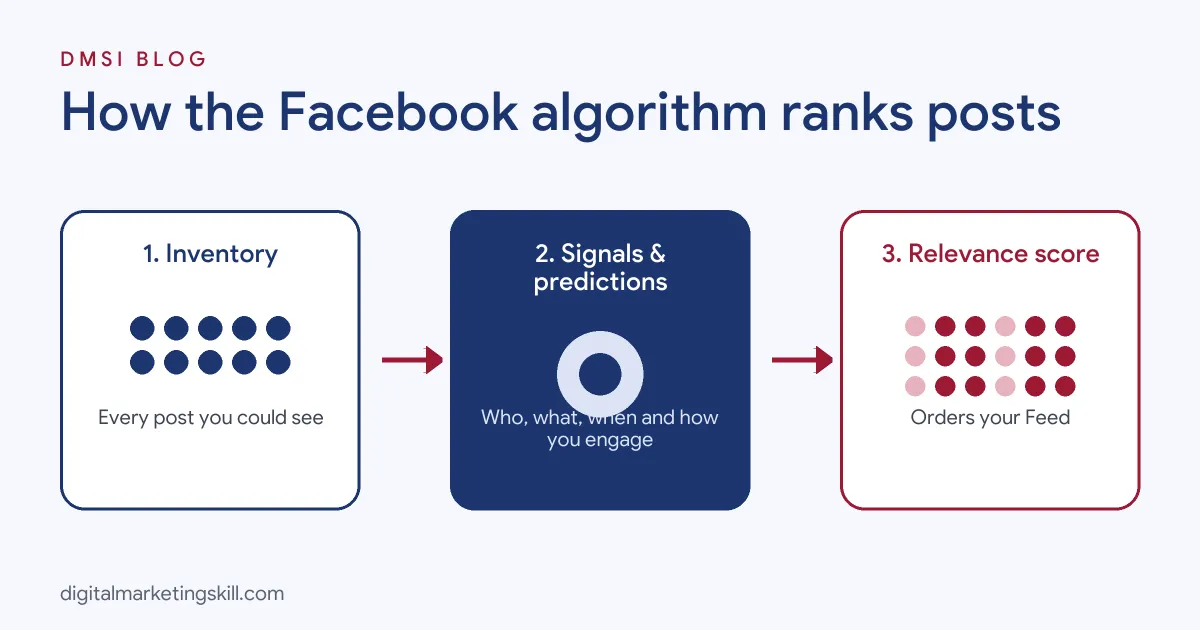
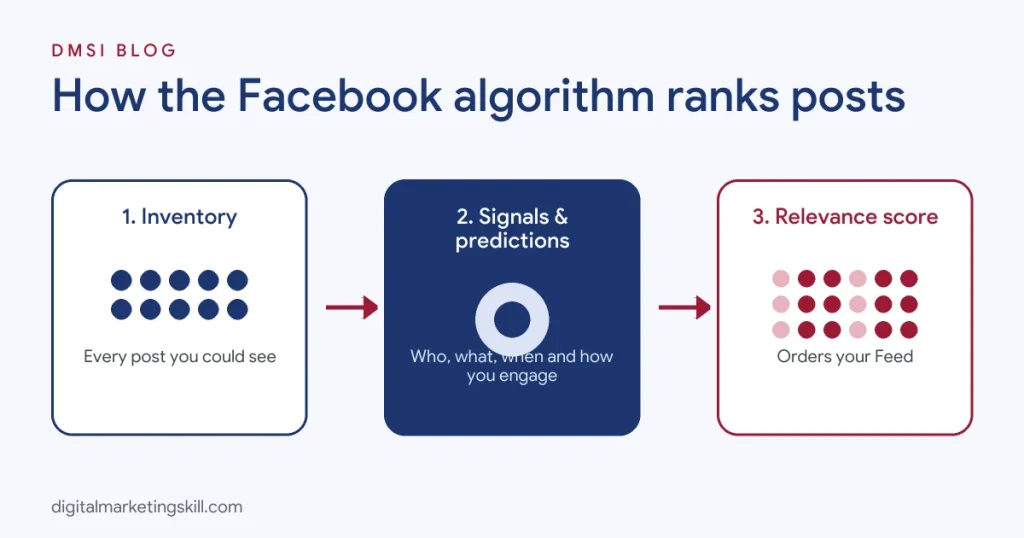
Meta explains Feed ranking as four stages.
| Step | What happens | What it means for you |
|---|---|---|
| 1. Inventory | Facebook gathers all posts a person could see: from friends, Pages and Groups they follow, plus recommended content and ads | Your post is one of thousands competing for the same slot |
| 2. Signals | It reads thousands of signals about each post and the person, such as who posted, when, the format and past interactions | Relationships and past engagement with your Page matter |
| 3. Predictions | Models predict how likely the person is to comment, share, watch, click or find the post valuable | Content built for real responses beats content built for vanity metrics |
| 4. Relevance score | Predictions are combined into a score that orders the Feed | The highest-value posts for that person appear first |
After ranking, Meta applies integrity checks. Content that breaks Community Standards is removed, and content that is borderline, misleading or low quality may have its distribution reduced.
Facebook Ranking Signals That Matter Most
Meta does not publish exact weightings, but it has explained the types of signals it uses. These are the ones marketers can influence.
Relationships and Past Interactions
People see more from friends, Pages and Groups they regularly interact with. If your audience comments on, shares and watches your posts, future posts are more likely to reach them. This is why consistent engagement builds momentum, and why long silences hurt.
Meaningful Engagement
Comments, replies, shares, saves and sends in Messenger signal that a post sparked something. Meta has long said it prioritises content that drives conversations between people. A post with ten thoughtful comments can outperform one with a hundred passive likes.
Watch Time and Completion
For video and Reels, how long people watch, and whether they finish or rewatch, are strong signals. A short video watched to the end often beats a long video people abandon.
Content Type and Format
If someone tends to watch videos, they see more videos. If they click links, they see more links. Format matters per person, so a mix of formats helps you reach different parts of your audience.
Originality and Quality
Meta has said it reduces distribution for accounts that repeatedly repost other people’s content without adding anything meaningful, and it favours original creators. Authentic, original content is safer and stronger over time.
Timeliness
Recent posts usually rank higher than old ones, though highly engaging older posts can resurface. Posting when your audience is online helps your content gather early signals.
How the Algorithm Differs for Feed, Reels, Groups and Video
| Surface | What it favours | Best for |
|---|---|---|
| Feed | Posts from connections and recommended content people are likely to engage with | Community updates, photos, conversation starters |
| Reels | Short vertical videos with strong watch time; heavy use of recommendations from accounts people do not follow | Reaching new audiences |
| Groups | Active discussion and relevance to the group’s topic | Building community and loyalty |
| Video | Longer videos that hold attention and bring people back | Tutorials, interviews, series |
| Stories | People you interact with most; time-sensitive content | Behind-the-scenes and quick updates |
For most Pages trying to grow, Reels offer the biggest reach because they are widely recommended. For deeper relationships, Groups and conversation-led Feed posts work best.
Your Algorithm: Letting Users Shape Their Feed
In October 2026, Meta introduced a feature called Your Algorithm. People can open it from the menu on posts and describe, in their own words, the topics they want to see more or less of. Facebook then adjusts Feed and Reels recommendations based on those preferences, alongside the familiar “interested” and “not interested” controls.
For marketers, this has two implications. First, clear topics matter more than ever: if someone tells Facebook they want more “small business marketing tips,” posts that are obviously about that topic are easier to match. Second, low-quality or off-topic content is easier for people to filter out. Make the subject of every post clear from the first line or first second.
What Lowers Your Reach on Facebook
Meta publishes guidance on content that may receive reduced distribution. Common reasons include:
- Engagement bait: posts that ask people to like, comment, share or tag friends just to boost reach, such as “Comment YES if you agree.”
- Clickbait: headlines that withhold or exaggerate information to make people click.
- Unoriginal content: reposting other people’s videos or posts without meaningful changes.
- Low-quality links: links to pages with little original content, heavy ads or misleading information.
- Misleading or borderline content: content rated false by fact-checkers or close to breaking Community Standards.
- Spammy behaviour: posting the same content repeatedly or across many Pages.
If your reach drops suddenly, check your Page’s account status in Meta Business Suite or the Professional Dashboard. It shows whether any content has been flagged or limited.
How to Work With the Facebook Algorithm: 14 Tactics
1. Know Exactly Who You Are Posting For
Define your audience and the topics they care about. Posts with a clear audience and topic earn stronger reactions, which the algorithm rewards. A short buyer persona helps.
2. Lead With Reels for Reach
Reels are recommended widely to non-followers. Post short, vertical videos with a strong opening, clear captions and a reason to watch to the end.
3. Hook People in the First Line or First Second
In Feed, the first line of text decides whether people tap “See more.” In video, the first second decides whether they keep watching. Put the most interesting point first.
4. Ask Questions That Invite Real Answers
Instead of “Like if you agree,” ask open questions people want to answer, such as “What’s the one marketing tool you couldn’t run your business without?” Real conversation is a strong signal and stays within Meta’s rules.
5. Reply to Comments Quickly
Replies create conversation threads and show the algorithm the post is active. Aim to reply within the first hour after posting.
6. Post Original Content
Create your own photos, videos and ideas. If you share others’ content, add commentary, context or a new angle so it becomes something new.
7. Use a Mix of Formats
Rotate Reels, photos, carousels, text posts, live video and links. Different people prefer different formats, and testing shows you what your audience responds to.
8. Go Live Occasionally
Live videos notify followers and often generate real-time comments. Use them for Q&As, launches, behind-the-scenes and tutorials.
9. Build or Join Relevant Groups
Groups create close communities where posts get strong engagement. Start a Group around your niche or participate helpfully in existing ones, following each group’s rules.
10. Post When Your Audience Is Online
Check audience activity in Meta Business Suite insights and post shortly before peak times to gather early engagement.
11. Be Smart With Links
Link posts can still work, but make the post valuable on its own. Write a useful summary, add an image or video, and send people to high-quality pages that load quickly.
12. Encourage Shares and Sends
Create content people want to send to friends: useful checklists, relatable humour, local news, helpful tips. Sends in Messenger and shares spread your post to new networks.
13. Stay Consistent
Regular posting keeps your audience engaged and gives the algorithm more data. Use a content calendar to plan a sustainable rhythm, whether that is three times a week or daily.
14. Boost Proven Posts
When an organic post performs well, a small boost or ad can push it to more of the right people. Paid and organic work best together.
For more inspiration, see our list of Facebook post ideas.
How the Algorithm Affects Facebook Ads
Ads go through a separate auction, but the same principle applies: Meta tries to show ads people will find relevant. The ad auction considers your bid, your estimated action rate (how likely people are to take your desired action) and ad quality. Relevant, engaging ads can win auctions at lower cost than poor ones.
That is why high cost per click often signals a creative or targeting problem, not just competition. Improving the hook, offer and landing page frequently lowers costs. Our guide to Facebook Ads Manager explains campaign setup, and the glossary entry on Meta Ads Manager covers the basics.
Pages, Professional Mode and Personal Profiles
The same ranking principles apply to every account type, but the tools differ, and that changes how you grow.
- Business Pages get Meta Business Suite insights, scheduling, ads and messaging tools. Pages rely heavily on engagement and Reels to reach beyond followers, because people naturally prioritise friends and family in Feed.
- Personal profiles in professional mode let creators keep their personal profile while unlocking analytics, followers and monetisation tools. Content can be recommended to people who do not follow you, so it suits personal brands, coaches and freelancers.
- Personal profiles without professional mode mainly reach friends. They are best for networking rather than marketing, and using them for heavy promotion can feel spammy to friends.
If you are building a personal brand as a freelancer or consultant, professional mode often reaches more people than a brand-new Page, because it starts from your existing network. Businesses with a team, a product range or plans to advertise usually need a Page. Many marketers use both: a Page for the business and professional mode for their personal expertise, cross-sharing the best content between them.
Common Facebook Algorithm Mistakes
- Using engagement bait. It may bring short-term reactions but can reduce distribution.
- Posting only links. A Page that only shares links to its website often sees low engagement.
- Reposting viral content. Unoriginal content is deprioritised and can affect monetisation.
- Ignoring comments. Unanswered comments waste the chance to build conversation.
- Inconsistent posting. Long gaps reduce the signals that keep your audience seeing you.
- Chasing likes over value. Likes are a weak signal compared with comments, shares and watch time.
- Not checking account status. Restrictions can silently limit reach.
How to Measure Your Facebook Reach
Use Meta Business Suite or the Professional Dashboard to track these KPIs:
| Metric | What it tells you |
|---|---|
| Reach and views | How many people saw your content |
| Reach from non-followers | Whether recommendations are working |
| Engagement rate | How actively people respond |
| Comments and shares | The strongest signals of meaningful engagement |
| Average watch time | Whether your videos hold attention |
| Link clicks | Whether posts drive traffic |
| Follower growth | Whether reach is turning into audience |
Compare results by format and topic every month. Double down on what earns comments, shares and watch time. Our glossary entry on organic reach explains why reach varies.
The One Rule for the Facebook Algorithm
Make posts your audience would choose to talk about. The algorithm is built to predict which content sparks meaningful responses for each person. If your post earns genuine comments, shares and attention from the right people, you are working with the system, not against it.
An Illustrative Case
Picture a small fitness studio in Manchester whose Facebook Page posts class timetables and “Like and share!” promotions. Reach averages 150 people per post, mostly existing members.
The owner changes approach. She posts two Reels a week showing quick home exercises with a clear on-screen hook, such as “Desk job? Do this for your back.” She replaces engagement bait with real questions like “What stops you exercising after work?” and replies to every comment. She also starts a free Group for local members to share progress.
After eight weeks, Reels average 4,000 views, with most views from non-followers in her area. Comments on Feed posts triple, and the Group becomes the main source of new trial bookings. She did not find a hack. She made content her audience wanted to watch and talk about.
This example is illustrative, not a real business, but it reflects how aligning with the algorithm’s goals improves reach.
Frequently Asked Questions About the Facebook Algorithm
How does the Facebook algorithm work?
It gathers all the posts you could see, reads thousands of signals about each, predicts how likely you are to find each valuable and ranks them with a relevance score.
What does the Facebook algorithm prioritise?
Content from people and Pages you interact with, posts that spark meaningful comments and shares, videos people watch to the end, and original, high-quality content.
Why has my Facebook reach dropped?
Common reasons include less engagement, engagement bait, unoriginal content, fewer posts or content restrictions. Check your account status and recent post performance.
How much does Facebook pay for 1,000 views?
There is no fixed rate. Payouts depend on the monetisation programme, audience location, content type and ad demand, and Meta does not publish a standard figure.
Can you tell if someone keeps looking at your Facebook profile?
No. Facebook does not let people see who views their profile, and Meta warns that apps claiming to show this are not genuine.
Why is my cost per click so high on Facebook?
High costs often come from weak creative, poor targeting, low relevance or a mismatched objective. Testing new hooks, offers and audiences usually helps.
Do hashtags help on Facebook?
They play a small role. Clear topics, captions and engaging content matter far more than hashtags on Facebook.
Are Reels better than posts for reach on Facebook?
Reels are often recommended to non-followers, so they usually reach more new people. Feed posts and Groups remain strong for engaging existing audiences.
Do link posts get less reach on Facebook?
They can, especially if the link leads to low-quality pages or the post adds little value. Make link posts useful on their own and point to high-quality pages.
What is Facebook’s Your Algorithm feature?
Introduced in October 2026, it lets people describe the topics they want more or less of in Feed and Reels, and Facebook adjusts recommendations accordingly.
Your Next Step
Understanding platform algorithms is a core skill for social media managers. The Master Diploma in Digital & AI Marketing at Digital Marketing Skill Institute includes an AI-powered Social Media Management and Advertising track where you plan content, run Meta ads and read analytics, alongside tracks in Lead Generation and Email Automation, Google, and WordPress and SEO.
From day one, you work on a real U.S. company’s project through the U.S. Project Internship, so you finish with real results and a verified U.S. work reference letter. You also get unlimited one-on-one coaching. The program carries dual US and UK accreditation, is recognised in more than 100 countries, and runs 100% online over three months.
You can build those skills wherever you live, anywhere in your country. Read student reviews, then apply for the 65% partial scholarship to see if you qualify.
Every figure in this guide was checked against its source before publication: Meta’s Transparency Center and Business Help Center, Meta’s announcement of Your Algorithm, Meta’s reported user figures and Pew Research Center. Platform features change often. The case above is an illustrative example, not a real result.