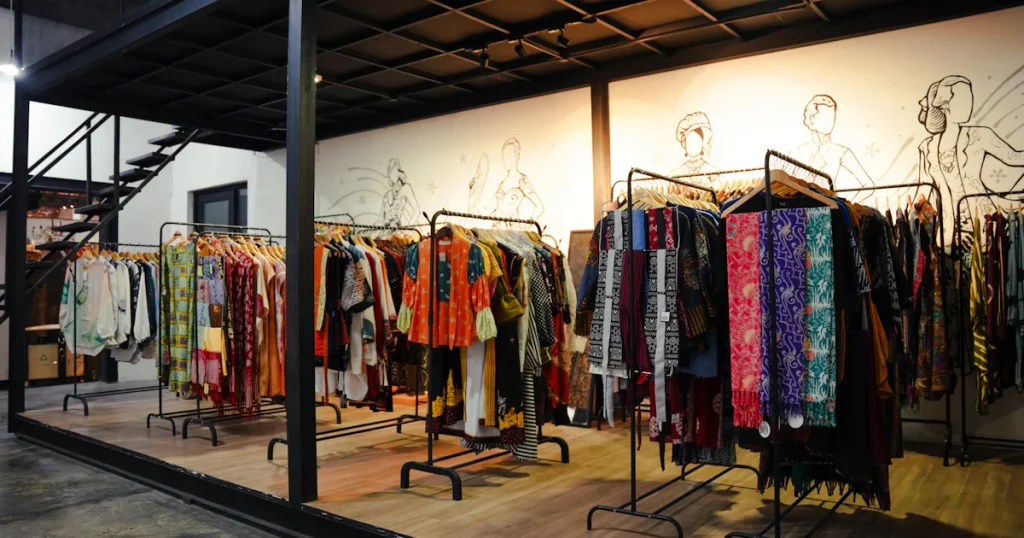
The most effective retail marketing strategies combine a clear understanding of your customers with a joined-up mix of channels: a strong local presence and in-store experience, personalised email and SMS, loyalty rewards that bring people back, social media and content that inspire, and paid search and retail media that capture people ready to buy. The best retailers connect online and in-store data so every campaign builds on what customers actually do, and they measure sales, repeat visits and customer value rather than just reach.
This guide explains what retail marketing is, the retail marketing mix, how to build a strategy step by step, 15 strategies that work for independent shops and larger retailers, what changes when selling through big retailers, and how to measure results.
Key Takeaways
- Endear’s five-step retail marketing process runs from knowing your customer and setting objectives to choosing channels, building the campaign, and measuring and optimising (Endear).
- Square’s retail strategies include turning first-time customers into regulars, rewarding existing customers, investing in local presence, using limited-time offers mindfully and partnering with other brands (Square).
- Target Accelerators says retailers evaluate potential brand partners on criteria including product content, stock consistency and marketing alignment (Target Accelerators).
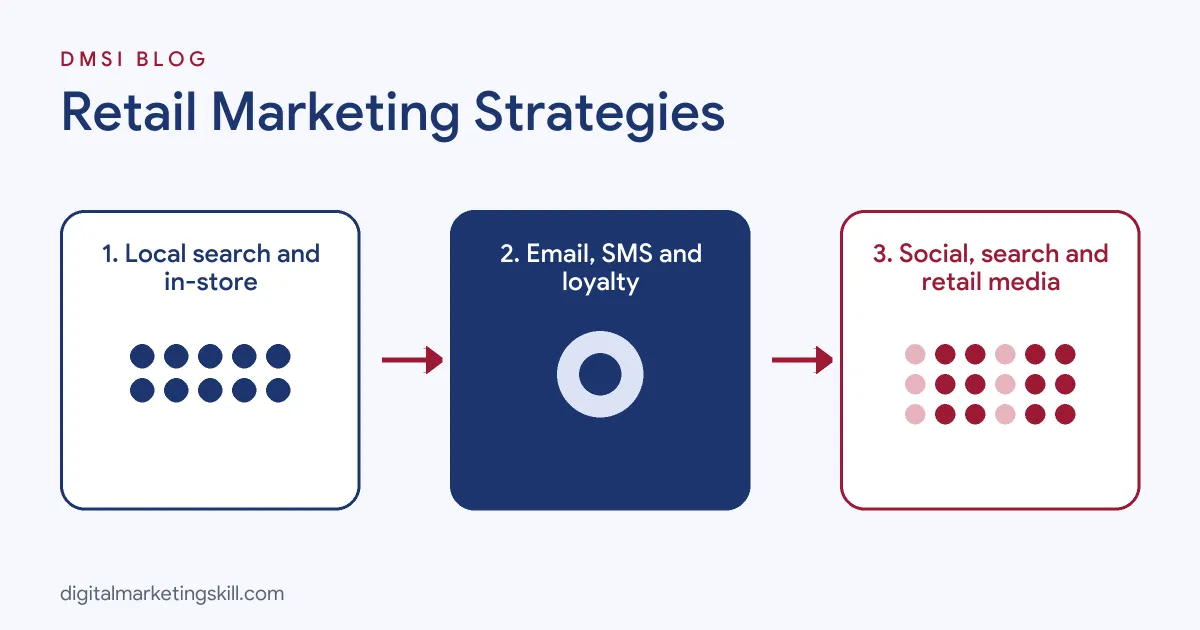
- What Most Retail Marketing Guides Miss
- What Retail Marketing Is
- The Retail Marketing Mix
- Types of Retail Marketing
- How to Build a Strategy
- 15 Retail Marketing Strategies
- Selling Through Big Retailers
- Measuring Results
- Common Mistakes
- FAQ
What Most Retail Marketing Guides Miss
Most retail marketing articles are written either for large chains or for software buyers, with long lists of tactics and a product pitch. Small and independent retailers need something simpler: a clear idea of which few strategies to start with, what they cost in time and how to tell if they are working.
Another common gap is the split between “online” and “in-store”. Customers do not think in channels. Someone might see a post on Instagram, check your opening hours on Google, visit the shop, then reorder online. The strongest strategies treat that journey as one, using the same offers, messages and customer data everywhere.
What Retail Marketing Is
Retail marketing covers everything a retailer does to attract shoppers, persuade them to buy and bring them back. It includes in-store displays and events, local advertising, social media, email and SMS, websites and online stores, loyalty programmes, promotions and, for brands, marketing through other retailers’ shelves and websites.
It differs from general marketing because it is closely tied to footfall, stock, location, seasons and the in-person experience. A retailer’s marketing has to match what is actually on the shelf.
The Retail Marketing Mix
Endear describes the 4Ps of retail marketing, and Square extends the idea to six Ps. A practical version for retailers looks like this:
- Product: the range you stock, how it meets customer needs, bundles and exclusives.
- Price: your pricing approach, from premium to everyday value, plus promotions.
- Place: where people buy: store, website, marketplaces, social shops, click and collect, delivery.
- Promotion: how you communicate: ads, social, email, events, displays.
- People: staff knowledge and service, which strongly shape the experience.
- Presentation: store layout, window displays, product photography and website design.
Types of Retail Marketing
- In-store marketing: window displays, signage, product placement, demos, events and staff recommendations.
- Digital marketing: websites, search, social media, email, SMS, online ads and marketplaces.
- Local marketing: community events, local partnerships, local SEO and a well-maintained Google Business Profile.
- Omnichannel marketing: connecting all channels so customers get a consistent experience. See our guide to omnichannel marketing.
- Shopper and trade marketing: brands working with retailers on displays, promotions and retail media to sell more on someone else’s shelves.
How to Build a Retail Marketing Strategy
Step 1: Know your customer
Endear puts knowing your customer first. Gather what you already know from sales data, loyalty sign-ups, reviews, social comments and conversations with staff. Who buys most often? What do they buy together? When do they visit? Why do they choose you over competitors? Create two or three simple customer profiles to guide decisions.
Step 2: Set clear objectives
Choose a few measurable goals, such as increasing repeat purchases, growing average order value, raising footfall on quiet weekdays or growing online sales. Each goal suggests different tactics.
Step 3: Choose your channels
Pick the channels where your customers already spend time and that you can sustain. A small shop might focus on Google Business Profile, Instagram, email and in-store events. A larger retailer might add paid search, retail media, SMS and influencer partnerships.
Step 4: Plan around the retail calendar
Retail follows seasons and key dates: back to school, Black Friday, Christmas, January sales, Valentine’s Day, Mother’s Day, Ramadan and Eid, Easter, summer holidays and local festivals. Build a calendar a few months ahead so stock, staff and marketing line up. Our guides to seasonal marketing and Black Friday marketing strategy go deeper.
Step 5: Build the campaigns
For each campaign, define the offer or message, the audience, the channels, the creative, the in-store support and the timing. Make sure staff know about every promotion before it launches.
Step 6: Measure and optimise
Track results weekly during campaigns and monthly overall. Keep what works, fix or drop what does not, and test one new idea at a time.
15 Retail Marketing Strategies That Work
1. Win local search
Many shoppers search for products or shops “near me” before they visit. Keep your Google Business Profile complete and accurate, with hours, photos, products and regular updates, and ask happy customers for reviews. Square highlights investing in your local presence as a core strategy.
2. Create an in-store experience worth visiting
Online shopping is convenient, so physical stores need to offer something more: expert advice, product demos, tastings, workshops, personal styling or simply a beautiful, well-organised space. Endear includes in-store experiential marketing among its strategies.
3. Use window displays and signage that sell
Change windows regularly to match seasons and campaigns. Inside, guide people with clear signage, highlight best sellers and place complementary products together.
4. Build an email and SMS list
Collect contact details at checkout, online and through loyalty sign-ups, with clear consent. Send personalised messages, such as new arrivals in categories a customer has bought before, back-in-stock alerts and birthday offers. Endear lists personalised email and SMS outreach as its first strategy. See our glossary entry on SMS marketing.
5. Turn first-time buyers into regulars
Square emphasises turning first-time customers into regulars. Follow up after a first purchase with a thank-you, care tips or a small incentive for a second visit. The second purchase is often the hardest; once people return, they are more likely to keep coming back.
6. Reward loyalty
A simple loyalty programme, whether points, stamps, tiers or member-only events, gives customers a reason to choose you again. Keep rewards easy to understand and genuinely valuable.
7. Clienteling and personal service
Clienteling means staff building one-to-one relationships with regular customers, remembering preferences and contacting them about relevant products. Endear lists clienteling and associate-led outreach among its strategies. It works especially well for fashion, beauty, jewellery and specialist shops.
8. Show up on social media and sell there
Use Instagram, TikTok and Facebook to show new stock, behind-the-scenes moments, styling ideas and customer photos. Social shops and product tags let people buy directly. See our guide on how to sell on Instagram.
9. Use user-generated content and social proof
Share customer photos and reviews, with permission, on social media, your website and in store. Square recommends leveraging social proof because people trust other customers. See our guide to user-generated content.
10. Partner with local businesses and creators
Co-host events, create joint offers or cross-promote with complementary businesses nearby, such as a bookshop and a cafe. Local creators and influencer marketing can introduce your shop to new audiences.
11. Run limited-time offers carefully
Flash sales, seasonal promotions and bundles can drive traffic, but constant discounts train customers to wait for sales and erode margins. Square advises using limited-time offers mindfully. Tie offers to clear reasons, such as a season, an anniversary or a new range, and track whether they bring new or returning customers.
12. Offer click and collect and flexible fulfilment
Let customers buy online and collect in store, reserve items, or get local delivery. These options connect online browsing with store visits, and collection trips often lead to extra purchases.
13. Use paid search, shopping ads and retail media
Paid search and Shopping ads reach people actively looking for products. For brands sold through big retailers and marketplaces, retail media, meaning ads on retailer websites and apps, puts products in front of shoppers at the moment of purchase. Endear includes paid search and retail media among its strategies. See our glossary entries on Shopping ads and Amazon Ads.
14. Create useful content and SEO
Buying guides, gift guides, care instructions and “how to style” content help customers and bring in search traffic. Endear lists content marketing and SEO among its strategies, and Square recommends creating valuable content.
15. Listen and act on feedback
Read reviews, ask staff what customers say and run quick surveys. Square highlights listening to customers. Fixing small frustrations, such as checkout queues or unclear returns, can lift sales more than a new campaign.
Retail Marketing on a Small Budget
Many effective retail tactics cost time rather than money. Updating your Google Business Profile every week, posting real photos of new stock, replying to every review, and sending a short email to past customers are all free or cheap. In store, rearranging displays around a theme, adding handwritten staff picks and creating a small photo spot customers want to share can lift sales without a big spend.
Partnerships stretch budgets further. Two neighbouring shops can share the cost of an event, swap flyers or run a joint loyalty card. Local schools, clubs and charities often welcome sponsorship of small events, which builds goodwill in the community. When you do spend on ads, start with tightly targeted campaigns, such as local search ads around your shop or social ads shown only to people within a few kilometres, and track every result with a code or a question at the till.
The key is consistency. A small set of activities done every week usually beats a big campaign followed by months of silence.
Choosing Where to Start
You do not need all 15 strategies at once. A practical starting set for most small retailers is:
- a complete, active Google Business Profile with regular reviews;
- an email or SMS list with a monthly newsletter and a welcome message;
- one social platform used consistently;
- a simple loyalty reward;
- a seasonal calendar with three or four key campaigns.
Once these are running smoothly, add paid search, partnerships, events or retail media.
Marketing When You Sell Through Big Retailers
Brands selling through supermarkets, department stores or large chains face a different challenge: they must win on someone else’s shelves and websites. Target Accelerators notes that retailers evaluate potential partners on criteria including product content, stock consistency and marketing alignment, and assess marketing strategies based on seasonality, industry trends and customer shopping behaviour. It also stresses that maintaining consistent stock levels is critical for a positive customer experience.
Target Accelerators advises that mass retail should come after building a strong foundation through direct-to-consumer sales or smaller retail partnerships, and suggests starting with a regional rollout to test the market. Practical steps for brands include:
- aligning your own marketing with the retailer’s promotional calendar;
- providing strong product content, images and descriptions for the retailer’s site;
- using retail media to drive visibility on the retailer’s website and app;
- driving shoppers to the retailer with your own social, email and influencer activity;
- tracking sell-through, not just sell-in, so you know if products are actually selling.
How to Measure Retail Marketing
| Metric | What it shows |
|---|---|
| Footfall and conversion rate | How many visitors come in and how many buy |
| Average transaction value | Whether bundles, upsells and displays work |
| Repeat purchase rate | Whether loyalty and follow-up are working |
| Customer lifetime value | Long-term value of customers from each channel |
| Email and SMS revenue | Sales driven by owned channels |
| Online to in-store activity | Click and collect orders, store visits from ads |
| Return on ad spend | Efficiency of paid campaigns |
Use discount codes, loyalty IDs and point-of-sale data to link campaigns to in-store sales. Ask new customers how they heard about you; it is simple and surprisingly useful.
Getting Staff Behind Your Marketing
Staff are often the most powerful marketing channel a shop has. Brief the team before every campaign so they can explain offers, recommend products and capture contact details at the till. Share results with them, such as how many loyalty sign-ups came in or which display sold best, so they see the impact of their work. Encourage staff to suggest ideas; they hear customer questions every day and often spot opportunities before managers do. Small incentives, like recognition for the most sign-ups in a month, can keep energy high during busy seasons.
Common Mistakes
- Discounting too often. It cuts margins and teaches customers to wait.
- Separate online and in-store worlds. Different prices, offers or messages confuse shoppers.
- Promoting products that are out of stock. Marketing must match inventory.
- Not training staff. Staff who do not know about a campaign cannot support it.
- Ignoring reviews. Unanswered reviews, especially negative ones, hurt trust.
- Collecting data without consent. Always get clear permission for email and SMS.
- Measuring only likes and reach. Track sales, repeat visits and customer value.
Retail Marketing Trends to Watch
- Retail media growth: more retailers sell advertising on their websites and apps, giving brands new ways to reach shoppers at the point of purchase.
- Social commerce: shoppers increasingly discover and buy products directly through social platforms and live shopping.
- Personalisation with first-party data: retailers rely more on their own customer data from loyalty programmes, email lists and purchases as third-party tracking becomes less reliable.
- AI tools: retailers use AI to write product descriptions, segment customers, forecast demand and personalise offers, though human checks remain essential.
- Experience-led stores: physical shops focus on events, services and community to give people reasons to visit.
- Value and trust: shoppers compare prices easily, so clear value, honest reviews and good service matter more than ever.
One Rule to Remember
Know your best customers, reach them through a few connected channels you can sustain, give them reasons to come back, and measure sales and repeat visits rather than likes.
Example: an independent homeware shop in Kumasi has steady weekend trade but quiet weekdays. The owner updates the Google Business Profile with fresh photos, starts collecting customer phone numbers and emails at checkout with permission, and sends a short weekly message featuring new arrivals and a Wednesday-only styling session in store. A simple stamp card rewards every fifth purchase. After three months, weekday visits rise and more first-time customers return for a second purchase. This example is illustrative and not a real business.
Retail Marketing Skills and Careers
Retailers and consumer brands need marketers who understand both stores and digital channels: local search, email and SMS, social commerce, paid search, retail media and analytics. These skills are in demand from independent shops to global brands. If you are in your country, learning to plan and measure retail campaigns, and building a portfolio of results for local businesses, can help you win remote marketing roles and freelance clients worldwide. For online stores specifically, see our comparison of the best ecommerce platforms.
Frequently Asked Questions
What is retail marketing?
Retail marketing is everything a retailer does to attract shoppers, persuade them to buy and bring them back, across stores, websites, social media, email and advertising.
What are the main retail marketing strategies?
Local search, in-store experiences, email and SMS, loyalty programmes, social media and social commerce, user-generated content, partnerships, paid search, retail media and content marketing.
How can I increase my retail sales?
Focus on turning first-time customers into regulars, improve your local visibility, personalise offers, train staff, use bundles and displays to raise average order value, and measure what works.
What are the types of retail marketing?
In-store, digital, local, omnichannel, and shopper or trade marketing for brands selling through other retailers.
What are the 4Ps of retail marketing?
Product, price, place and promotion. Many retailers add people and presentation to reflect service and store design.
What is omnichannel retail marketing?
It connects all channels, such as store, website, social and email, so customers get a consistent experience and can move easily between them.
What is retail media?
Retail media is advertising sold by retailers on their own websites, apps and sometimes in stores, letting brands reach shoppers close to the point of purchase.
How do small shops compete with big retailers?
By offering personal service, local relevance, curated ranges, events and community, and by staying visible in local search and social media.
How much should a retailer spend on marketing?
It varies by business, margins and growth goals. Start with a budget you can sustain, track results by channel and increase spending where returns are clear.
What is the 3-3-3 rule in marketing?
It is used in different ways by different marketers, often as a simple planning rule, such as focusing on three audiences, three messages or three channels at a time. The principle is to stay focused rather than spreading effort too thin.
Your Next Step
Retail marketing blends local, social, email and paid skills that shops and brands hire for. The Master Diploma in Digital & AI Marketing at Digital Marketing Skill Institute covers AI-powered Social Media Management and Advertising, Lead Generation and Email Automation, Google, and a WordPress and SEO track where you build and rank a real website.
From day one, you work on a real U.S. company’s project through the U.S. Project Internship, so you finish with real results and a verified U.S. work reference letter. You also get unlimited one-on-one coaching. The program carries dual US and UK accreditation, is recognised in more than 100 countries, and runs 100% online over three months.
You can build those skills wherever you live, anywhere in your country. Read student reviews, then apply for the 65% partial scholarship to see if you qualify.
Sources checked November 2026: Endear, Square, Target Accelerators: Mass retail marketing and Target Accelerators: Mass retail readiness. We have no connection with these companies.