
Owned media is any marketing channel a business controls and does not pay to rent: its website, blog, email list, app, podcast and the content it publishes there. Because you own the channel, you decide what goes on it, when it goes out and who sees it. Owned media is one of the four media types in the PESO model, alongside paid, earned and shared media. It is often the cheapest channel to run over time, but it takes patience to build an audience.
Key Takeaways
- Owned media covers channels you control, such as your website, blog, newsletter and app.
- It sits alongside paid media (ads), earned media (coverage and reviews) and shared media (social posts and shares).
- Social media profiles are usually treated as shared media, because the platform controls reach and the rules.
- Owned media builds long-term assets, such as search rankings and an email list, that keep working after a campaign ends.
- The trade-off is time: owned channels grow slowly without paid or earned media to start them off.
What Is Owned Media?
A simple test helps. Ask, “If this platform changed its rules tomorrow, would I still reach my audience?” If the answer is yes, it is probably owned media. Your website stays yours when an algorithm changes. Your email list stays yours even if a social network closes your account.
Owned media includes the channel and the content on it. For example, the blog is the channel, and each article, guide or case study is owned content. A brand’s newsletter is owned, and so is the lead magnet people download to join it.
The idea grew out of the older paid, owned and earned framework. Communications consultant Gini Dietrich later added shared media and named the result the PESO model in her book Spin Sucks. She has said that, although paid comes first in the acronym, owned media usually comes first in practice, because every other channel needs something worth pointing to.
Owned vs Paid, Earned and Shared Media
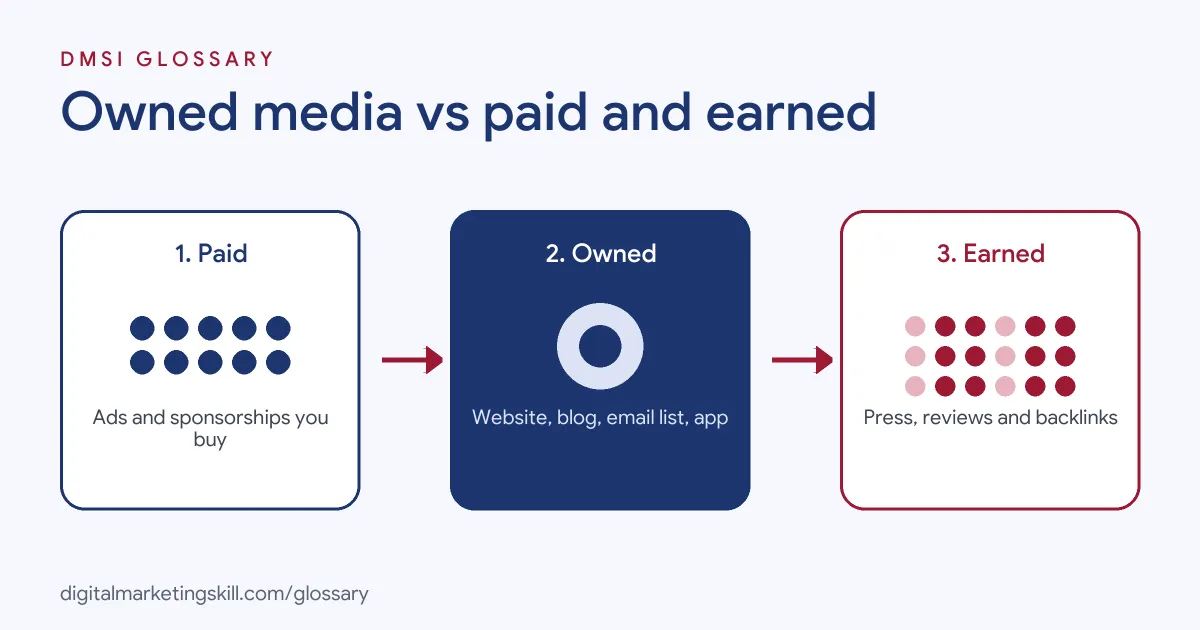
Each media type does a different job. Strong campaigns combine them rather than picking one.
| Type | What it is | Examples | Main strength | Main weakness |
|---|---|---|---|---|
| Owned | Channels you control | Website, blog, email list, app, podcast | Full control and lasting value | Slow to build reach |
| Paid | Reach you buy | Search ads, social ads, sponsorships | Fast, targeted reach | Stops when spending stops |
| Earned | Attention others give you | Press coverage, reviews, backlinks | High trust | Hard to control or predict |
| Shared | Social platforms and sharing | Instagram, LinkedIn, TikTok, community groups | Conversation and community | Platform controls reach |
You can read more about the other types in our guides to paid media and earned media.
Is Social Media Owned Media?
This is the most common point of confusion. You create your Instagram posts and control your profile, so many people call it owned. However, the platform sets the rules, decides how many followers see each post and can change the algorithm overnight. For that reason, the PESO model files social profiles under shared media. A useful habit is to treat social as rented space and keep moving followers towards channels you truly own, such as your email list.
Examples of Owned Media
- Website and landing pages. Your home for product details, prices, sign-ups and sales.
- Blog and resource hub. Articles and guides that earn organic traffic from search.
- Email newsletter. A direct line to subscribers who chose to hear from you. See newsletter.
- Podcast or video library. Episodes hosted on your site or feed.
- App and customer portal. Notifications and messages to people who already use your product.
- Downloadable content. E-books, templates, reports and case studies.
- Community you host. A forum or member area on your own platform.
A Worked Example
Picture a freelance social media manager who wins most clients through Instagram. One day, reach on her posts drops sharply after a platform update, and enquiries slow down. She has no other way to reach the people who followed her.
So she starts building owned media. First, she writes a simple website with a services page and three case studies. Next, she creates a free content calendar template and offers it in exchange for an email address. She then posts on Instagram as before, but every few posts now point people to the template. Within a few months, she has a small email list of business owners who asked to hear from her. She sends them one useful tip a week and a monthly note about her availability.
Now, when social reach dips, her enquiries hold steady. Her Instagram is still important, but it feeds a channel she controls rather than being the whole business. That shift, from rented attention to owned relationships, is the core idea behind owned media.
Why Owned Media Matters
First, owned media compounds. A helpful guide can bring in visitors from search for years, while an ad stops the moment the budget runs out. Over time, this lowers your customer acquisition cost.
Second, it gives you first-party data. When people visit your site or join your list, you learn what they read and click, with their consent. That data is increasingly valuable as third-party cookies fade.
Third, it protects you from platform risk. Businesses that rely only on one social network can lose most of their reach after a single algorithm change. An email list and a well-ranked website soften that blow.
Finally, owned media makes every other channel work harder. Ads perform better when they send people to a strong landing page. Journalists link to useful research. People share content that is genuinely worth reading.
How to Build an Owned Media Strategy
- Define your audience. Write a clear buyer persona and list the questions they ask before they buy.
- Pick a home base. For most businesses, this is the website plus an email list. Add a podcast or video library only if you can keep it going.
- Plan your topics. Group content into content pillars and map them to search demand with keyword research.
- Publish on a schedule. A realistic content calendar beats bursts of activity followed by silence.
- Capture visitors. Add sign-up forms, lead magnets and clear calls to action so readers become subscribers.
- Amplify with other media. Use paid ads, PR and social posts to bring people to your owned content in the first place.
- Measure and improve. Track traffic, sign-ups, email engagement and sales from owned channels, then update what works.
How to Measure Owned Media
Choose a few key performance indicators that link to business results. Useful ones include organic sessions, email list growth, open rate, click-through rate, conversions from organic and email traffic, and returning visitors. Avoid judging owned media on one month alone. Because it compounds, the trend over a quarter or a year tells the real story.
Common Mistakes
- Building only on rented land. Pouring all effort into one social platform and never collecting emails.
- Publishing without promotion. Great content still needs paid, earned or shared media to find its first readers.
- No clear next step. Articles that end without a sign-up or offer waste the traffic they earn.
- Letting content go stale. Outdated guides lose rankings and trust, so review your key pages regularly.
Where You’ll Use This at Work
Owned media appears in content, email, SEO and marketing leadership roles. Senior job adverts often ask candidates to build these channels from scratch. One remote Head of GTM role, for example, includes the task: “Develop owned media channels, including newsletters, podcasts, thought leadership, and strategic content.” At entry level, you might write blog posts, set up email sequences or improve landing pages, all of which are owned media work.
Learn It in the Full Stack Track
Owned media spans websites, content, email and social, so the best fit is the Full Stack option, which covers all four tracks. You build a WordPress site, grow an email list and plan content that brings people back, with one portfolio project from each track. You also work on a U.S. Project Internship from day one, with unlimited 1-on-1 mentoring.
You may also like our glossary entries on content marketing, inbound marketing and multichannel marketing.
Frequently Asked Questions
What is owned media in simple terms?
Owned media is any channel your business controls, such as your website, blog or email list, where you decide what to publish.
What are examples of owned media?
Websites, blogs, newsletters, apps, podcasts, e-books, case studies and member communities hosted on your own platform.
Is social media owned or earned media?
Your social profiles are usually classed as shared media, because the platform controls reach. Shares and mentions by others can count as earned.
What is the difference between owned and earned media?
Owned media is content on channels you control. Earned media is attention other people give you, such as press coverage, reviews and backlinks.
What is the PESO model?
PESO stands for paid, earned, shared and owned media. It is a framework for planning all four types together in one strategy.
Is email marketing owned media?
Yes. Your email list is one of the strongest owned channels, because you can reach subscribers directly without relying on an algorithm.
Sources: Spin Sucks: The PESO Model breakdown; Wikipedia: PESO model; PRSA: Gini Dietrich on the PESO Model; remote job listing on Himalayas.